

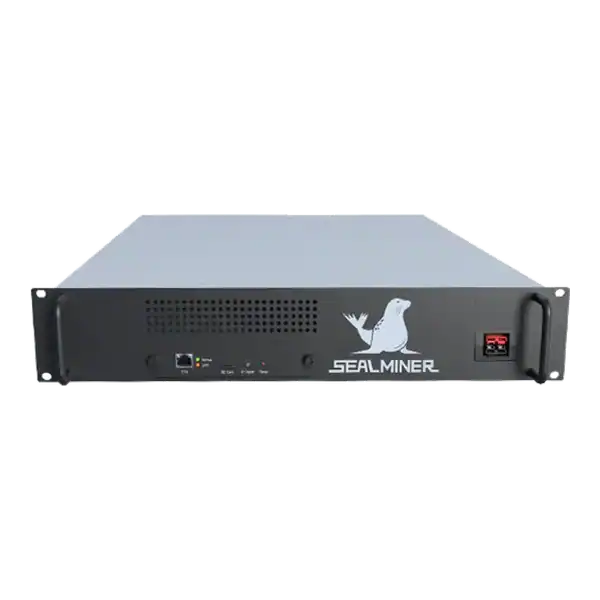
Sealminer A4 Ultra Hydro
Bitcoin & Bitcoin Cash ASIC Miner

886TH
HASHRATE
9.45W/TH
EFFICIENCY
8373W
POWER
£856.08
EST. MONTHLY
NO PAYBACK
EST. ROI
Antminer L7 and L9 custom firmware: assess L7 and L9 custom firmware through exact support, Scrypt tuning, wall power, accepted work, developer fees, thermal.
Antminer L7 and L9 custom firmware can only be assessed against an exact supported machine, operating objective and measured baseline. Potential benefits include lower-power profiles, per-chain tuning, improved fleet controls or more flexible performance.
Potential costs include developer fees, unsupported boards, higher thermal stress, changed warranty position, security exposure and difficult rollback from signed manufacturer firmware. L7 and L9 are both Scrypt miners. But that does not make images or tuning limits interchangeable.
This article evaluates the tuning decision. The compatibility checklist handles S21+/L9 identity and the rollout guide handles change management.
Antminer L7 and L9 custom firmware: The checklist is deliberately evidence based. Marketing language such as home friendly, efficient or profitable has no fixed meaning without a measured operating mode and a real site boundary.
A mining technician is checking Antminer L7 and L9 custom firmware. Choose the objective first: reduce joules per gigahash, hold a power cap, improve stability in heat, increase hashrate when margin permits or gain management functions.
Choose the objective first: reduce joules per gigahash, hold a power cap, improve stability in heat, increase hashrate when margin permits or gain management functions. One profile cannot optimise every objective.
Record the exact L7 or L9 variant, board identifiers, power supply, firmware and official specifications. BITMAIN lists the L9 at 16GH/s and 3,360W for the stated test condition, with tolerances. Use the actual unit rather than applying that figure to an L7.
Check manufacturer warranty, repair and security-firmware conditions before installing an unauthorised image. A financial gain is not comparable until the value of lost support or recovery risk is included.
Write the intended outcome before looking at a headline hashrate. A learning device, a useful room heater, a quiet home miner and a commercially productive machine are different purchases. The correct comparison changes when the available circuit, sound limit, heat demand, pool route or expected ownership period changes.
Use a dated decision sheet and keep manufacturer claims separate from measured results. Record the exact model, variant, power supply, firmware and operating mode. Similar product names do not make accessories, voltage, firmware or thermal limits interchangeable.

Use only a firmware supplier with a current exact compatibility list, verifiable download, documented fee, release history, security process and recovery method. Marketing testimonials are not a support matrix.
Ask how autotuning selects voltage and frequency, what thermal and power limits remain active, how the fee is collected and what happens when the fee endpoint or pool is unavailable.
Preserve manufacturer logs, stock performance and the original configuration. A later repair or resale decision needs to distinguish a hardware fault from a tuning change.
Prefer the manufacturer specification, manual and firmware portal for identity and limits. But treat them as the starting point rather than a promise of site performance. Keep a copy of the pages and files used because support pages, downloads and product revisions can change.
Ask the seller for a serial photograph, condition statement, included accessories and a recent operating record for the actual unit. A generic product image cannot prove board revision, power supply condition, repair history or whether the miner reaches stable accepted work.
Confirm electrical capacity and cooling for the highest permitted profile. Do not treat an available slider as evidence that the power supply, connector, duct or site limit can carry the setting continuously.
Isolate the management network and restrict firmware endpoints. Change credentials, verify pool addresses and prevent public access to SSH or miner interfaces.
Create conservative efficiency, stock-equivalent and stop profiles. Approve one named operator to change them and record the reason and expected duration.
A competent person should confirm the electrical route for the real continuous load. Check voltage, protective device, earthing, cable, connector, socket, isolation and ventilation together. Do not assume that a plug physically fitting a socket proves that the circuit is suitable for sustained operation.
Place the miner on a trusted network segment with no unnecessary inbound exposure. Change supplied credentials, use a documented wallet and pool account, set approved backup endpoints and confirm that every endpoint belongs to the intended operator before power is applied.
Run stock firmware and the candidate profile at comparable inlet conditions. Measure complete wall power, pool-accepted hashrate, rejects, hardware errors, temperatures, fans and restarts over a representative period.
Deduct the firmware fee from useful work or revenue using the vendor’s exact method. Include pool fees, merged-mined asset treatment, cooling and extra maintenance when comparing net value.
Test hot and cool site conditions. A profile that looks efficient for an hour can become unstable or require more fan energy when ambient temperature rises.
Measure power at the wall and compare local hashrate with accepted pool work over a representative period. Local display figures can look healthy while stale shares, invalid work, reconnects or a wrong payout address reduce useful output.
Calculate revenue and cost over a range, not one favourable day. Include electricity, pool fees, auxiliary cooling, maintenance, downtime, conversion costs and hardware value. For a heat-use case, credit only heat that replaces a cost the owner would otherwise incur.
| Risk | Evidence to get | Control |
|---|---|---|
| Image does not support exact board | Current compatibility matrix | Test the precise revision |
| Developer fee understated | Documented fee and pool evidence | Calculate net accepted work |
| Thermal or electrical overload | Wall power and heat-soak record | Use conservative site limits |
| Warranty or repair route affected | Manufacturer and seller terms | Price the lost remedy |
| Rollback unavailable | Recovery image and physical test | Prove rollback before scaling |
Rank each risk by consequence and by the practical ability to detect it before purchase. A low-priced machine with uncertain firmware, exhausted cooling or a weak algorithm market can require more working capital and attention than a newer unit with a higher invoice price.
Set written stop conditions. Examples include an unsafe supply, unavailable official firmware, rejected work above the approved limit, repeated thermal shutdown, no lawful payout route or an energy break-even price below the contracted rate. A stop condition prevents sunk cost from becoming the reason to continue.
Begin with one out-of-production or otherwise approved test unit at a conservative profile. Confirm board detection, power-supply telemetry, fan response and accepted Scrypt work before changing performance.
Step between stock-equivalent and efficiency profiles, allowing the tuner to stabilise each time. Do not chase the highest local rate during commissioning. Stop at the first unexplained error, power excursion or thermal limit.
Begin with one unit or the smallest sensible batch. Photograph labels and connections, export the original configuration, note ambient conditions and record the start time. Watch the kernel or system log, board detection, fan behaviour, temperatures, local hashrate, pool connection and accepted work.
Do not declare acceptance from a short dashboard snapshot. Run long enough to expose heat soak, intermittent network faults and pool variance. Retain the test record with the invoice, serial number, firmware file and any seller correspondence so a later repair or warranty question has a clear baseline.
The checklist is deliberately evidence based. Marketing language such as home friendly, efficient or profitable has no fixed meaning without a measured operating mode and a real site boundary. The record should make it possible for another competent person to reproduce the decision.
Antminer L7 and L9 custom firmware: The checklist is deliberately evidence based. Marketing language such as home friendly, efficient or profitable has no fixed meaning without a measured operating mode and a real site boundary.
Choose the objective first: reduce joules per gigahash, hold a power cap, improve stability in heat, increase hashrate when margin permits or gain management functions.
Use only a firmware supplier with a current exact compatibility list, verifiable download, documented fee, release history, security process and recovery method.
Confirm electrical capacity and cooling for the highest permitted profile. Do not treat an available slider as evidence that the power supply, connector, duct or site limit can carry the setting continuously.
Custom L7 or L9 firmware is justified only by measured net improvement within the site’s safe limits. Verify exact support, fees, security, warranty and rollback, then compare accepted Scrypt work and wall power at equal conditions. A conservative efficiency profile that remains stable can be more valuable than a headline overclock.
Use The Mining Shop UK tools and support pages to compare the exact hardware against your real electricity, installation, pool and operating constraints before ordering or commissioning it.
Require exact L7 or L9 model and board support. Sharing Scrypt does not make firmware cross-compatible. Compare net pool-accepted work and wall power after developer fees, rejects, cooling and stability, not a local hashrate screenshot.

Stock firmware provenance restoration: restore stock firmware provenance before ASIC resale using exact hardware identity, official files, configuration.
Plan a WhatsMiner batch firmware rollout using model cohorts, WhatsMinerTool, pilot gates, configuration evidence, monitoring and a tested rollback route.
ASICBoost compatibility check: Verify explicit model, firmware and pool support for overt ASICBoost before enabling it. Verify the current evidence.
Join the ASIC Mining Discussion
Members can read and join the discussion
Log in to read comments from other miners. Create a free account if you would like to ask a question or share your experience.
Membership helps us protect the discussion from spam and keep answers useful.