

ASIC Mining in Other Countries: A Business Planning Guide
Plan ASIC mining in another country with checks for legality, energy, tax, customs, ownership, insurance, connectivity, sanctions and repatriation.
Read article
How flexible UK Bitcoin mining hosting can use constrained or hard to export wind, solar and biogas generation, with honest evidence and operating controls.
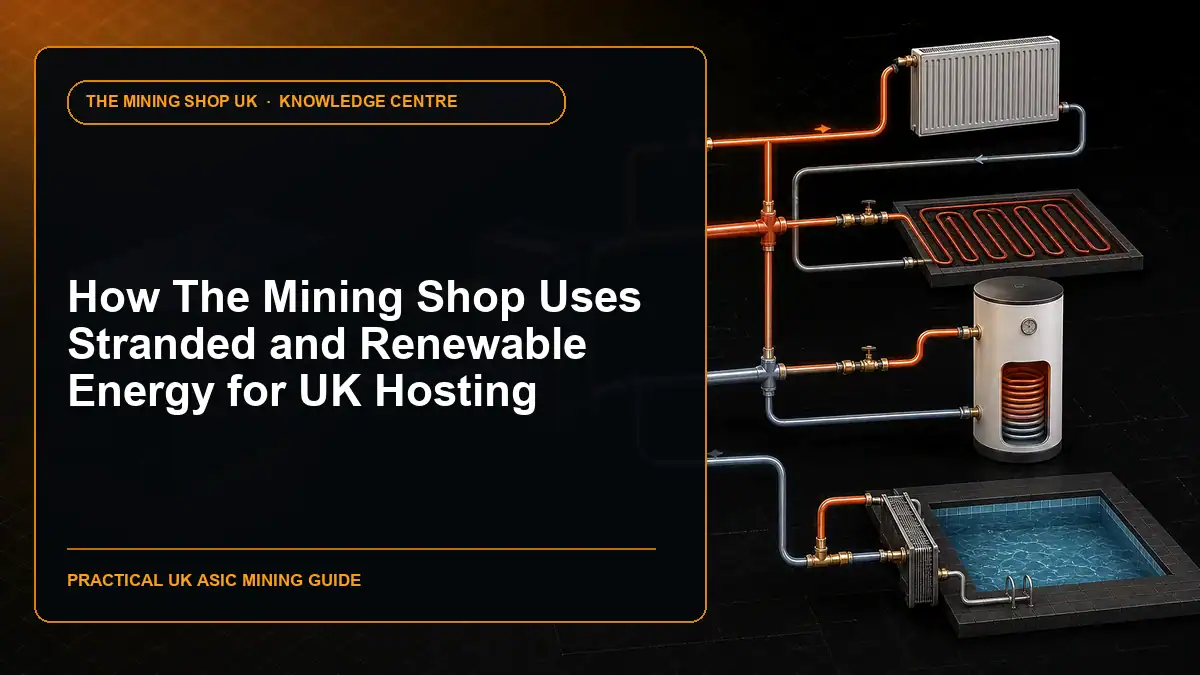
The Mining Shop's UK hosting model is designed around a mix of energy sources and technologies where generation can be stranded, constrained or difficult to export. Mining can provide a controllable local load, but every site still needs a lawful connection, measured energy and evidence for any environmental claim.
Some generators can produce more electricity than a local connection can export at a particular time. Others are remote from economic grid capacity, face curtailment or have a site load that varies. A flexible computing load can use some of that output locally when the commercial and grid arrangements permit it.
This does not mean the electricity has no cost or no alternative use. The project needs metering, a supply agreement, network permission and a comparison with storage, grid reinforcement, heat use and other flexible demand.
ASIC miners are modular and can be deployed in increments rather than waiting for a single large process line. They can also be underclocked or stopped when energy is unavailable or has greater value elsewhere. Revenue follows delivered computing work, so the load can operate close to generation without moving a physical product every day.
Mining still needs reliable network access. It normally requires modest bandwidth, but latency, failover, monitoring and cyber security remain important. We do not claim that any internet connection is sufficient.
Wind and solar output varies with weather and time. A mining site can follow available power when hardware, contracts and controls allow. The commercial model should include lower utilisation, restart behaviour, temperature cycles and the value of exported electricity. Batteries can serve different needs, including ride through, ramp control and time shifting.
Anaerobic digestion can provide dispatchable generation from biogas, subject to feedstock, engine maintenance and environmental permits. Mining may use generation that exceeds the export limit or site demand. Heat from engines and miners can have additional uses, but the system needs a site specific heat balance and lawful emissions and waste management.
Phase change material stores and releases heat as it changes phase. It can help buffer recovered miner heat or cooling demand, but it is not a primary energy source. We assess PCM and other storage technologies as parts of a wider energy system rather than describing them as renewable generation.
We use terms such as renewable, stranded, curtailed or carbon reducing only where the project has appropriate evidence. Renewable certificates, generator data, half hourly meters, contracts and site records should support the claim. Electricity from the grid is not automatically renewable because a renewable generator exists nearby.
NESO recognises that as renewable generation grows there are periods when increasing demand can help manage surplus supply. Mining is one possible flexible demand, alongside storage, heat, transport and industrial loads. It must compete on real system value and comply with the same connection and market rules.
Ask where the miner is hosted, how power is metered, what energy claim is being made, how curtailment affects fees and uptime, who controls underclocking or shutdown, what connectivity and insurance exist and whether heat is used. We document site specific terms rather than applying one renewable label to every facility.
Rules and official guidance can change. Check the current source before making a decision.
Plan ASIC mining in another country with checks for legality, energy, tax, customs, ownership, insurance, connectivity, sanctions and repatriation.
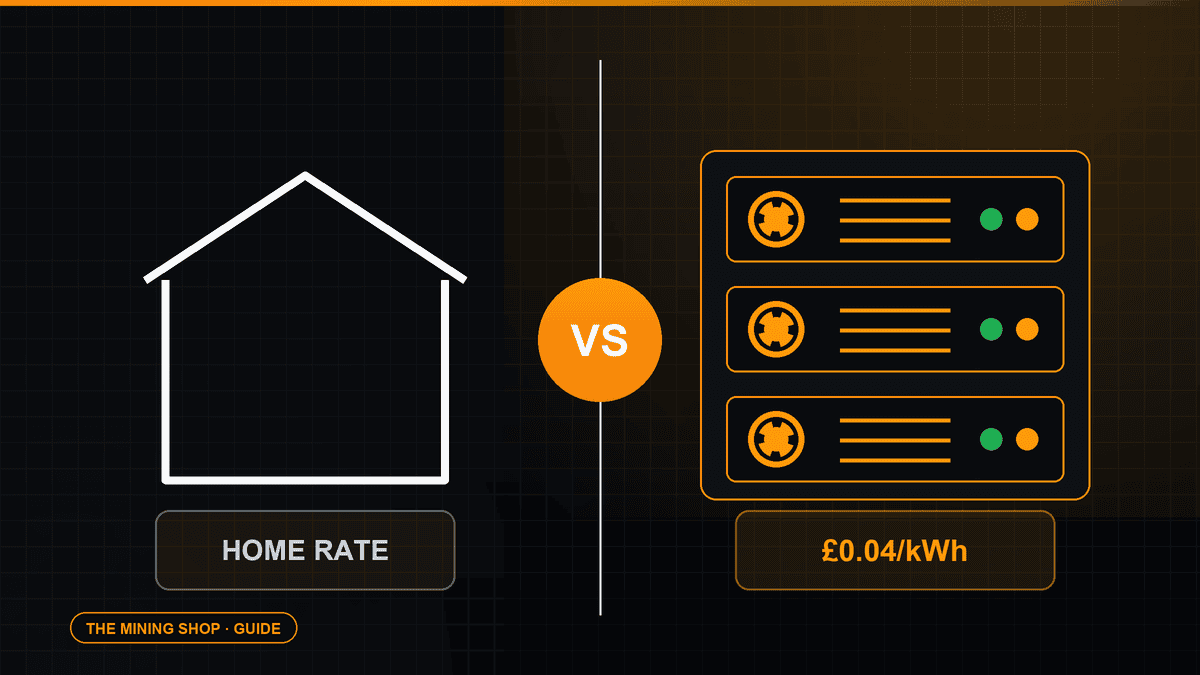
Every miner faces the same fork: run the machine yourself, or put it in a facility built for the job. The right answer is not the same for everyone, and anyone who tells you it is has something to sell you. This guide puts the two options side by side with real arithmetic, real machines […]
Understand Scale an ASIC Mining Operation. Plan power, cooling, monitoring, contracts and resilient multi-miner operation before choosing equipment.