
Pre-order
Overall ranking

Equihash
·
ZEC
Overall rank#1of 100AvailableAll: #2 / 831
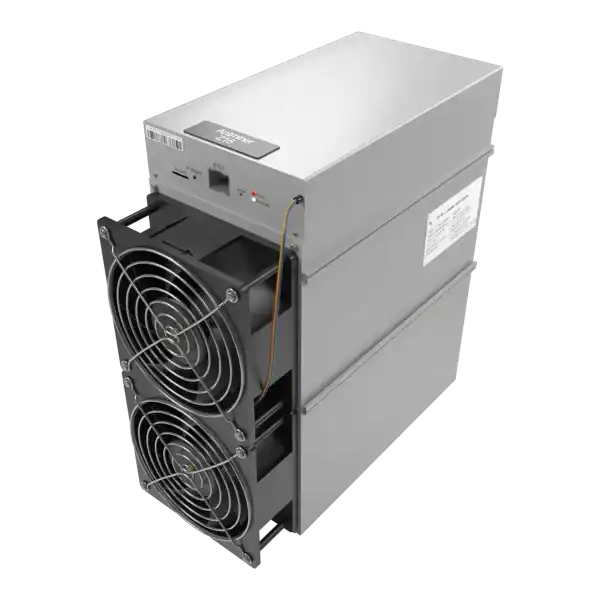

Pre-OrderFree Shipping
Hashrate
525KSOL
Efficiency
4.73W/KSOL
Power
2483W
Earns/kWh
42.0p
Understand reduce ASIC miner noise through airflow resistance and ducting. Check electrical supply, heat, noise and complete cost before home use.
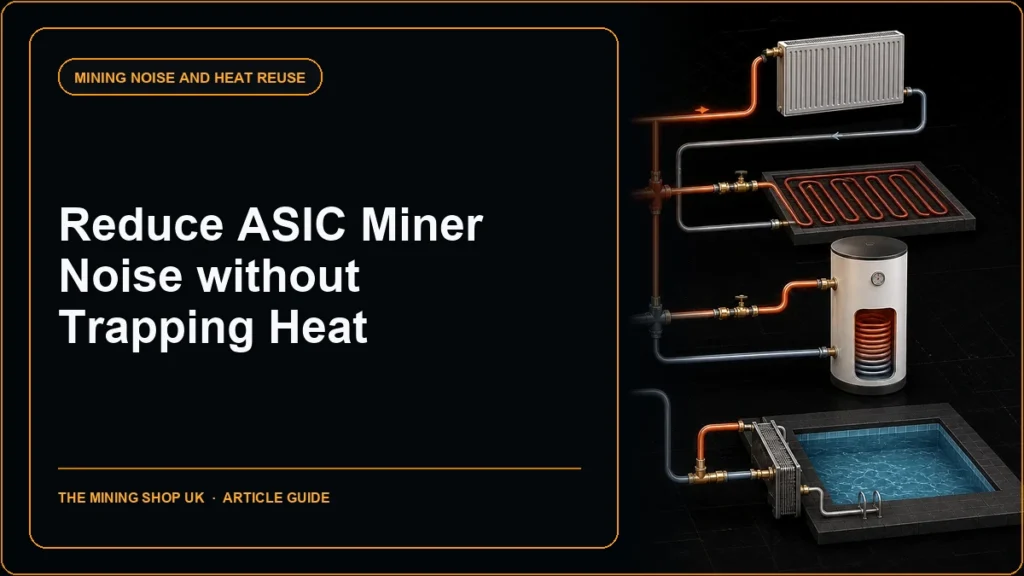
To reduce ASIC miner noise safely, begin with location, airflow, maintenance and vibration control rather than obstructing the cooling path.
Most industrial air-cooled ASICs are loud because high-speed fans must move heat through a compact chassis. Real noise control starts with location, maintenance and airflow. Simply slowing fans or wrapping the machine can trigger throttling, faults or damage. This guide gives a safe order of work and an acceptance test for every modification.
Reduce ASIC miner noise: Some sites cannot accommodate industrial noise. A flat, terraced house or shared workshop may have no safe duct route.
A miner is checking reduce ASIC miner noise. Verify every modification with temperatures, fan data, logs and accepted pool hashrate, and choose hosting when the building cannot support the machine without disturbing the people around it.
An air-cooled ASIC is a small server appliance, not a desktop PC. Several kilowatts of heat cross tightly packed heatsinks. So compact fans run quickly. The result is blade noise, turbulent airflow and vibration transferred into shelves, walls and ducts. A specification is a result under stated conditions, not a promise for your room.
Bitmain lists the S19 XP at 76 dBA at 25°C.
Actual sound depends on temperature, fan control, distance, reflections and installation. A phone app can show a large relative change. But not replace a competent assessment. Start by deciding whether the problem is hearing exposure, disturbance in an occupied room, vibration through a building or neighbour noise. Each needs a different control.
Our ASIC miners UK FAQ covers the wider electrical, noise and home-installation questions.

For workplaces, the Health and Safety Executive sets daily or weekly lower and upper exposure action values of 80 and 85 dB(A), with an exposure limit value of 87 dB(A) after hearing protection is taken into account. Those are personal exposure values over time, not a pass or fail reading beside the exhaust.
If workers may be materially exposed, get a competent noise assessment and follow the applicable duties. At home, those figures show why long exposure deserves respect. But they do not make a bedroom a suitable miner room. Keep industrial units out of normal living spaces.
Record sound at fixed positions with operating mode, inlet temperature and fan RPM. Repair scraping, bearing rumble or a changed tone rather than hiding it.
First, relocate the source. A secure garage, outbuilding or plant room adds distance without touching cooling. Keep it dry, clean and ventilated, with safe isolation and no exhaust recirculation. Second, stop structure-borne vibration. Use a stable non-combustible support and appropriately rated anti-vibration mounts without making the miner unstable. Secure loose panels and ducts.
Do not place a heavy, vibrating miner on a resonant shelf and then blame the fans for the whole noise level. Third, restore healthy condition.
Clean restricted heatsinks safely and replace failed or noisy fans with compatible parts. Dust raises temperature and fan demand. If logs show thermal or fan errors, use our ASIC troubleshooting checklist instead of tuning around the fault. Fourth, improve the air path.
A large, smooth intake and exhaust route with gentle bends can move the noise outlet away from people. Only after those controls should you consider an engineered enclosure or an approved lower-power profile.
| Control | Likely benefit | Thermal risk | Our view |
|---|---|---|---|
| Relocate and add distance | High for occupied areas | Low if ventilation remains correct | Best first option |
| Vibration isolation | Good for hum through structures | Low | Useful supporting control |
| Short, correctly sized ducting | Good when it moves the outlet | Medium if resistance or recirculation is created | Design and test |
| Acoustic enclosure | Potentially high | High if improvised | Treat as engineered ventilation |
| Approved underclock | Can reduce heat and fan demand | Low to medium depending on firmware and warranty | Check approval and verify |
| Block vents or force low fan RPM | May sound quieter briefly | Severe | Never |
Ducts add resistance. Flexible hose, adapters, filters and sharp bends consume fan pressure. An engineered inline fan may help. But a random booster can fight the miner or fail with the ASIC trapped hot. Use suitable components and preserve service access.
A safe acoustic enclosure needs separate, generous inlet and exhaust paths, acoustic bends or lined plenums outside the direct hot airstream, temperature monitoring and a fail-safe shutdown or unrestricted bypass.
Internal materials must be suitable for the temperature and fire risk. Never place loose foam where it can be drawn into a fan, coat the miner in insulation or rely on a sealed cupboard. Heat and sound take different routes. A quiet box may transmit vibration into the floor.
At the same time, an outdoor exhaust moves noise towards a neighbour. Test at the boundary and during intended operating hours.
Fans are part of the thermal protection system. Forcing a lower speed, fitting an incompatible fan simulator or disconnecting a fan may remove the symptom while chips, voltage regulators, connectors and the PSU run hotter. A displayed average temperature can also hide a local hotspot. Manufacturer limits apply to the exact model and may change with altitude and inlet conditions.
Custom firmware and underclocking are not the same as blindly slowing fans. A well-designed lower-power profile can reduce both heat and required airflow. But firmware support, temperature controls and warranty consequences must be checked first. The Mining Shop warranty excludes damage caused by unsupported firmware, unsafe overclocking and inadequate airflow.
If the objective is quiet operation, reduce power demand safely. Do not remove cooling from an unchanged load.
Before modification, record inlet and board temperatures, fan RPM, wall power, local and pool hashrate, rejects and log warnings at approved settings. Note ambient conditions, change one thing and repeat. Do not call a five-minute run a pass.
Allow the system to stabilise, then test for a sustained period and again at the warmest expected inlet temperature. Confirm all hashboards remain present, accepted hashrate is consistent with the baseline, fans are stable and no thermal throttling, resets or protection events appear.
Inspect plugs, connectors and duct joints for abnormal heat without touching live or hot parts. Build failure into the test: what happens if an inline fan stops, a damper sticks or a filter loads with dust?
The safe answer is free airflow or controlled shutdown, not a miner continuing at full power in a sealed enclosure. Keep the records. They are valuable if a later fault needs board-level ASIC repair.
Some sites cannot accommodate industrial noise. A flat, terraced house or shared workshop may have no safe duct route. An expensive enclosure can still leave high domestic power costs and poor service access. Compare the full enclosure, ventilation and electrical cost with ASIC miner hosting. Hosting moves noise and heat to infrastructure designed for them.
It is not automatically the cheapest option in every case. But it is often more honest than pretending an industrial air-cooled miner can become a silent living-room appliance.
Safe ASIC noise reduction is a sequence: measure, relocate, isolate vibration, maintain the machine, improve the air path, then consider engineered acoustic treatment or an approved lower-power mode. Cooling capacity is a non-negotiable design constraint. If a change makes the miner quieter by making it hotter, it has failed.
Verify every modification with temperatures, fan data, logs and accepted pool hashrate, and choose hosting when the building cannot support the machine without disturbing the people around it.
Reduce ASIC miner noise: Some sites cannot accommodate industrial noise. A flat, terraced house or shared workshop may have no safe duct route.
An air-cooled ASIC is a small server appliance, not a desktop PC.
For workplaces, the Health and Safety Executive sets daily or weekly lower and upper exposure action values of 80 and 85 dB(A), with an exposure limit value of 87 dB(A) after hearing protection is taken into account.
First, relocate the source. A secure garage, outbuilding or plant room adds distance without touching cooling.
[object Object]
Never reduce noise by obstructing an intake, blocking exhaust or forcing fan speed below what the cooling system needs. Relocation, distance, vibration isolation and a clean low-resistance air path usually offer the safest first gains.
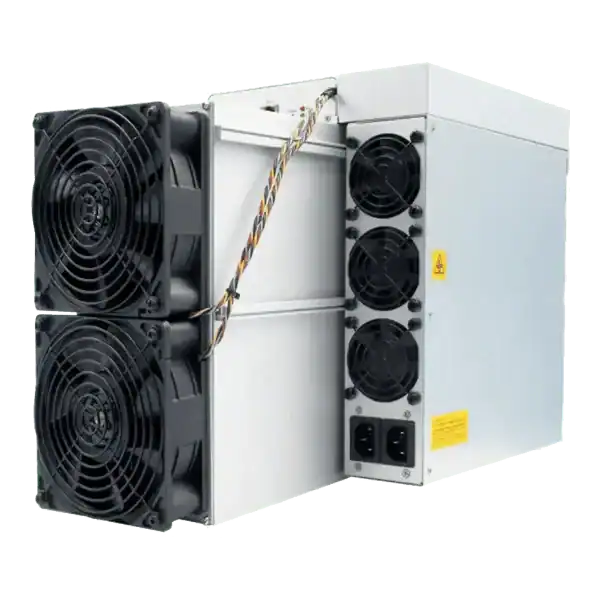
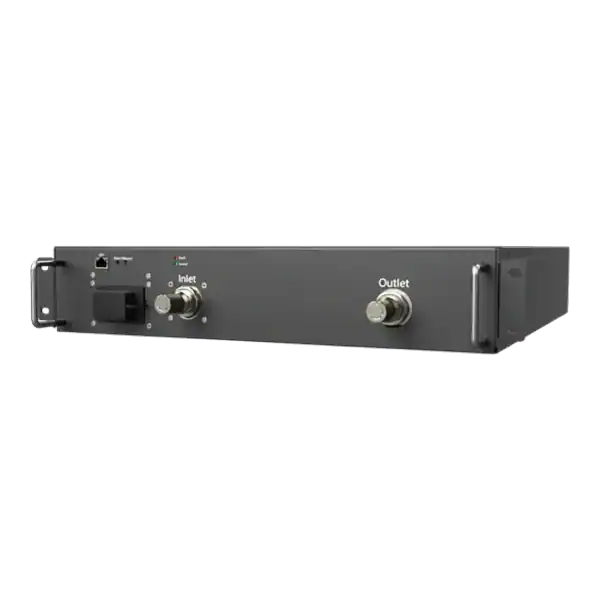

Bathhouse says it began a pool-heating mining pilot in 2022. Its technical explanation describes immersion-cooled ASICs, a dielectric-fluid circuit and heat exchangers that transfer heat into pool plumbing. The comparison is with its previous electric resistance heaters.
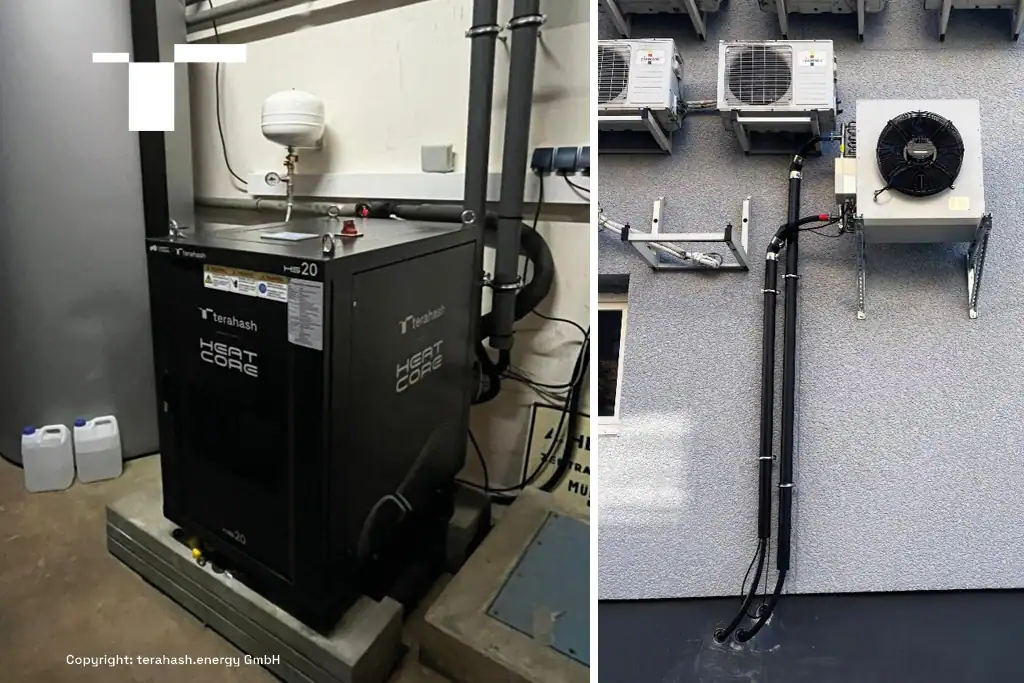
Terahash describes a commissioned system at Nebona’s spice factory: a Heatcore HS20 with two Whatsminer M63 units uses surplus rooftop solar power and supplies hot water to a buffer tank. The existing heating system remains available.

SunBit reports fitting a Bitcoin Boiler alongside the oil boiler in a 200 m² Kotka home. An outdoor unit rejects unwanted summer heat and allows additional use of solar surplus.

Join the ASIC Mining Discussion
Members can read and join the discussion
Log in to read comments from other miners. Create a free account if you would like to ask a question or share your experience.
Membership helps us protect the discussion from spam and keep answers useful.