
Pre-order
Overall ranking

Equihash
·
ZEC
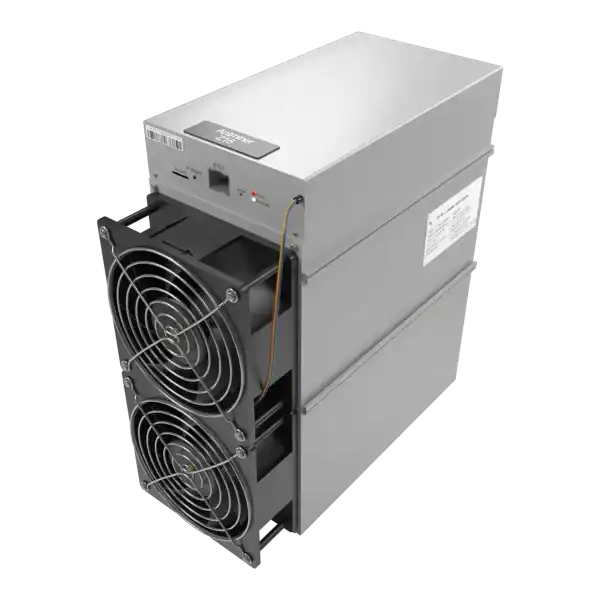
Overall rank#1of 100AvailableAll: #2 / 831

Pre-OrderFree Shipping
Hashrate
525KSOL
Efficiency
4.73W/KSOL
Power
2483W
Earns/kWh
42.2p
A Monero P2Pool node gives RandomX miners regular pool-style payouts without a central pool operator. Learn the income, privacy and security trade-offs.
A Monero P2Pool node gives RandomX miners regular pool-style payouts without a central pool operator. Learn the income, privacy and security trade-offs.
Monero P2Pool node: The setup has three main parts. Monerod validates the Monero chain and supplies block data. P2Pool builds and shares mining jobs through its peer network.
Imagine several neighbours buying lottery tickets together. A normal pool asks one person to hold the money and keep the records.
The setup has three main parts. Monerod validates the Monero chain and supplies block data. P2Pool builds and shares mining jobs through its peer network. XMRig or another compatible RandomX miner connects to the local P2Pool Stratum port and performs the actual hashing.
When P2Pool finds a Monero block, eligible shares in the P2Pool window receive outputs directly in the block reward. There is no central pool wallet holding a running account balance. This is why a Monero P2Pool node can reduce custody and shutdown risk compared with a conventional pool.
P2Pool does not create a separate node subsidy. Income comes from RandomX mining that contributes valid shares. A person who runs P2Pool without connecting meaningful hashrate should not expect ordinary passive payments simply for relaying the sharechain.
Payouts remain variable. The main P2Pool sidechain suits larger hashrate, while smaller sidechains can make share discovery more practical for modest miners. Smaller does not mean guaranteed. Short periods can be lucky or unlucky, and electricity remains due whether a payout arrives or not.

P2Pool can remove a conventional pool fee and avoids an unpaid balance controlled by a pool operator. It also lets the miner choose and verify the Monero node, wallet address and software. Those features can preserve more of the gross reward and reduce counterparty risk.
They do not make the CPU hash faster or change network difficulty. Extra administration, node electricity and downtime can offset the saved fee. Compare accepted hashrate and actual wallet receipts over a meaningful period rather than declaring success after one lucky block.
Monero protects transaction privacy, but P2Pool publishes mining wallet addresses in its share data. Official P2Pool guidance recommends a separate main wallet address used only for mining. Reusing a personal wallet address can link mining activity that the operator expected to keep separate.
Do not publish management ports, logs or screenshots containing wallet addresses and peer details. Keep wallet spending keys away from the mining servers. P2Pool needs a payout address, not the seed words that control the wallet.
Synchronise the system clock, keep Monero and P2Pool versions compatible and follow security releases promptly. Use a restricted operating-system account, a firewall and only the ports the chosen setup needs. Expose Stratum to the local mining network, not to the whole internet by accident.
Monitor monerod height, peer count, ZMQ connection, P2Pool peers, share rate, uncle shares and miner connections. P2Pool can fail over between Monero nodes, which is useful for a larger operation. Test failover and restart behaviour before relying on it during an outage.
A conventional pool is easiest and often offers smooth dashboards and payouts, but it controls the service and unpaid balance. Solo mining gives maximum independence but very uneven rewards. P2Pool aims for direct payouts and decentralisation while retaining pool-like sharing.
The best choice depends on hashrate, technical skill and tolerance for variance. A beginner can start with a conventional pool, learn to run monerod, then trial P2Pool on a small part of the fleet. Measure the change instead of moving every worker at once.
Write down what Monero P2Pool node is expected to achieve before buying coins, hardware or hosting. Separate direct protocol payments from possible savings, better privacy or improved mining control. Use current network figures, measure power at the wall and include every fee. A dated calculator is evidence for one decision, not a promise that the same result will continue.
Run a small trial first. Record setup time, uptime, accepted work, actual wallet receipts and every fault over several weeks. Test a lower coin price, a higher network difficulty or node count, a missed-payment period and a hardware failure. Do not commit capital that is needed for household bills, tax or existing mining electricity.
If the plan works only in the best case, it is not a reliable income plan.
Monero P2Pool node: The setup has three main parts. Monerod validates the Monero chain and supplies block data.
The setup has three main parts. Monerod validates the Monero chain and supplies block data.
P2Pool does not create a separate node subsidy. Income comes from RandomX mining that contributes valid shares.
P2Pool can remove a conventional pool fee and avoids an unpaid balance controlled by a pool operator.
P2Pool combines a local Monero node with a decentralised pool sidechain. It can provide smaller, more regular payouts than solo mining without giving a central pool control of unpaid funds. The Monero P2Pool node itself is not a passive-income box; payouts come from RandomX mining work connected to it.
Monero P2Pool went live on 5 October 2021, but that month already contains the agreed maximum of 15 articles. This article is dated 13 August 2022, the Monero v15/v16 network upgrade for which later P2Pool versions were required. The placement is historical and technically relevant, but it is not the first P2Pool launch date.
Node rules, collateral, rewards, software and network economics can change. Check the current official documentation and calculate costs before committing funds or equipment.
Salvium mining explained for beginners. Learn how RandomX CPU work, miner and staker reward shares, privacy features, tail emission and pool checks fit together.
Learn how Iron Fish FishHash pool node works, what it can earn, the costs and security checks, and how a Iron Fish node can support FishHash miners.
Understand Iron Fish FishHash mining after block 503,338, including hardware compatibility, pool evidence, wallet controls, power measurement and market risk.

Join the ASIC Mining Discussion
Members can read and join the discussion
Log in to read comments from other miners. Create a free account if you would like to ask a question or share your experience.
Membership helps us protect the discussion from spam and keep answers useful.