Monero Mining Hardware: Why RandomX Favours CPUs explains where Monero fits in proof of work, what hardware is relevant and which facts must be checked before committing power or equipment.
TL;DR
Monero Mining Hardware: Why RandomX Favours CPUs explains where Monero fits in proof of work, what hardware is relevant and which facts must be checked before committing power or equipment.
- Confirm the current Monero consensus rules and active mining algorithm before choosing hardware.
- RandomX compatibility does not by itself prove that a network has useful liquidity, pool support or sustainable demand.
- Use current pool, wallet, exchange and network documentation because smaller projects can change or become inactive.
- Treat revenue estimates as a comparison only and include electricity, fees, downtime and hardware resale risk.

Background and purpose
Let’s start with the obvious question that’s probably ricocheting around your brain like a confused cryptocurrency: what exactly is Monero, and why should anyone care about yet another digital currency when we already have more coins than there are flavors of energy drinks at your local gas station?
The significant concept about Monero lies in its use of advanced cryptographic techniques that make transactions completely untraceable and unlinkable. Unlike Bitcoin, where curious onlookers can follow the money trail from address to address like digital breadcrumbs, Monero transactions disappear into a cryptographic fog that would make even the most determined blockchain detective throw up their hands in frustration.
What makes the technical approach about Monero particularly impressive is its use of ring signatures, stealth addresses, and RingCT (Ring Confidential Transactions) to create what cryptographers call “perfect fungibility.” This means that every Monero coin is identical and interchangeable, unlike Bitcoin where coins can become “tainted” by their transaction history and potentially rejected by exchanges or services.
The philosophical foundation about Monero reflects a commitment to financial privacy as a fundamental human right rather than a luxury for the privacy-conscious few. The project emerged from the understanding that true financial freedom requires the ability to transact without surveillance, censorship, or discrimination based on how you’ve earned or spent your money in the past.
The community ethos about Monero prioritizes decentralization, privacy, and fungibility over marketing hype and speculative trading. This focus on substance over style has created a cryptocurrency that’s genuinely useful for people who need financial privacy, rather than just another vehicle for get-rich-quick schemes and social media influencer endorsements.
RandomX: The Algorithm That Changed Everything
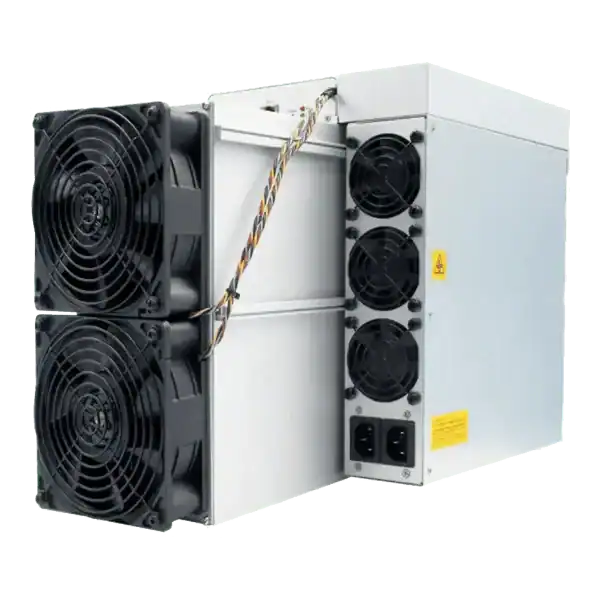
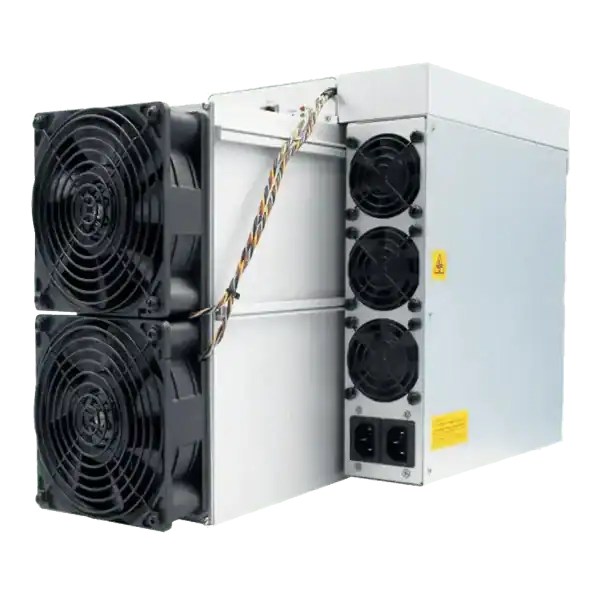
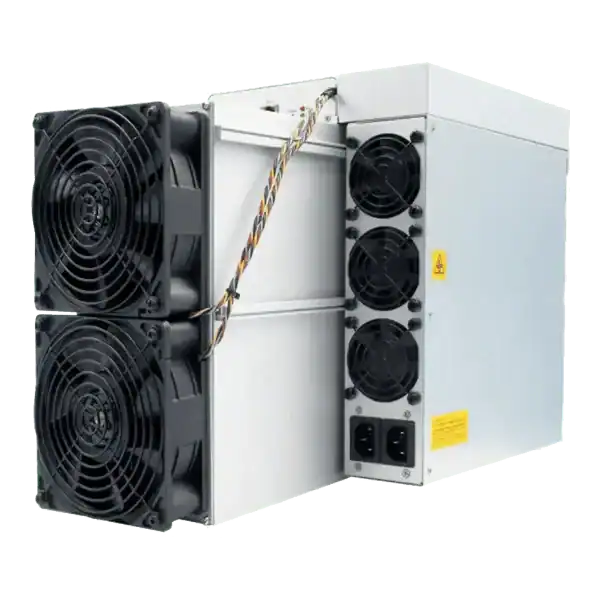
The genius behind RandomX about Monero lies in its design philosophy: create an algorithm that performs best on the hardware that regular people already own, namely, CPUs. Unlike algorithms that favor expensive graphics cards or specialised ASIC miners, RandomX was engineered to level the playing field and make mining genuinely accessible to anyone with a decent computer.
The technical implementation about Monero’s RandomX algorithm requires substantial amounts of RAM (ideally 2GB or more) and benefits from CPUs with good single-thread performance. This memory-intensive approach creates natural barriers against both ASIC miners and botnets, as infected computers running mining software would quickly become noticeably slow and resource-hungry.
The evolution story about Monero’s mining algorithms reveals the project’s commitment to maintaining decentralized mining. Before RandomX, Monero used various iterations of the CryptoNight algorithm, periodically implementing hard forks to stay ahead of ASIC development. However, this cat-and-mouse game became unsustainable, leading to the development of RandomX as a more permanent solution.
The performance characteristics about Monero’s RandomX algorithm favor modern CPUs from both Intel and AMD, with post-2011 processors generally providing good mining performance. The algorithm includes two modes: Fast mode (requiring 2GB RAM) for optimal performance, and Light mode (requiring 256MB RAM) for validation nodes and resource-constrained systems.
The CryptoNight Legacy: Understanding Monero's Evolution
The original design philosophy about Monero’s use of CryptoNight centred on creating ASIC-resistant mining that remained accessible to GPU miners while still being somewhat CPU-friendly. CryptoNight achieved this through memory-hard computations that required frequent memory access patterns, making it expensive and difficult to implement efficiently in specialised hardware.
What made CryptoNight interesting about Monero’s early mining ecosystem was its focus on egalitarian proof-of-work, ensuring that mining remained distributed among many participants rather than concentrated in large industrial operations. The algorithm’s design incorporated a scratchpad that matched the L3 cache size of contemporary CPUs, creating natural optimization for consumer hardware.
The ongoing battle about Monero’s commitment to ASIC resistance led to multiple CryptoNight variants, including CryptoNight v7, CryptoNight v8, and CryptoNight-R. Each iteration represented an arms race against ASIC manufacturers who continually developed new hardware to exploit the previous algorithm versions.
The limitation discovered about Monero’s CryptoNight approach was that it required constant vigilance and regular hard forks to maintain ASIC resistance. This created network disruption and required users to frequently update their software, leading the development team to seek a more sustainable long-term solution.
The transition period about Monero’s move from CryptoNight to RandomX highlighted the project’s dedication to its core principles. Rather than accepting ASIC dominance as inevitable, the team invested significant resources in developing a fundamentally different approach to proof-of-work mining.
Mining Setup: From Zero to Hero
Getting started with mining about Monero is surprisingly straightforward, especially compared to the complex setups required for other cryptocurrencies. The RandomX algorithm’s CPU-friendly design means that most people can begin mining using hardware they already own, without needing specialised equipment or significant upfront investments.
Popular mining software about Monero includes XMRig, XMR-Stak-RX, and SRBMiner-Multi, all of which support RandomX mining across Windows, Linux, and macOS platforms. These miners are well-documented and include built-in optimization features that automatically detect and configure optimal settings for different CPU types.
The pool selection process about Monero mining offers numerous options with different fee structures, payout schemes, and geographical locations. Major pools include SupportXMR, MineXMR, and Nanopool, each offering different minimum payout thresholds and payment frequencies to accommodate various mining preferences.
Solo mining considerations about Monero remain viable for miners with substantial hashrates, thanks to the RandomX algorithm’s more predictable difficulty adjustments. While pool mining provides more consistent rewards, solo miners can potentially earn larger payouts when they successfully find blocks, though with less frequency.
Performance optimization about Monero mining involves several factors including proper cooling, memory configuration, and CPU affinity settings. Many miners find that slightly underclocking their CPUs while optimising memory timings can provide better hashrates per watt, improving overall profitability.
Technical design
The privacy implementation about Monero represents some of the most advanced cryptographic techniques deployed in any cryptocurrency. Understanding these technologies helps explain why Monero is considered the gold standard for financial privacy in the digital asset space.
Stealth addresses provide recipient privacy about Monero transactions by generating unique, one-time addresses for each payment. When someone sends you XMR, they’re not sending it to your public address, they’re creating a unique address derived from your public key that only you can detect and spend from.
RingCT (Ring Confidential Transactions) hides the transaction amounts about Monero transfers, ensuring that observers can’t determine how much money is being sent. This technology uses cryptographic commitments to prove that inputs equal outputs without revealing the actual amounts involved.
The fungibility achieved about Monero through these combined privacy technologies means that all XMR coins are identical and interchangeable. Unlike Bitcoin, where coins can be blacklisted or rejected based on their transaction history, every Monero coin has equal value and acceptance.
The anonymity provided about Monero extends beyond just hiding transaction details to protecting user metadata and behavioral patterns. The combination of multiple privacy technologies creates comprehensive protection against various forms of blockchain analysis and surveillance techniques.
Real-World Applications and Use Cases
The practical utility about Monero extends far beyond theoretical privacy benefits to include real-world applications where financial confidentiality is essential. These use cases demonstrate why privacy-focused cryptocurrencies serve important functions in the digital economy.
Legitimate business applications about Monero include companies that need to protect sensitive financial information from competitors, suppliers, or customers. Traditional payment methods often reveal detailed transaction patterns that can compromise business strategies or competitive advantages.
Personal financial privacy about Monero protects individuals from various forms of discrimination, surveillance, and targeting based on their spending patterns. In an era where financial data is routinely collected, analyzed, and sold, having truly private payment options becomes increasingly valuable.
International commerce benefits about Monero include the ability to conduct cross-border transactions without revealing sensitive financial information to intermediaries, governments, or other parties who might use that information for inappropriate purposes.
Humanitarian organizations find value about Monero when operating in regions where financial surveillance could endanger their work or the people they serve. The ability to move funds without creating traceable records can be crucial for organizations working in politically sensitive environments.
Investment diversification about Monero appeals to individuals who want to maintain some financial privacy in their cryptocurrency holdings. While not everyone needs maximum privacy for every transaction, having options for private value storage and transfer provides important financial flexibility.
Network Security and Decentralization
The security model about Monero benefits from the RandomX algorithm’s resistance to centralized mining operations. By maintaining mining accessibility for individual participants, the network achieves better geographic and economic distribution of mining power.
Decentralization metrics about Monero consistently show healthier distribution compared to cryptocurrencies dominated by large mining pools or ASIC farms. The CPU-friendly mining algorithm ensures that mining remains accessible to participants worldwide without requiring significant capital investments.
Network resilience about Monero is enhanced by having thousands of individual miners rather than a few large operations. This distribution makes the network more resistant to both technical failures and regulatory pressure that might affect concentrated mining operations.
The hash rate distribution about Monero reflects the success of RandomX in maintaining decentralized mining. Unlike Bitcoin, where a few large pools control most of the network, Monero maintains a more distributed mining landscape with numerous smaller participants.
Attack resistance about Monero benefits from both the decentralized mining and the privacy features that make it difficult for attackers to analyze network activity or identify high-value targets. The combination of technical and economic barriers creates multiple layers of security.
Market Position and Adoption
The market dynamics about Monero reflect its position as the leading privacy-focused cryptocurrency, with consistent demand from users who prioritize financial confidentiality over speculative trading opportunities. This creates different market characteristics compared to purely speculative cryptocurrencies.
Institutional interest about Monero remains limited due to regulatory concerns and compliance requirements, but this also means that the cryptocurrency maintains its focus on individual users and privacy applications rather than becoming another institutional investment vehicle.
Regulatory challenges about Monero have led to delistings from some exchanges, but this has also strengthened the project’s commitment to privacy and demonstrated the importance of truly decentralized exchanges and peer-to-peer trading options.
Developer activity about Monero remains consistently high, with regular updates, security improvements, and new privacy features. The project’s focus on technical excellence rather than marketing creates sustained development momentum.
Community growth about Monero continues through word-of-mouth recommendations and practical adoption rather than social media hype. This organic growth pattern creates a more stable user base focused on actual utility rather than speculative trading.
Current status and outlook
The development roadmap about Monero continues to focus on improving privacy, scalability, and usability while maintaining the core principles of fungibility and decentralization. Planned improvements include enhanced mobile wallets, improved synchronization speeds, and additional privacy features.
Research initiatives about Monero include ongoing work on next-generation privacy technologies, scalability solutions, and user experience improvements. The Monero Research Lab continues to publish papers and develop new cryptographic techniques that benefit the entire privacy cryptocurrency ecosystem.
Scalability improvements about Monero address transaction size and verification speed without compromising privacy features. Recent developments include bulletproofs+ implementation and ongoing research into more efficient privacy-preserving transaction formats.
Mobile accessibility about Monero continues to improve with better wallet applications and simplified user interfaces that make privacy-focused cryptocurrency more accessible to non-technical users while maintaining security and privacy standards.
Integration opportunities about Monero include partnerships with privacy-focused services, merchant adoption for privacy-conscious businesses, and development of privacy-preserving financial applications that leverage Monero’s unique capabilities.
Practical conclusion
As we conclude this comprehensive exploration of Monero, it’s clear that this cryptocurrency represents something genuinely important in the digital asset space, a working implementation of financial privacy that goes beyond marketing claims to provide real protection for users’ financial information.
The mining opportunities about Monero offer accessible entry points for individuals who want to participate in cryptocurrency mining without massive hardware investments. The RandomX algorithm ensures that mining remains distributed and accessible while providing competitive returns for efficient operations.
For users who value financial privacy, the features about Monero provide unparalleled protection against surveillance, analysis, and discrimination based on spending patterns. In an era of increasing financial surveillance, having access to truly private payment options becomes increasingly valuable.
The technical innovations about Monero, particularly RandomX mining and advanced privacy technologies, demonstrate how cryptocurrency projects can prioritize user needs and fundamental rights over speculative trading or institutional adoption metrics.
Whether Monero continues to grow and evolve will depend on continued development, user education, and broader recognition of financial privacy as a fundamental right rather than a luxury for the privacy-conscious few.
The lessons about Monero’s approach to cryptocurrency development, prioritizing privacy, decentralization, and user empowerment over marketing hype and institutional adoption, offer valuable insights for the broader cryptocurrency ecosystem.
Sometimes the most important innovations are the ones that protect fundamental rights and freedoms rather than promising significant returns or disrupting entire industries. In a world where financial privacy is under constant attack, projects like Monero provide essential tools for maintaining economic freedom and personal autonomy.
What to verify before acting
Mining networks, pool support, firmware, exchange access and hardware availability can change. Verify the current network documentation, test with a small controlled configuration and do not rely on a historical profitability figure when purchasing equipment.
Useful next steps
Authoritative references
Check current official documentation alongside this article because network rules, product ranges and legal guidance can change.