

Antminer Z15 Pro
Zcash & Horizen ASIC Miner
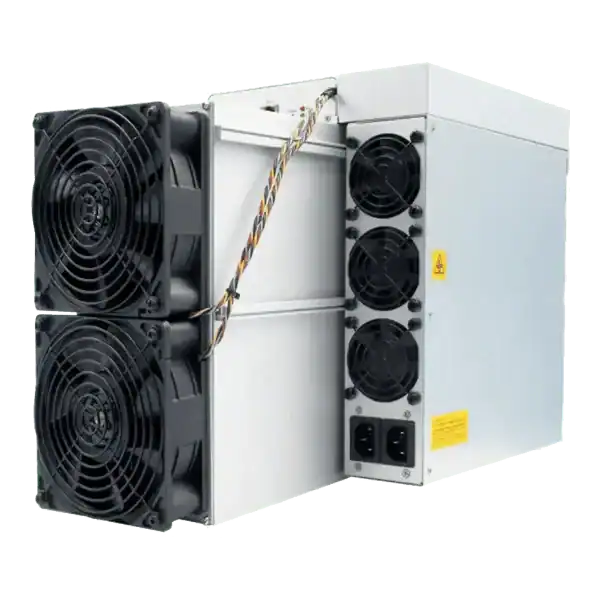

860KSOL
HASHRATE
3.3W/KSOL
EFFICIENCY
2838W
POWER
£1417.20
EST. MONTHLY
9
Months
EST. ROI
Monero Network and Privacy made simple. See the main facts, costs, risks and practical checks before you make a decision.

Monero network and privacy: What Miners Should Know explains where Monero fits in proof of work, what hardware is relevant and which facts must be checked.
Monero Network and Privacy: What Miners Should Know explains where Monero fits in proof of work, what hardware is relevant and which facts must be checked before committing power or equipment.
Monero network and privacy: The economic model about Monero includes a unique feature called "tail emission" that ensures miners will always have incentives to secure the network.
A miner is checking Monero network and privacy. As blockchain analysis companies developed increasingly sophisticated tracking methods, it became clear that Bitcoin transactions could be traced, analysed, and connected to real-world identities.

Enter a mysterious figure known as “thankful_for_today” who forked a cryptocurrency called Bytecoin to create something called BitMonero. This was later shortened to Monero (meaning “money” in Esperanto, because apparently even cryptocurrency creators have their pretentious moments). The early development about Monero was taken over by a community of developers who shared a vision of true financial privacy, not just pseudonymity.
The philosophical foundation about Monero reflects a deep understanding of the difference between privacy and secrecy. While Bitcoin operates on the principle of transparency and auditability, Monero operates on the principle that financial privacy is essential for personal safety, business confidentiality, and basic human dignity. It’s the difference between living in a glass house and living in a home with curtains.
What makes the creation story about Monero particularly interesting is how it emerged from the realization that Bitcoin’s “anonymous” reputation was largely a myth. As blockchain analysis companies developed increasingly sophisticated tracking methods, it became clear that Bitcoin transactions could be traced, analysed, and connected to real-world identities. Monero was created to solve this fundamental privacy problem.
When developers discuss about Monero, they inevitably focus on its mining algorithm evolution, culminating in RandomX, one of the most sophisticated mining algorithms ever created. Unlike Bitcoin’s SHA-256 or Litecoin’s Scrypt, RandomX was designed from the ground up to be ASIC-resistant and CPU-friendly, ensuring that ordinary people can participate in mining using regular computers.
The technical complexity about Monero’s RandomX algorithm includes memory-hard functions, random code execution, and various other features that make it extremely difficult to optimise with specialised hardware. The algorithm generates random programs and executes them, making it nearly impossible to create efficient ASICs because the computational requirements change unpredictably.
Mining accessibility about Monero means that anyone with a modern CPU can participate profitably, maintaining the decentralised ethos that many other cryptocurrencies have lost to industrial mining operations. This democratic approach to mining ensures that the network remains distributed across thousands of individual miners rather than concentrated in large mining farms.
The technical foundation about Monero is based on the CryptoNote protocol. This was designed specifically for privacy-focused cryptocurrencies. Unlike Bitcoin. This added privacy features as afterthoughts, Monero was built from the ground up with privacy as its core design principle. Every aspect of the protocol prioritizes privacy while maintaining the security and functionality expected from a cryptocurrency.
The blockchain structure about Monero differs significantly from Bitcoin’s transparent model. Instead of a ledger where all transactions are publicly visible, Monero’s blockchain contains encrypted transaction data that only the participants can decrypt. Outside observers see transaction activity but cannot determine senders, receivers, or amounts.
Consensus mechanisms about Monero use proof-of-work like Bitcoin. But with mining algorithms designed to maintain decentralisation. The network adjusts mining difficulty every block (rather than every 2016 blocks like Bitcoin), allowing for more responsive difficulty adjustments and smoother mining rewards.
Network security about Monero benefits from its privacy features, as the difficulty of analysing transaction patterns makes certain types of attacks more challenging. However, this privacy comes with trade-offs in terms of transaction size and verification time compared to transparent cryptocurrencies.
Government perspectives about Monero are predictably complicated, ranging from cautious acceptance to outright hostility. The cryptocurrency’s privacy features make it difficult for authorities to track transactions for tax compliance, anti-money laundering efforts, or criminal investigations. This has led to a complex regulatory landscape where some countries embrace privacy coins while others ban them entirely.
Law enforcement challenges about Monero have led to some exchanges delisting the cryptocurrency to avoid regulatory scrutiny. The irony is that Monero’s privacy features. This protect legitimate users from surveillance and financial tracking, also make it attractive to those with less legitimate intentions.
The compliance debate about Monero highlights fundamental questions about financial privacy rights versus regulatory oversight. Supporters argue that privacy is a basic human right and that law-abiding citizens shouldn’t have to sacrifice privacy for compliance. Critics worry that complete transaction privacy makes it impossible to prevent money laundering and other financial crimes.
Exchange policies about Monero vary significantly, with some platforms embracing privacy coins and others avoiding them to maintain regulatory relationships. This fragmented adoption has created challenges for users while also demonstrating the importance of decentralised exchanges and peer-to-peer trading.
The mining history about Monero reads like a game of cat and mouse between developers and ASIC manufacturers. Unlike most cryptocurrencies that eventually succumb to specialised mining hardware, Monero has successfully maintained CPU-friendly mining through multiple algorithm changes designed to thwart ASIC development.
Early mining about Monero used the CryptoNight algorithm. This was initially effective at preventing ASIC mining. However, as CryptoNight ASICs eventually appeared, the Monero community made the controversial decision to hard fork and change the algorithm to maintain mining accessibility for ordinary users.
The algorithm evolution about Monero included several variants of CryptoNight before ultimately transitioning to RandomX in 2019. Each change was designed to “brick” existing ASIC miners while maintaining compatibility with CPU and GPU mining. This aggressive anti-ASIC stance has kept Monero mining more decentralised than most major cryptocurrencies.
Mining profitability about Monero for home miners has remained viable due to the CPU-friendly algorithm design. While you won’t get rich mining Monero on your laptop, you can earn enough to cover electricity costs and maybe buy a pizza occasionally. This accessibility has helped maintain a large, distributed network of miners worldwide.
Privacy effectiveness about Monero depends partly on the size of its anonymity set, the number of possible senders and receivers that could be involved in any given transaction. The larger this set, the more difficult it becomes to perform statistical analysis or make educated guesses about transaction participants.
Ring size about Monero has increased over time, with current transactions mixing with 15 other possible senders by default. This creates reasonable privacy while keeping transaction sizes manageable. The ring size represents a balance between privacy, blockchain bloat, and computational requirements.
Statistical analysis resistance about Monero has been tested by researchers and blockchain analysis companies with mixed results. While complete transaction tracking is extremely difficult, some statistical attacks can potentially reduce privacy in certain circumstances, leading to ongoing improvements in the protocol.
Merchant adoption about Monero has been more limited compared to transparent cryptocurrencies, partly due to regulatory concerns and partly due to the technical challenges of implementing privacy-focused payment systems. However, privacy-conscious businesses and people continue to embrace Monero for legitimate transactions where financial privacy is important.
The use cases about Monero extend beyond illicit activities to include legitimate privacy needs such as protecting business transactions from competitors, preventing personal financial information from being tracked, and maintaining privacy in politically sensitive regions. These legitimate use cases show the value of financial privacy for law-abiding citizens.
Payment processing about Monero requires specialised solutions that can handle the unique aspects of private transactions. Unlike Bitcoin payments where merchants can easily verify transaction details on public block explorers, Monero payments require different approaches to transaction verification and accounting.
Wallet software about Monero has evolved to provide user-friendly interfaces while maintaining the privacy features that make the cryptocurrency valuable. Modern Monero wallets handle the complex cryptographic operations automatically while providing simple interfaces for sending and receiving private transactions.

Transaction sizes about Monero are significantly larger than Bitcoin transactions due to the extra cryptographic data required for privacy features. A typical Monero transaction is roughly 8 times larger than a comparable Bitcoin transaction. This affects blockchain storage requirements and synchronization times.
Verification complexity about Monero means that validating transactions requires more computational resources than transparent cryptocurrencies. The privacy features add cryptographic overhead that makes transaction verification slower and more resource-intensive, though still practical for modern hardware.
Scalability considerations about Monero include managing blockchain growth while maintaining privacy features. The larger transaction sizes and complex verification requirements create unique scaling challenges that must be addressed without compromising privacy or decentralisation.
Performance optimisation about Monero continues through ongoing development efforts to improve efficiency while maintaining privacy guarantees. Recent upgrades have reduced transaction sizes and improved verification speeds, demonstrating that privacy and efficiency can coexist with careful engineering.
The economic model about Monero includes a unique feature called “tail emission” that ensures miners will always have incentives to secure the network. Unlike Bitcoin. This will eventually rely entirely on transaction fees for mining rewards, Monero will continue producing new coins indefinitely at a low, fixed rate.
Mining sustainability about Monero addresses the long-term security question that faces cryptocurrencies with capped supplies. When Bitcoin’s mining rewards eventually drop to zero, network security will depend entirely on transaction fees. Monero’s tail emission ensures that miners will always receive block rewards, providing predictable security incentives.
Inflation dynamics about Monero stabilize at about 0.6% annually once tail emission begins, creating mild inflation that encourages spending rather than hoarding. This economic model aligns with Monero’s goal of being a practical currency rather than just a store of value.
Economic philosophy about Monero reflects a belief that slight inflation is preferable to the deflationary economics of fixed-supply cryptocurrencies. The predictable, low inflation rate maintains scarcity while ensuring long-term network sustainability.
The governance approach about Monero emphasizes community consensus and gradual improvements rather than dramatic changes or contentious hard forks. The development community has consistently prioritized privacy enhancements and ASIC resistance over features that might compromise the cryptocurrency’s core values.
Research initiatives about Monero include ongoing collaboration with academic institutions and privacy researchers to develop new cryptographic techniques and improve existing privacy features. The project has funded significant research into advanced privacy technologies that benefit the entire cryptocurrency ecosystem.
Code review processes about Monero involve extensive peer review and testing due to the complex cryptographic operations involved. Privacy features require careful implementation to avoid vulnerabilities that could compromise user anonymity or create security risks.
Open source development about Monero has attracted contributions from privacy advocates, cryptographers, and software developers worldwide. The transparent development process ensures that privacy features are implemented correctly and that the code can be audited by security experts.
Innovation trajectories about Monero continue to focus on improving privacy, efficiency, and usability. Upcoming developments include further transaction size reductions, improved wallet software, and potential integration with other privacy technologies like Tor and I2P.
Adoption challenges about Monero include regulatory pressure, exchange delistings, and the general preference for compliance-friendly cryptocurrencies among institutional users. However, growing awareness of financial privacy rights continues to drive interest in privacy-focused cryptocurrencies.
Technology evolution about Monero may include integration with layer-two solutions, atomic swaps with other cryptocurrencies, and improved mobile wallet experiences. The goal is to make privacy-focused transactions as user-friendly as transparent cryptocurrency payments.
Long-term viability about Monero depends on balancing privacy features with practical usability and regulatory acceptance. The cryptocurrency must continue evolving to meet user needs while maintaining the privacy guarantees that define its value proposition.
The philosophical questions about Monero extend beyond technology to fundamental questions about financial systems and personal rights. In a field of increasing digital surveillance, does financial privacy represent a legitimate need or a barrier to law enforcement and tax collection?
Social implications about Monero include both positive and negative potential impacts. Privacy can protect vulnerable populations, enable free speech, and preserve personal dignity. However, complete financial privacy can also help tax evasion, money laundering, and other illegal activities.
The balance between privacy and accountability about Monero reflects broader societal tensions about surveillance, freedom, and security. Different communities and jurisdictions will likely reach different conclusions about the appropriate balance between these competing values.
Educational efforts about Monero focus on explaining the legitimate uses for financial privacy and dispelling misconceptions about privacy-focused cryptocurrencies. The goal is to promote understanding of privacy technology rather than just its association with illicit activities.
The enduring appeal about Monero lies in its uncompromising approach to financial privacy in an increasingly transparent digital world. While other cryptocurrencies treat privacy as an optional feature, Monero makes it fundamental to every transaction.
Whether Monero succeeds long-term depends on society’s evolving views about financial privacy, regulatory developments, and the cryptocurrency’s ability to maintain its privacy guarantees while improving usability. The technology clearly works. The question is whether the world wants what Monero offers.
The investment considerations about Monero include both technological risks and regulatory uncertainties. Privacy features create unique value propositions but also unique challenges in terms of adoption and compliance.
The legacy about Monero may be less about its specific market success and more about demonstrating that true financial privacy is technically possible in the digital age. Whether that capability remains available to ordinary users depends on ongoing development, community support, and societal choices about the role of privacy in financial systems.
Interested in exploring financial privacy? Remember that cryptocurrency regulations vary by jurisdiction, privacy tools should be used responsibly, and you should always understand the legal implications of your financial choices. Privacy is a right. But with rights come responsibilities.
Mining networks, pool support, firmware, exchange access and hardware availability can change. Verify the current network documentation, test with a small controlled configuration and do not rely on a historical profitability figure when purchasing equipment.
Monero network and privacy: The economic model about Monero includes a unique feature called "tail emission" that ensures miners will always have incentives to secure the network.
Enter a mysterious figure known as "thankful_for_today" who forked a cryptocurrency called Bytecoin to create something called BitMonero.
When developers discuss about Monero, they inevitably focus on its mining algorithm evolution, culminating in RandomX, one of the most sophisticated mining algorithms ever created.
The technical foundation about Monero is based on the CryptoNote protocol. This was designed specifically for privacy-focused cryptocurrencies.
Confirm the current Monero consensus rules and active mining algorithm before choosing hardware. RandomX compatibility does not by itself prove that a network has useful liquidity, pool support or sustainable demand.
For Monero network and privacy, check current official guidance and retain the evidence used for the decision. Check current official documentation alongside this article because network rules, product ranges and legal guidance can change.

Salvium mining explained for beginners. Learn how RandomX CPU work, miner and staker reward shares, privacy features, tail emission and pool checks fit together.

Learn how Iron Fish FishHash pool node works, what it can earn, the costs and security checks, and how a Iron Fish node can support FishHash miners.

Understand Iron Fish FishHash mining after block 503,338, including hardware compatibility, pool evidence, wallet controls, power measurement and market risk.
Join the ASIC Mining Discussion
Members can read and join the discussion
Log in to read comments from other miners. Create a free account if you would like to ask a question or share your experience.
Membership helps us protect the discussion from spam and keep answers useful.