

Sealminer A4 Ultra Hydro
Bitcoin & Bitcoin Cash ASIC Miner
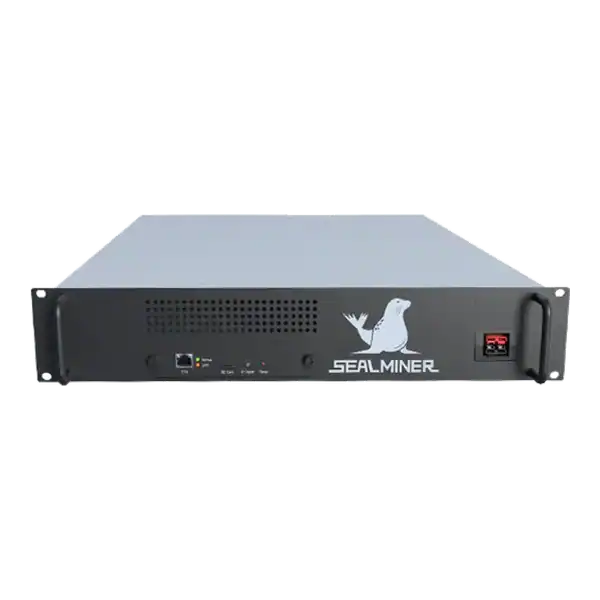

886TH
HASHRATE
9.45W/TH
EFFICIENCY
8373W
POWER
£854.90
EST. MONTHLY
NO PAYBACK
EST. ROI
Trace the Kaspa ASIC transition from GPU mining to industrial KHeavyHash hardware, including efficiency, difficulty, firmware, electrical and resale risks.

Trace the Kaspa ASIC transition from GPU mining to industrial KHeavyHash hardware, including efficiency, difficulty, firmware, electrical and resale risks.
Kaspa’s KHeavyHash network was initially accessible to CPUs and then GPUs. But specialised hardware changed the efficiency frontier rapidly in 2023. A GPU can move among several compatible workloads and has a broad resale market. But it carries general-purpose circuitry and memory overhead.
When efficient ASIC fleets enter a proof-of-work network, total hashrate and difficulty can rise until weaker equipment earns less per unit of electricity. The KS3 specification calls for 200 to 240 volt input and about 3.5 kilowatts at stated conditions, with two input paths and environmental limits.
Kaspa ASIC transition: Kaspa's KHeavyHash network was initially accessible to CPUs and then GPUs. But specialised hardware changed the efficiency frontier rapidly in 2023.
A miner is checking Kaspa ASIC transition. If those facts are unknown, the operator cannot show which rules were actually applied before electricity was committed to the work.
Kaspa’s KHeavyHash network was initially accessible to CPUs and then GPUs. But specialised hardware changed the efficiency frontier rapidly in 2023. The publication of an industrial KS3 specification provides a verifiable milestone: 9.4 TH/s, about 3,500 watts and high-voltage continuous-power requirements. This article uses that dated evidence to examine the operational transition rather than repeating a general KHeavyHash algorithm guide.
Start with the validating node, because the ASIC only hashes the candidate header it receives. Record the node release and the pool component that assembled the block. If those facts are unknown, the operator cannot show which rules were actually applied before electricity was committed to the work.
A GPU can move among several compatible workloads and has a broad resale market. But it carries general-purpose circuitry and memory overhead. A KHeavyHash ASIC concentrates silicon, firmware and cooling around one proof-of-work family, delivering far more hashes per watt at the cost of flexibility.
Compare wall power and accepted pool work, not vendor hashrate alone, because rejected shares and auxiliary cooling reduce delivered efficiency.
Treat status dashboards as observations, not as the source of truth. Compare them with an independently operated node and retain the raw deployment or template response. Period boundaries, chain reorganisations and cached pool pages can otherwise make a correct-looking percentage describe the wrong state.
When efficient ASIC fleets enter a proof-of-work network, total hashrate and difficulty can rise until weaker equipment earns less per unit of electricity. The timing is uneven: shipments, firmware stability, pool support and power availability all constrain deployment. A historical profitability screenshot cannot establish today’s return. Model several difficulty paths alongside Kaspa’s changing emission schedule, fees, downtime and actual tariff.

Build the failure response before the boundary arrives. Define which rejection messages trigger an alert, who can pause a template source and how failover is prevented from returning miners to the same faulty validation stack. A second hostname is not independent when both endpoints share one node.
The KS3 specification calls for 200 to 240 volt input and about 3.5 kilowatts at stated conditions, with two input paths and environmental limits. That is industrial continuous load, not a desktop GPU substitution. A competent person must verify circuit capacity, protective devices, connectors, earthing and isolation. Ducting must move the full heat output without recirculation, excessive resistance or unsafe noise exposure.
Separate readiness, signalling and enforcement in the operating log. Readiness is a claim about software and process, signalling is data carried by blocks, and enforcement is a validation result. Combining them into a single supported or unsupported label hides the point at which revenue is actually at risk.
Use only firmware for the exact model and verify the official checksum or release route. Change supplied credentials, isolate management interfaces and configure approved pool endpoints. Compare local hashboard output with accepted KHeavyHash shares over a representative period. A pool outage, obsolete Stratum implementation or incorrect payout address can erase revenue while the miner still appears healthy on its local dashboard.
Map responsibility across the full path: validating node, template server, pool protocol, proxy, firmware and ASIC. For each layer, state what it can alter and what it merely relays. This prevents a version-bit setting in firmware from being mistaken for complete consensus-rule support. Relate that responsibility map to the pool and job-control boundary in our Stratum V2 guide.
A KHeavyHash ASIC cannot become a SHA-256, Scrypt or general GPU miner through firmware. Its residual value therefore depends on compatible networks, pool access, power economics and buyer demand. Apply a conservative resale value and test the loss of the primary coin or settlement route. Avoid assuming list price equals completed-sale value, especially when network difficulty is rising quickly.
Test the primary and failover paths with the same checks. Compare chain tip, chainwork, deployment state, required rules and template age, then save the result with a timestamp. The process should be repeatable by another operator without relying on an undocumented pool conversation.
Photograph serials and condition, record original firmware, verify the supply and airflow plan, then commission the smallest practical batch. Capture wall power, inlet and outlet temperature, fan speed, local hashrate, accepted work and pool reconnects. Set stop conditions for thermal errors, excessive rejects, unsafe connectors or contribution below the approved threshold. The ASIC transition rewards disciplined measurement, not retrospective peak-revenue comparisons.
Turn the conclusion into a business decision. State which chain and settlement venues the operation intends to serve, the maximum acceptable stale-block exposure and the point at which mining pauses. This connects protocol evidence to electricity cost, pool revenue and payout finality.
A concise decision record for Kaspa ASIC transition should name the source documents, their dates, the node release tested, the responsible pool or template provider and the exact trigger for action. Include screenshots or machine-readable output for the deployment state. But keep the raw node response as the stronger evidence.
State whether a change affects policy, block construction or consensus validity, because those layers have different failure costs.
Run the check on every production and failover path. Confirm that monitoring alerts on stale templates, unexpected chain tips, rejected proposals and a rise in stale shares. Keep rollback instructions for node and pool configuration. But do not roll back across an active consensus boundary without understanding the rules the older release enforces.
If the evidence conflicts, pause the affected path and investigate before committing more electricity to uncertain work.
For related background, read our plain-English BIP-110 guide and technical BIP-110 review. Those articles use a modern proposal to show why signalling, activation, template construction and accepted chain history must be examined separately.
Kaspa asic transition is best understood as a defined interaction between validating software, mining infrastructure and economic acceptance. The safest operator does not infer consensus from a dashboard percentage or a pool slogan. They verify the rule source, the activation boundary, the template fields and the chain their payouts ultimately settle on. That discipline reduces the chance of hashing an invalid or commercially unwanted block.
Kaspa ASIC transition: Kaspa's KHeavyHash network was initially accessible to CPUs and then GPUs. But specialised hardware changed the efficiency frontier rapidly in 2023.
Kaspa's KHeavyHash network was initially accessible to CPUs and then GPUs. But specialised hardware changed the efficiency frontier rapidly in 2023.
A GPU can move among several compatible workloads and has a broad resale market.
When efficient ASIC fleets enter a proof-of-work network, total hashrate and difficulty can rise until weaker equipment earns less per unit of electricity.
Primary specifications are living technical records. Check their current status and changelog before using this article for a production activation decision.


Xaya Core mining ended after the legacy chain was deprecated. Learn what happened to CHI, how the WCHI snapshot works and why old mining guides are obsolete.

QRL mining explained for beginners. Learn how RandomX favours CPUs, how solo and pool mining differ, and why XMSS wallet use needs careful planning.

Nockchain mining explained in simple English. Learn what zero-knowledge proof of work means, how the fair launch works and why miners should test carefully.
Join the ASIC Mining Discussion
Members can read and join the discussion
Log in to read comments from other miners. Create a free account if you would like to ask a question or share your experience.
Membership helps us protect the discussion from spam and keep answers useful.