

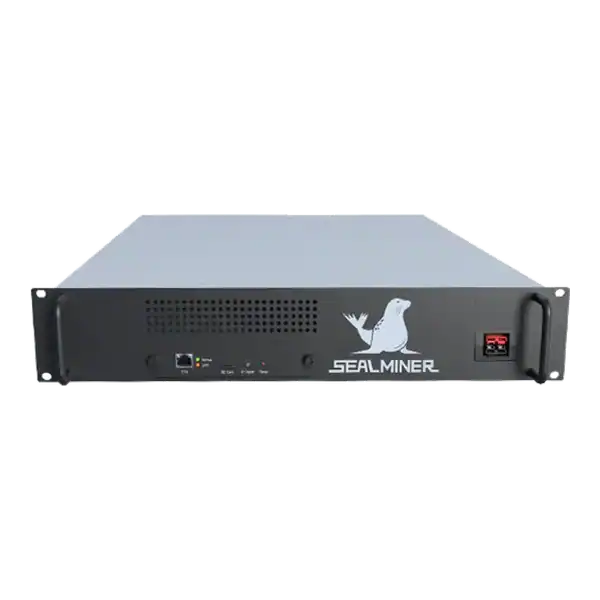
Sealminer A4 Ultra Hydro
Bitcoin & Bitcoin Cash ASIC Miner

886TH
HASHRATE
9.45W/TH
EFFICIENCY
8373W
POWER
£903.43
EST. MONTHLY
NO PAYBACK
EST. ROI
Calculate hydro ASIC water cooler sizing from measured kW, coolant flow, temperature rise, ambient design, pump head, redundancy and safe rejection margin.
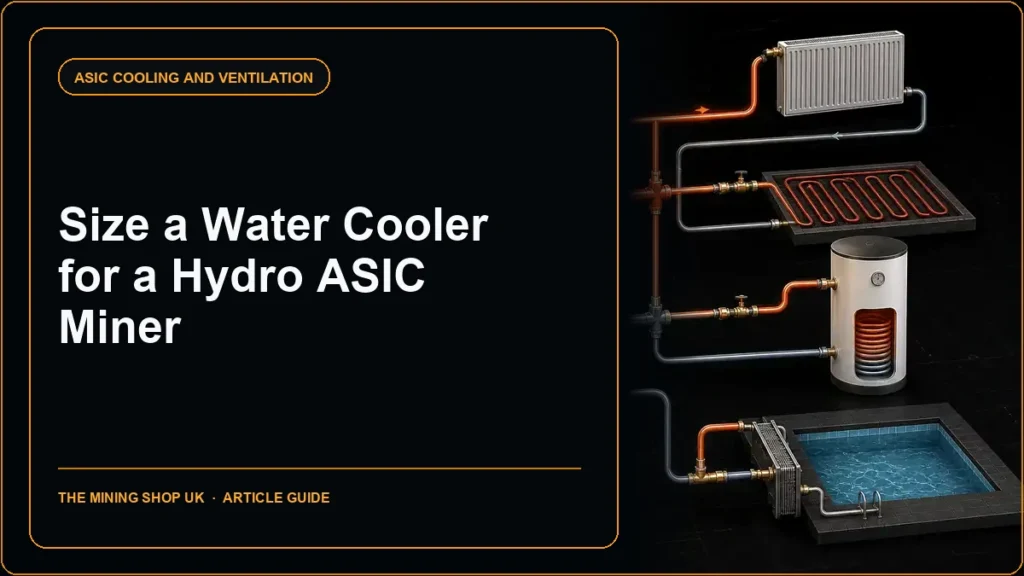
Hydro ASIC water cooler sizing starts with the heat that must be rejected, not the miner's hashrate. Use measured electrical input plus relevant pump and distribution losses, the manufacturer's coolant flow and temperature limits and the site's highest design ambient condition.
Then select exchanger, dry cooler or chiller capacity, pump head, water quality, controls and redundancy with a competent thermal engineer.
Hydro ASIC water cooler sizing needs a complete thermal and hydraulic design. Convert maximum measured power into heat, cross-check flow from allowable temperature rise, then verify pressure drop, exchanger approach and cooler capacity at the hottest ambient.
A site operator is checking hydro ASIC water cooler sizing. Protect the fleet with proven flow, alarms, standby and full heat rejection before considering higher power.
Record the exact hydro model, quantity, maximum approved power profile, PSU location, pump input and other heat entering the loop. Use measured and manufacturer worst-case values.
For a first approximation, a 5.5kW miner contributes roughly 5.5kW of heat while hashing. Ten units therefore require about 55kW before pump, exchanger and design allowances.
Separate useful heat-reuse duty from mandatory rejection duty. The cooler must protect the fleet when the building or process needs no heat.
Do not size from average profitability mode if firmware can return to a higher power automatically. Lock and document the approved maximum or size for it.

For water, thermal power Q in kW is about mass flow in kg/s multiplied by 4.186kJ/kgK and temperature rise in kelvin. Rearrange to estimate required flow.
A 55kW load with a permitted 10°C water rise needs about 1.31kg/s, close to 79 litres per minute before detailed fluid and system corrections.
If glycol or another approved fluid is used, density, specific heat and viscosity differ. Use the manufacturer’s properties at operating temperature.
Flow alone does not prove cooling. The heat exchanger must provide the required approach temperature and the external cooler must reject heat at the design ambient.
| Input | Source | Why |
|---|---|---|
| Maximum miner kW | Model and approved profile | Thermal duty |
| Flow per miner | Manufacturer manual | Chip and board cooling |
| Inlet and outlet range | Manufacturer manual | Temperature margin |
| Pressure and drop | Manual and system calculation | Pump and leak protection |
| Fluid quality | Manufacturer specification | Corrosion and fouling |
| Ambient design | Site weather and placement | Cooler capacity |
Check whether flow is specified per miner, per rack or as a range. Parallel branches need balancing so the nearest machine does not take most of the flow.
Stay within maximum pressure and connector limits. A larger pump can increase leak risk without correcting a restricted branch.
A plate exchanger needs duty, primary and secondary flow, inlet temperatures, allowable pressure drop, materials and fouling allowance. Select through a competent vendor rather than kW label alone.
A dry cooler’s rated capacity changes with ambient air and approach temperature. At a hot summer design point, low coolant temperature may require a much larger coil or a chiller.
A chiller can maintain lower temperature but adds compressor energy, capital, maintenance and heat rejection. Include its efficiency at design load and part load.
Where heat is reused, use valves or a secondary loop to transfer demand and keep a full-capacity rejection path available.
Pump selection needs total flow and pressure drop through miners, pipes, fittings, valves, filters, exchanger and elevation effects. Add a design allowance without selecting an excessively high-pressure pump.
Use branch balancing and measure flow or differential pressure. One common supply-temperature sensor cannot reveal a starved miner.
Provide air removal, expansion, fill, drain, filtration and service isolation appropriate to the system. Avoid dead legs and materials incompatible with the approved coolant.
Standby pumps or N+1 design can protect a material fleet. But test automatic changeover and ensure the standby path is not seized or isolated.
Monitor supply and return temperature, flow, pressure, pump state, leak detection, cooler fans and each miner. Set warning and trip levels from manufacturer and engineered limits.
Sequence cooling before hashing and maintain post-run flow where required. A pool controller should not restart miners until cooling is proven.
On low flow, high temperature or leak, reduce load or isolate safely. Do not suppress trips to preserve revenue.
Record every alarm and test. A sensor that has never been challenged is an assumption, not a protective control.
Hydro ASIC water cooler sizing needs a complete thermal and hydraulic design. Convert maximum measured power into heat, cross-check flow from allowable temperature rise, then verify pressure drop, exchanger approach and cooler capacity at the hottest ambient.
Record the exact hydro model, quantity, maximum approved power profile, PSU location, pump input and other heat entering the loop.
For water, thermal power Q in kW is about mass flow in kg/s multiplied by 4.186kJ/kgK and temperature rise in kelvin.
Check whether flow is specified per miner, per rack or as a range.
Hydro ASIC water cooler sizing needs a complete thermal and hydraulic design. Convert maximum measured power into heat, cross-check flow from allowable temperature rise, then verify pressure drop, exchanger approach and cooler capacity at the hottest ambient. Protect the fleet with proven flow, alarms, standby and full heat rejection before considering higher power.
Retain the design calculation, commissioning readings and approved operating envelope with the site asset record. Run a fouling and maintenance case as well as the clean commissioning calculation. Filters, exchanger plates and dry-cooler coils lose performance as contamination accumulates.
Set documented inspection or pressure-drop triggers and retain enough capacity to reach the planned service interval without leaving any miners outside their approved temperature envelope.
Use The Mining Shop UK consultancy and efficiency data to define the miner load before appointing a competent cooling-system designer.
Treat almost all miner electrical input as heat and add auxiliaries that enter the coolant or room. Size for maximum approved operating power and design ambient. Use Q = mass flow × specific heat × temperature rise to cross-check flow. But include pressure drop, exchanger approach, altitude, fouling and fluid properties.


Understand Immersion Cooled ASIC Miners for UK. Plan electrical load, airflow, heat, noise and cooling for a UK mining site before choosing equipment.
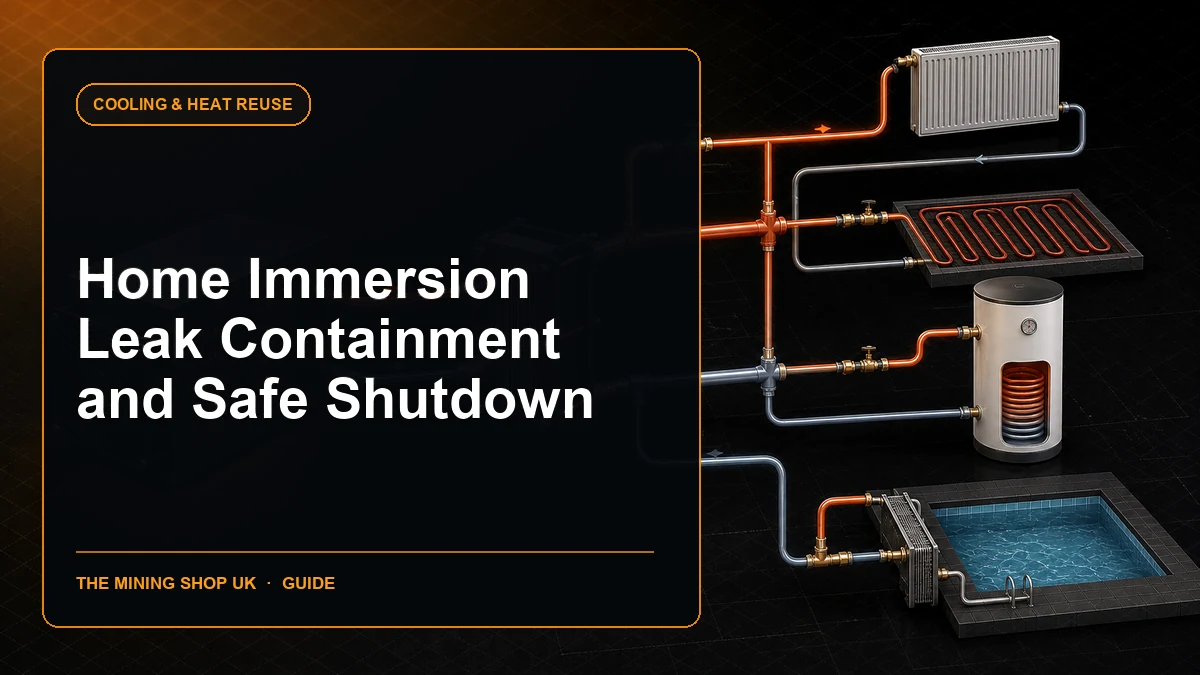
Plan home immersion leak containment through tank siting, secondary containment, sensors, isolation, fluid handling, heat rejection and emergency response.
Hydro cooled ASIC miners benefits and risks explained for UK operators, including water circuits, power, heat rejection, maintenance and site planning.
Join the ASIC Mining Discussion
Members can read and join the discussion
Log in to read comments from other miners. Create a free account if you would like to ask a question or share your experience.
Membership helps us protect the discussion from spam and keep answers useful.