Fractal Bitcoin Mining Guide: SHA-256 Hardware and Risks explains where Fractal Bitcoin fits in proof of work, what hardware is relevant and which facts must be checked before committing power or equipment.
TL;DR
Fractal Bitcoin Mining Guide: SHA-256 Hardware and Risks explains where Fractal Bitcoin fits in proof of work, what hardware is relevant and which facts must be checked before committing power or equipment.
- Confirm the current Fractal Bitcoin consensus rules and active mining algorithm before choosing hardware.
- SHA-256 compatibility does not by itself prove that a network has useful liquidity, pool support or sustainable demand.
- Use current pool, wallet, exchange and network documentation because smaller projects can change or become inactive.
- Treat revenue estimates as a comparison only and include electricity, fees, downtime and hardware resale risk.
When people ask about Fractal Bitcoin, they’re diving into one of the most mathematically beautiful and technically ambitious scaling solutions ever conceived, a project that uses fractal mathematics to create recursive Bitcoin networks that can scale infinitely while maintaining the security and decentralization properties that make Bitcoin the king of cryptocurrencies. This isn’t just another Bitcoin fork or Layer 2 solution; it’s a complete reimagining of how blockchain networks can achieve unlimited scalability through mathematical principles that have fascinated scientists for centuries.
The Mathematical Genesis: When Geometry Meets Cryptocurrency
The development philosophy that shaped the project emphasizes mathematical elegance and provable scaling properties rather than just throwing more hardware at the scalability problem. This approach creates scaling solutions that are as beautiful as they are functional.
The technical vision about Fractal Bitcoin involves creating an infinite hierarchy of Bitcoin networks that can process transactions at different scales while maintaining the security properties that make Bitcoin valuable for storing and transferring value.
The SHA-256d Algorithm: Infinite Bitcoin, Infinite Mining
When miners start getting excited about Fractal Bitcoin, they discover that the project uses the familiar SHA-256d algorithm, the same double SHA-256 hashing that secures the original Bitcoin network. This choice ensures compatibility with existing Bitcoin mining infrastructure while enabling fractal scaling.
The mining approach about Fractal Bitcoin allows miners to choose which fractal layer to mine based on their hardware capabilities and profit preferences. Smaller fractal layers require less computational power while larger layers provide higher rewards for more powerful mining operations.
Hash rate distribution across fractal layers creates a unique mining ecosystem where different types of miners can participate profitably at different scales. This democratizes mining participation while maintaining overall network security.
Mining economics benefit from the fractal structure that enables miners to find profitable niches at different scales rather than competing only in a single global hash rate competition like traditional Bitcoin mining.
Fractal Architecture: Infinite Scalability Through Mathematics
The significant design that makes people excited about Fractal Bitcoin centers around its fractal architecture, where each layer of the network is a complete Bitcoin implementation that processes transactions faster than the layer below it while maintaining mathematical relationships that ensure consistency across all layers.
Scaling properties about Fractal Bitcoin through fractal mathematics enable the network to theoretically achieve unlimited transaction throughput by adding new fractal layers that process transactions at increasingly fine time scales while maintaining security through recursive verification.
Layer communication happens through mathematical proofs that ensure transactions and state changes propagate correctly between fractal layers without requiring trust in any centralized coordination mechanism. The mathematics handles the complexity automatically.
Security inheritance ensures that each fractal layer benefits from the combined security of all larger layers, creating a system where even the smallest fractal instances have security properties that scale with the entire network.
Recursive Bitcoin: Every Layer is Bitcoin
The implementation philosophy that defines what’s unique about Fractal Bitcoin involves running actual Bitcoin code at each fractal layer rather than creating simplified or modified versions. This ensures that every layer maintains the full feature set and security properties of Bitcoin.
Protocol compatibility means that existing Bitcoin applications, wallets, and tools can work with any fractal layer without modification. Users can choose their preferred layer based on speed and cost requirements while using familiar Bitcoin interfaces.
The mathematical structure about Fractal Bitcoin ensures that transactions can move between layers seamlessly while maintaining the cryptographic properties that make Bitcoin transactions secure and verifiable.
Development simplicity comes from reusing proven Bitcoin code rather than creating new implementations that might introduce bugs or security vulnerabilities. Each fractal layer is Bitcoin running at a different scale.
Mining Democracy: Scaling Participation, Not Just Throughput
The mining ecosystem that attracts diverse participants about Fractal Bitcoin includes opportunities for miners with different hardware capabilities to participate profitably at appropriate fractal layers rather than being forced out by ever-increasing difficulty.
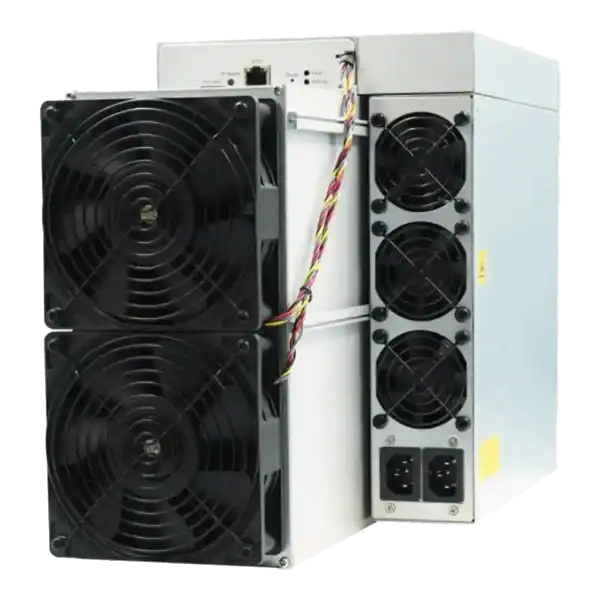
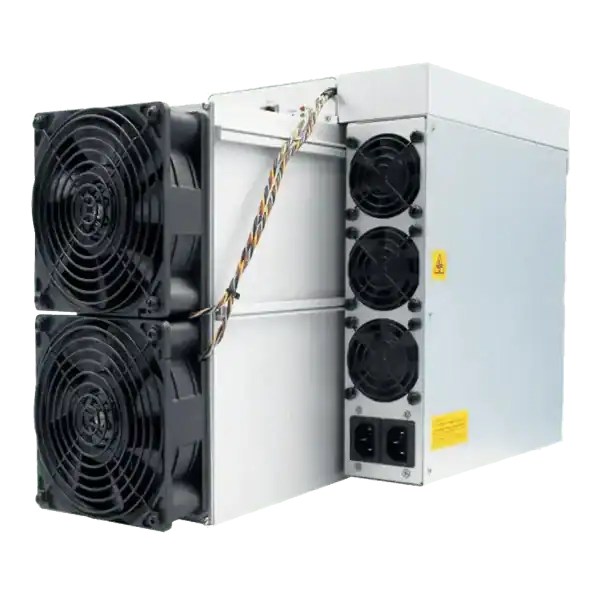
ASIC mining can focus on larger fractal layers where the higher hash rates and energy consumption are justified by proportionally higher rewards, while smaller operations can mine smaller layers profitably with less powerful hardware.
GPU mining remains viable on smaller fractal layers where the reduced computational requirements make graphics card mining competitive, preserving mining accessibility for enthusiast miners and smaller operations.
CPU mining even becomes possible on the smallest fractal layers, enabling virtually anyone to participate in network security while earning small amounts of cryptocurrency through proof-of-work mining.
Transaction Processing: Speed Through Scale
The performance characteristics that make users excited about Fractal Bitcoin include transaction processing speeds that scale with the number of fractal layers, enabling everything from instant micropayments to secure high-value transfers depending on user requirements.
Confirmation times vary by fractal layer, with smaller layers providing near-instant confirmations for small transactions while larger layers provide the security guarantees needed for high-value transfers that require multiple confirmations.
Fee structures reflect the different security and speed guarantees provided by different fractal layers, allowing users to choose the appropriate trade-off between cost, speed, and security for their specific transaction needs.
User experience improvements come from automatic layer selection based on transaction requirements, hiding the complexity of the fractal architecture behind interfaces that feel like using improved Bitcoin with better performance.
Smart Contract Integration: Bitcoin Scripting at Every Scale
The programmability that developers appreciate about Fractal Bitcoin includes full Bitcoin scripting capabilities at every fractal layer, enabling smart contracts and complex transactions that can execute at different speeds and security levels.
Layer specialization allows different fractal layers to optimize for different types of smart contracts, with high-frequency trading contracts running on fast layers while long-term custody contracts execute on high-security layers.
Cross-layer operations enable smart contracts that span multiple fractal layers, creating applications that can benefit from both the speed of small layers and the security of large layers within the same application.
Development tools provide unified interfaces for building applications that can operate across multiple fractal layers without requiring developers to understand the mathematical complexities of the fractal architecture.
Security Model: Mathematical Guarantees
The security analysis that gives confidence about Fractal Bitcoin relies on mathematical proofs that demonstrate how security properties propagate through the fractal hierarchy, ensuring that the overall system security increases with the number of participating layers.
Attack resistance includes protection against both traditional Bitcoin attacks and novel attack vectors that could potentially exploit the fractal structure. The mathematical foundation provides provable security guarantees.
Consensus mechanisms ensure that all fractal layers maintain agreement on transaction validity and state transitions while operating at different time scales. The fractal mathematics handles synchronization automatically.
Cryptographic verification enables any participant to verify the validity of transactions and state changes across all fractal layers without requiring trust in any central authority or complex multi-party computation protocols.
Real-World Applications: Infinite Use Cases
The practical applications that demonstrate value about Fractal Bitcoin include use cases ranging from high-frequency micropayments to secure long-term value storage, all using the same underlying Bitcoin technology optimised for different requirements.
Payment processing can occur at appropriate fractal layers based on transaction size and urgency, with coffee purchases settling instantly on small layers while real estate transactions use large layers for maximum security.
DeFi applications can leverage the fractal architecture to provide both high-speed trading capabilities and secure custody solutions within the same platform, optimising different components for their specific requirements.
Gaming integration enables blockchain games that can handle thousands of small transactions per second for in-game actions while providing secure ownership verification for valuable assets through larger fractal layers.
Environmental Efficiency: Smart Scaling
The environmental approach about Fractal Bitcoin optimizes energy consumption by distributing mining across fractal layers with different computational requirements, enabling more efficient utilization of mining hardware and renewable energy sources.
Energy distribution across fractal layers allows miners to choose layers that match their available energy resources and environmental priorities, creating opportunities for renewable energy mining at appropriate scales.
Carbon footprint optimization includes promoting mining operations that can use intermittent renewable energy sources by adjusting their fractal layer participation based on energy availability.
Sustainability strategy involves building a mining ecosystem that can adapt to changing energy conditions while maintaining network security through the distributed fractal architecture.
Developer Experience: Building on Infinite Bitcoin
The programming environment that attracts developers about Fractal Bitcoin provides familiar Bitcoin development tools and APIs that work consistently across all fractal layers, making it easy to build applications that scale automatically.
Documentation quality reflects the project’s mathematical foundations with precise specifications and proofs that help developers understand both the practical usage and theoretical guarantees of the fractal architecture.
Testing frameworks enable developers to test applications across multiple fractal layers simultaneously, ensuring that applications work correctly regardless of which layer users choose for their transactions.
Integration capabilities allow existing Bitcoin applications to add fractal scaling with minimal code changes, making it easy to upgrade existing systems to take advantage of improved performance.
Economic considerations
The tokenomics that support everything about Fractal Bitcoin maintain Bitcoin’s proven economic model across all fractal layers while creating new opportunities for value accrual through increased utility and adoption.
Mining rewards are distributed across fractal layers based on computational contribution and layer security requirements, creating incentives for miners to participate at appropriate scales while maintaining overall network security.
Transaction fees reflect the different security and speed guarantees provided by different layers, allowing market forces to determine the appropriate pricing for different levels of service.
Value capture mechanisms ensure that increased network usage across all fractal layers translates into value for the cryptocurrency while maintaining the deflationary properties that make Bitcoin attractive as a store of value.
Network Effects: Scaling Community
The community growth that drives adoption about Fractal Bitcoin includes Bitcoin enthusiasts who appreciate the mathematical elegance of fractal scaling and developers who need the performance benefits for their applications.
Educational initiatives help users understand fractal mathematics and its applications to blockchain scaling, promoting informed adoption while building appreciation for the mathematical beauty of the solution.
Research collaboration includes ongoing work with mathematicians and computer scientists to explore new applications of fractal principles to blockchain technology and distributed systems.
Global participation spans multiple communities including Bitcoin maximalists, mathematics enthusiasts, and developers who need high-performance blockchain infrastructure for their applications.
Competitive Analysis: Mathematical Innovation
What distinguishes the technical approach about Fractal Bitcoin from other scaling solutions is the use of proven mathematical principles rather than experimental consensus mechanisms or complex layer-2 protocols that introduce new trust assumptions.
Performance comparisons often highlight the unlimited theoretical scalability provided by fractal architecture compared to layer-2 solutions that have fixed capacity limits or require complex trade-offs between speed and security.
Innovation metrics include the mathematical elegance of the solution and the preservation of Bitcoin’s security properties across all scaling layers, providing scaling without compromising the fundamental value propositions of Bitcoin.
Adoption advantages come from compatibility with existing Bitcoin infrastructure and the ability to scale gradually by adding fractal layers as needed rather than requiring network-wide upgrades or migrations.
Commercial considerations Thesis: Betting on Mathematical Beauty
The investment considerations about Fractal Bitcoin include both the technical merits of fractal scaling and the potential for the project to capture value from Bitcoin’s continued growth while solving its scalability limitations.
Risk assessment involves evaluating both the mathematical complexity of fractal architecture and the market risks associated with any cryptocurrency investment, particularly projects that represent significant technical innovations.
Growth potential depends on adoption of fractal scaling by Bitcoin users and developers who need the performance improvements while maintaining Bitcoin’s security and decentralization properties.
Market opportunity includes the potential for fractal scaling to enable new applications and use cases that weren’t previously possible with Bitcoin’s limited transaction throughput.
Current status and outlook
The roadmap for advancing what’s possible about Fractal Bitcoin includes continued development of fractal layer management tools, cross-layer applications, and integration with existing Bitcoin infrastructure and services.
Research initiatives involve exploring new applications of fractal mathematics to blockchain technology and investigating how fractal principles could be applied to other aspects of distributed systems.
Partnership opportunities include collaborations with Bitcoin infrastructure providers, mining operations, and application developers who could benefit from fractal scaling capabilities.
Platform evolution includes new tools and services that make fractal scaling more accessible to users and developers while maintaining the mathematical rigor that ensures security and scaling properties.
Regulatory Considerations: Bitcoin Plus Mathematics
The regulatory positioning about Fractal Bitcoin benefits from being based entirely on Bitcoin technology and mathematical principles rather than introducing new financial instruments or experimental consensus mechanisms that might attract regulatory scrutiny.
Compliance advantages come from maintaining Bitcoin’s transparent transaction model across all fractal layers while providing scaling improvements through mathematical optimization rather than privacy features that might concern regulators.
Legal clarity benefits from the project’s foundation in well-established Bitcoin technology and mathematical principles that are clearly understood and accepted by both technical and regulatory communities.
International acceptance may be enhanced by the project’s focus on scaling existing Bitcoin functionality rather than creating new financial instruments or experimental economic models.
Practical conclusion
The fundamental innovation about Fractal Bitcoin lies in applying rigorous mathematical principles to solve blockchain scalability while preserving all the properties that make Bitcoin valuable as both a currency and a store of value.
Whether the project achieves mainstream adoption depends on the Bitcoin community’s willingness to embrace mathematical scaling solutions and the development of applications that take advantage of fractal architecture capabilities.
The practical impact about Fractal Bitcoin extends beyond just transaction throughput to include enabling new categories of applications that require both Bitcoin’s security properties and high-performance transaction processing.
The broader implications about Fractal Bitcoin for cryptocurrency development include demonstrating how mathematical principles can solve fundamental blockchain problems and potentially influencing how other projects approach scaling challenges.
What to verify before acting
Mining networks, pool support, firmware, exchange access and hardware availability can change. Verify the current network documentation, test with a small controlled configuration and do not rely on a historical profitability figure when purchasing equipment.
Useful next steps
Authoritative references
Check current official documentation alongside this article because network rules, product ranges and legal guidance can change.