Buying a NerdMiner: Buy a NerdMiner for education, display, open-source experimentation or an extremely remote solo-mining chance, not predictable earnings.
Buying a NerdMiner should be treated as purchasing a small open-source learning and lottery-mining device, not a substitute for a Bitcoin ASIC. NerdMiner V2 runs mining software on supported ESP32 display boards and can show hashes, targets, shares, pools and Bitcoin data at very low power. Its hashrate is tiny beside even a small Bitaxe.
So regular income or a realistic block expectation should not be the buying case.
buying a NerdMiner in simple English
Buying a NerdMiner: The strongest use is visible learning. It can show an address, pool status, hashrate, blocks, difficulty and share progress while demonstrating that mining searches candidate hashes.
Simple example
A miner is checking buying a NerdMiner. If the goal is meaningful ASIC hashrate or commercial revenue, compare a Bitaxe or industrial SHA-256 miner instead and model its complete operating cost.
Key terms in plain English
Bitcoin Core:
Widely used Bitcoin software. It can check blocks and transactions and provide wallet, network and operator tools.
ASIC:
A computer built to do one specialised job. A mining ASIC is designed for a particular proof-of-work algorithm.
Hashrate:
The amount of mining work a machine attempts each second. More hashrate does not guarantee more profit.
Efficiency:
How much electricity a miner uses for a set amount of work. Lower joules per terahash usually means better efficiency.
Mining pool:
A service that combines work from many miners and shares rewards using stated rules.
Decide what you want the NerdMiner to do
The strongest use is visible learning. It can show an address, pool status, hashrate, blocks, difficulty and share progress while demonstrating that mining searches candidate hashes.
It can also be an inexpensive open-source electronics project or desk display. The official NerdMiner V2 repository includes board definitions and firmware for supported ESP32 devices.
It is not a commercial Bitcoin miner. An ESP32 microcontroller performs software hashing at a rate many orders of magnitude below modern SHA-256 ASIC hardware. Do not buy it to offset electricity bills or meet a monthly Bitcoin target.
Quick reference for buying a NerdMiner.
Check whether the listing is hardware, firmware or both
NerdMiner V2 is open-source software. At the same time, online listings can offer a flashed development board, an assembled enclosure, a kit or simply instructions. Read exactly what arrives.
Record the ESP32 family, board revision, screen controller, screen size, USB connector, enclosure, cable and power supply. A photograph of a similar colour display does not prove firmware compatibility.
NerdMiner buying checklist
Question
Evidence
Risk if missing
Which board?
Exact model and revision
Wrong image or non-working display
Which firmware?
Official repository release and target
Unknown changes or obsolete build
What is included?
Board, screen, case, cable and supply
Extra parts or unsafe power
Which pools?
Current endpoint and firmware support
No accepted shares
Who supports it?
Named seller and return route
No help with a faulty assembly
What is promised?
Educational capability in writing
Misleading earnings expectation
Verify the firmware source
The recognised NerdMiner V2 project is maintained in the BitMaker-hub repository. Use its current release or the seller’s disclosed fork and source code. A fork can be legitimate. But its changes, update route and data destinations should be visible.
Avoid a preconfigured device whose wallet, pool or remote-service behaviour cannot be changed. Reflash from a trusted source if the provenance is uncertain.
Open-source availability does not make every seller official. Check the hardware seller separately from the software project.
Understand the mining probability
A NerdMiner can attempt SHA-256 work and can submit shares to a compatible service. That makes it a miner in a technical sense. But its contribution is extremely small relative to the Bitcoin network.
The expected solo time is governed by the device’s hashrate divided by network hashrate. Because both the device implementation and network change, use the live figures shown by the chosen service and label the result as probability, not a due date.
A best-share display records the strongest result seen. It can improve without earning anything. Pool-specific community rewards can also differ from Bitcoin block or standard pool revenue and must be checked under current terms.
Compare it with a Bitaxe and industrial ASIC
A Bitaxe uses a real Bitcoin ASIC chip controlled by an ESP32. A NerdMiner uses the ESP32 itself for hashing. Their enclosures may look similarly small. But their compute path is fundamentally different.
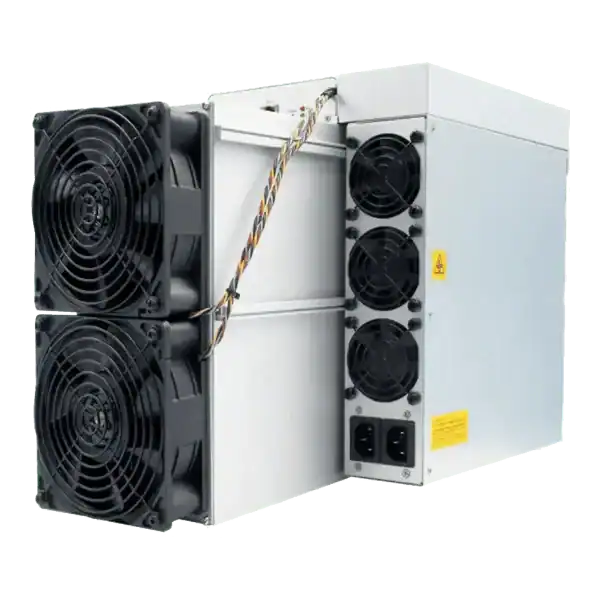
A modern industrial Antminer or WhatsMiner contains many ASIC chips, uses kilowatts and requires electrical, airflow and noise design. It is purchased for an operating revenue case. At the same time, a NerdMiner is normally purchased for learning.
Choose a Bitaxe when the educational goal includes real ASIC behaviour, pool-effective hashrate, tuning and hardware efficiency. Choose an industrial unit only after modelling electricity, site and risk.
Review power and physical quality
Use the board manufacturer’s stated USB supply and a sound cable. Small screens and radios can become unstable with a poor supply even though total power is low.
Inspect exposed solder, enclosure clearance, ventilation, buttons and connector strain. A hobby device should not be placed on a conductive surface or left with a damaged lithium accessory.
The low load makes desk use practical. But screen brightness and continuous operation can affect display life. Use dimming or a schedule if supported.
Check privacy and network behaviour
The device needs Wi-Fi credentials and contacts pool and data services. Place it on an isolated home or device network rather than the same segment as payment, customer or business systems.
Use a payout address or public identifier only where required. A Bitcoin address is public information but can link activity. So do not reuse a sensitive treasury address merely for a display.
Review a seller fork for extra endpoints, telemetry and update services. Reset or reflash a used unit before entering credentials.
When buying a NerdMiner makes sense
A good fit
It makes sense as a low-power introduction to hashes, pools and probability, a coding project or a Bitcoin-themed display.
Value comes from the learning, assembly and presentation rather than expected coin output.
A poor fit
It does not suit a buyer seeking recurring revenue, a fast payback or a meaningful share of Bitcoin network hashrate.
Avoid listings that imply normal pool earnings or hide the board and firmware source.
Common NerdMiner buying mistakes
Confusing NerdMiner software hashing with a Bitaxe ASIC chip.
Buying from a photograph without an exact board target.
Treating a best share as earned Bitcoin.
Using a commercial-miner profitability calculator for an ESP32 display.
Entering Wi-Fi and wallet data into unknown firmware.
Paying an ASIC price for an assembled development board.
Assuming open-source software creates a manufacturer warranty.
Frequently asked questions
What is the main point of buying a NerdMiner?
Buying a NerdMiner: The strongest use is visible learning. It can show an address, pool status, hashrate, blocks, difficulty and share progress while demonstrating that mining searches candidate hashes.
For buying a NerdMiner, what should a beginner know about decide what you want the NerdMiner to do?
The strongest use is visible learning. It can show an address, pool status, hashrate, blocks, difficulty and share progress while demonstrating that mining searches candidate hashes.
For buying a NerdMiner, what should a beginner know about checking whether the listing is hardware, firmware or both?
NerdMiner V2 is open-source software. At the same time, online listings can offer a flashed development board, an assembled enclosure, a kit or simply instructions.
For buying a NerdMiner, what should a beginner know about verifying the firmware source?
The recognised NerdMiner V2 project is maintained in the BitMaker-hub repository.
Key points to remember
Buying a NerdMiner makes sense when the product is judged as a small educational computer. Verify the board and official firmware target, understand what the seller includes, protect the Wi-Fi network and treat shares as a lesson in probability. If the goal is meaningful ASIC hashrate or commercial revenue, compare a Bitaxe or industrial SHA-256 miner instead and model its complete operating cost.
Next steps
Use The Mining Shop UK’s mining basics, security and profitability guides to choose between an educational NerdMiner, a small real-ASIC project and production mining hardware.
Buy a NerdMiner for education, display, open-source experimentation or an extremely remote solo-mining chance, not predictable earnings. Confirm the exact ESP32 board and display, official NerdMiner V2 compatibility, firmware source, USB power requirement and seller support.
Darren Waggott is the visionary Founder and CEO of The Mining Shop UK, with over a decade of leadership in the cryptocurrency mining sector. Renowned for driving innovation, Darren has built a company dedicated to providing high-quality ASIC miners and comprehensive hosting services. His forward-thinking approach places The Mining Shop UK at the forefront of the industry.
Membership helps us protect the discussion from spam and keep answers useful.
ASIC MINING SUPPORT
Need Help Choosing an ASIC Miner?
Tell us what you want to mine, your electricity cost and where the machine will run. We can help you compare hardware, power requirements, hosting and repairs.
We use necessary cookies to run the shop and optional analytics cookies to understand how visitors use the site and improve shopping and checkout. You can accept analytics, use only necessary cookies, or choose settings. You can change your choice at any time.
Functional
Always active
The technical storage or access is strictly necessary for the legitimate purpose of enabling the use of a specific service explicitly requested by the subscriber or user, or for the sole purpose of carrying out the transmission of a communication over an electronic communications network.
Preferences
The technical storage or access is necessary for the legitimate purpose of storing preferences that are not requested by the subscriber or user.
Statistics
The technical storage or access that is used exclusively for statistical purposes.The technical storage or access that is used exclusively for anonymous statistical purposes. Without a subpoena, voluntary compliance on the part of your Internet Service Provider, or additional records from a third party, information stored or retrieved for this purpose alone cannot usually be used to identify you.
Marketing
The technical storage or access is required to create user profiles to send advertising, or to track the user on a website or across several websites for similar marketing purposes.





Join the ASIC Mining Discussion
Members can read and join the discussion
Log in to read comments from other miners. Create a free account if you would like to ask a question or share your experience.
Membership helps us protect the discussion from spam and keep answers useful.