
Bitcoin vs Altcoins: Networks, Mining and Risk Compared
Compare Bitcoin vs altcoins by consensus, issuance, hardware, liquidity, security and governance without assuming every alternative coin works the same way.
Read article
Page 95
Compare Bitcoin vs altcoins by consensus, issuance, hardware, liquidity, security and governance without assuming every alternative coin works the same way.
Learn how DHCP reservations for ASIC miners works, what it changes for miners, the money and safety risks, and the checks to make before using it.
BIP 50 March 2013 chain fork explained: trace the Berkeley DB lock limit, emergency miner downgrade, double spend and enduring operator lessons.
A Bitcoin UTXO is an unspent transaction output available as a future input. Learn wallet balances, change, fees, consolidation, privacy and node validation simply.
BIP 38 encrypted private keys explained: understand 6P records, scrypt, EC-multiply mode, password risk, test vectors and safe recovery.
BIP 37 Bloom filters explained: review filtered-block relay, false positives, privacy leakage, resource risk and why modern clients moved away.

The Bitcoin mempool is each node’s set of valid unconfirmed transactions. Learn fee rates, eviction, replacement, differences between nodes and miner selection.

Learn how mining pool share difficulty works, what it changes for miners, the money and safety risks, and the checks to make before using it.
Stratum V1 explained for ASIC operators: follow subscriptions, authorisation, mining jobs, share difficulty, extranonce handling and pool control.
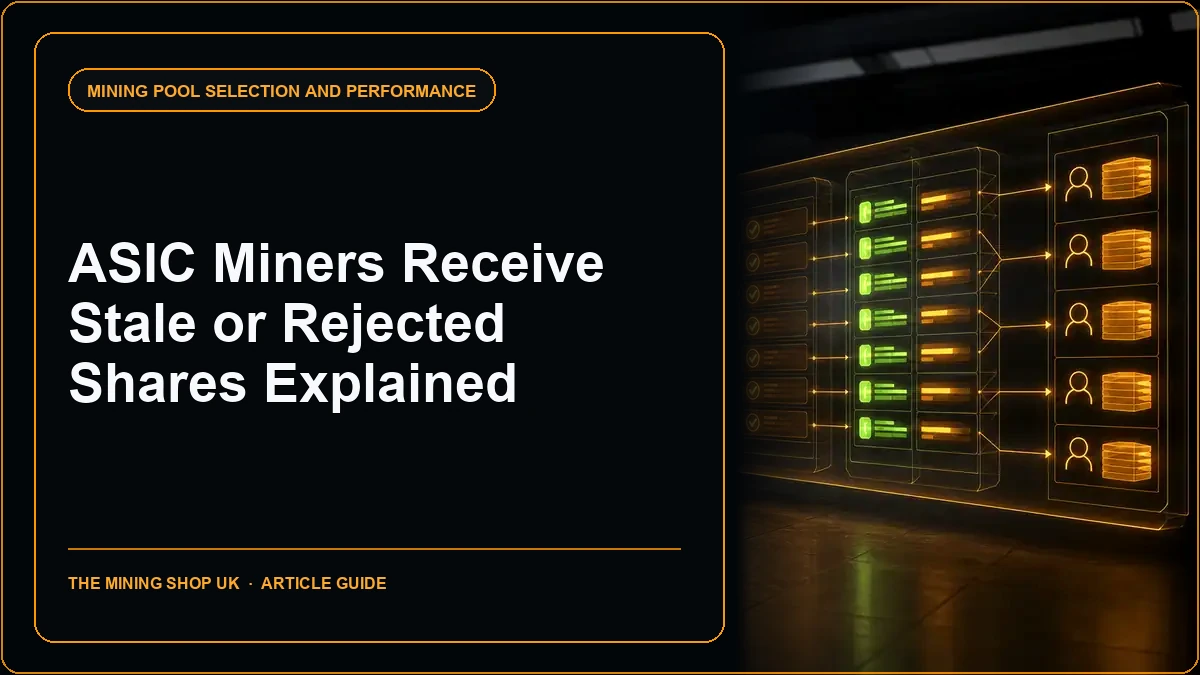
Learn how ASIC stale and rejected shares works, what it changes for miners, the money and safety risks, and the checks to make before using it.

Learn how original Stratum mining protocol works, what it changes for miners, the money and safety risks, and the checks to make before using it.

Learn how Peercoin hybrid mining nodes works, what it can earn, the costs and security checks, and how a Peercoin node can support SHA-256 miners.