

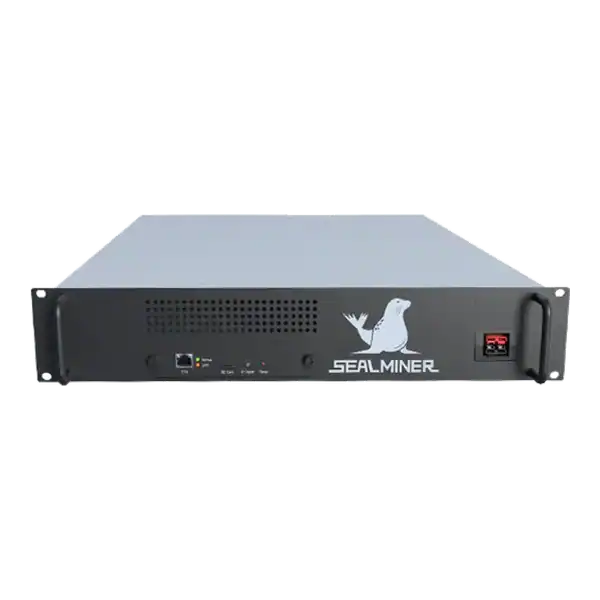
Sealminer A4 Ultra Hydro
Bitcoin & Bitcoin Cash ASIC Miner

886TH
HASHRATE
9.45W/TH
EFFICIENCY
8373W
POWER
£898.19
EST. MONTHLY
NO PAYBACK
EST. ROI
Model Bitcoin mining with solar using interval generation, ASIC minimum load, imports, exports, curtailment, batteries and measured accepted work.
Bitcoin mining with solar is a load-matching problem, not a claim that an ASIC runs continuously from the panel nameplate. UK solar output varies by hour, weather and season. At the same time, an ASIC normally wants a stable minimum input plus cooling.
A sound design uses interval generation and site-demand data, defines grid import and export rules, models curtailment and restart losses, and compares mining value with the alternative value of exported or displaced electricity.
Bitcoin mining with solar: Include array or incremental control capital only according to the decision being tested. A sunk solar system and a new array built mainly for mining have different economic questions.
A miner wants to understand Bitcoin mining with solar. Separate AC output after the inverter from panel DC nameplate. Bitcoin mining with solar can be technically workable when interval generation and ASIC load are matched honestly.
get measured or professionally modelled solar output for the exact location, array orientation, shading, inverter and expected losses. Annual generation is useful for totals but conceals the daily mismatch.
Collect site import, export and ordinary-load data over the same timestamps. Mining should not be credited with solar already needed by higher-value or essential loads.
Separate AC output after the inverter from panel DC nameplate. The ASIC and its cooling use AC power and experience inverter, cable and distribution losses.
Model summer and winter independently. A system sized to run a miner on a bright summer day can rely heavily on grid import in a winter week.

Record supported stock and lower-power profiles for the exact model. Confirm minimum stable power, accepted hashrate, restart time and cooling demand through testing rather than a generic percentage.
Most ASICs do not follow every passing cloud smoothly. Frequent hard power cycles can lose pool work and add thermal stress. At the same time, some controlled firmware can change power within limits.
Include fans, pumps, network, inverter and ventilation. Nearly all miner input becomes heat. So solar-rich warm hours can also create the highest cooling requirement.
Use safe isolation and control design. Do not connect an ASIC directly to panels or bypass approved inverter, protection and grid arrangements.
| Strategy | Benefit | Main cost or risk |
|---|---|---|
| Solar surplus only | Avoids intentional grid import | Low and variable utilisation |
| Solar plus grid floor | Stable mining | Pays import price during shortfall |
| Solar plus battery | Smoother operation | Battery losses, wear and capital |
| Flexible power profile | Uses more variable surplus | Firmware, stability and warranty |
| Seasonal mining | Avoids weak months | Idle hardware and fixed cost |
| Export instead | Simple alternative value | Forgone mining opportunity |
Set threshold and hysteresis so the miner does not switch repeatedly around one power value. Require a minimum expected run period before starting and a safe shutdown sequence.
Where a battery is proposed, compare the same stored kWh with evening import avoidance or other site services. Mining is not automatically the highest-value discharge.
Suppose an array exports 4kW of genuine surplus from 10:00 to 14:00 on a representative clear day. At the same time, the selected ASIC and auxiliary load require 3.5kW. It can run for four hours and use about 14kWh without intentional import under that simplified day.
On a variable day, surplus may move between 1kW and 4kW. If the ASIC cannot operate stably below 3.5kW, starting during every short peak can create repeated resets. A control rule might require surplus above 3.7kW for a defined period and stop below another threshold.
The commercial comparison uses net mining receipts for accepted work during those hours minus maintenance and control costs, against the export payment or displaced site value of 14kWh.
Repeat the calculation for every interval over a year and include days with no run. Multiplying the clear-day result by 365 would materially overstate utilisation.
Confirm the solar and load design with a competent installer and the relevant Distribution Network Operator process. Generation, storage, export limitation and material load changes can have connection and protection requirements.
Use metering that distinguishes generation, site demand, grid import, export and the miner circuit. Without that separation, renewable-use claims and cost allocation are difficult to evidence.
Check the Smart Export Guarantee or other export contract. Export tariffs and eligibility vary, and a meter cannot allocate the same kWh to both export income and mining.
Review planning, lease, insurance, fire, electrical and business-use conditions. A domestic solar installation does not automatically approve an industrial continuous load.
Include array or incremental control capital only according to the decision being tested. A sunk solar system and a new array built mainly for mining have different economic questions.
Do not call the mining zero-carbon solely because annual solar generation equals annual ASIC use. Time matching, grid imports, embodied impacts and the chosen accounting boundary need clear disclosure.
State whether claims are location-based, contractual or physical interval matching and retain meter evidence. Avoid broad ‘green Bitcoin’ language that the data cannot support.
Stress-test lower mining revenue, inverter downtime, battery replacement, curtailment and a higher alternative value for solar electricity.
Bitcoin mining with solar: Include array or incremental control capital only according to the decision being tested.
get measured or professionally modelled solar output for the exact location, array orientation, shading, inverter and expected losses.
Record supported stock and lower-power profiles for the exact model. Confirm minimum stable power, accepted hashrate, restart time and cooling demand through testing rather than a generic percentage.
Set threshold and hysteresis so the miner does not switch repeatedly around one power value.
Bitcoin mining with solar can be technically workable when interval generation and ASIC load are matched honestly. The key figures are genuine surplus, minimum stable load, accepted work and the alternative value of each kWh. Use competent connection and control design, test variable-weather behaviour and make environmental claims only to the boundary the meter evidence supports.
Use The Mining Shop UK efficiency and profitability tools with interval utilisation rather than assuming 24-hour solar operation.
Use at least representative half-hourly or finer solar and site-load data. Annual kWh cannot show whether power is available when the miner needs it. Define whether the ASIC may import from the grid, curtail, use a battery or run only above a threshold, then include auxiliary cooling and restart behaviour.


Terahash describes Kläger Group’s Hartha energy park with a 1.6 MWp solar array, a 350 kWh battery and a mining container able to absorb up to 500 kW. The container is intended to buy surplus left by industrial production, with storage and grid export also available.
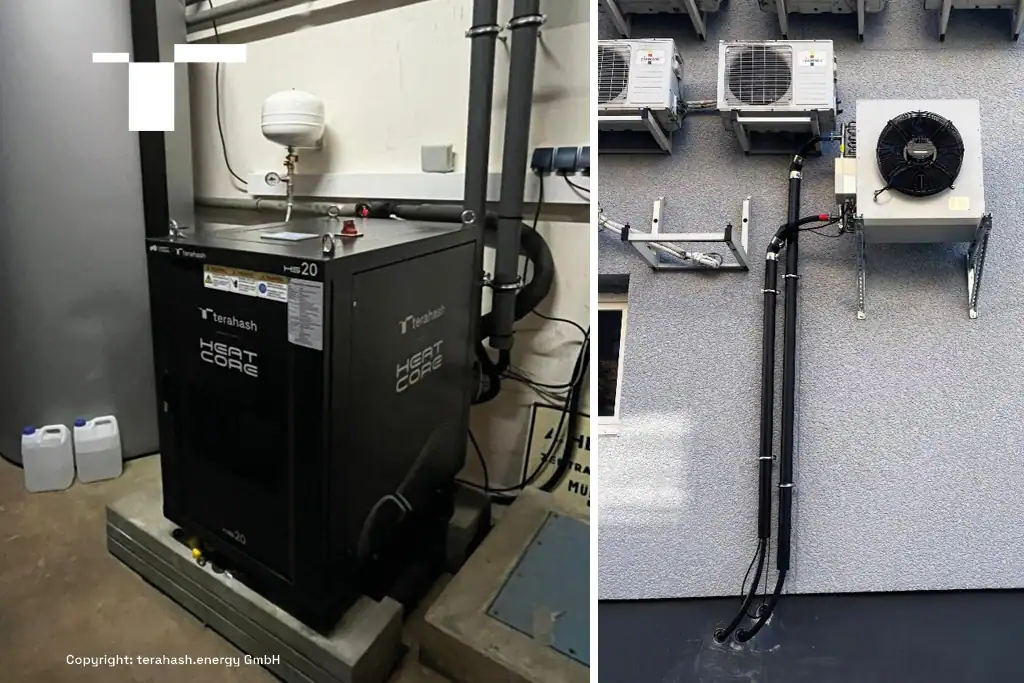
Terahash describes a commissioned system at Nebona’s spice factory: a Heatcore HS20 with two Whatsminer M63 units uses surplus rooftop solar power and supplies hot water to a buffer tank. The existing heating system remains available.

SunBit reports fitting a Bitcoin Boiler alongside the oil boiler in a 200 m² Kotka home. An outdoor unit rejects unwanted summer heat and allows additional use of solar surplus.
Join the ASIC Mining Discussion
Members can read and join the discussion
Log in to read comments from other miners. Create a free account if you would like to ask a question or share your experience.
Membership helps us protect the discussion from spam and keep answers useful.