

Sealminer A4 Ultra Hydro
Bitcoin & Bitcoin Cash ASIC Miner
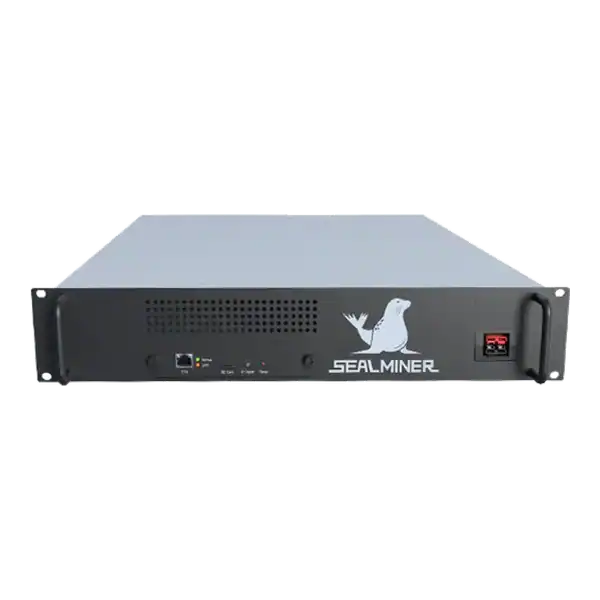

886TH
HASHRATE
9.45W/TH
EFFICIENCY
8373W
POWER
£933.57
EST. MONTHLY
NO PAYBACK
EST. ROI
Understand why Bitcoin mining revenue changes with difficulty, fees, bitcoin price, pool accounting and accepted hashrate, and how to compare days fairly.

Bitcoin mining revenue changes from day to day because network difficulty, transaction fees, bitcoin price, pool accounting and accepted hashrate do not remain fixed. This guide separates those effects so UK ASIC operators can investigate a movement instead of treating every dashboard change as a fault.
Bitcoin mining revenue is not a fixed coupon paid by the network. A miner contributes hashes in competition with the rest of the network.
A miner wants to understand Bitcoin mining revenue. Its expected share of block subsidy and transaction fees changes when network difficulty changes. It is an expectation that must be converted into valid work delivered to the pool after downtime, rejected shares and throttling.
Bitcoin mining revenue is not a fixed coupon paid by the network. A miner contributes hashes in competition with the rest of the network. Its expected share of block subsidy and transaction fees changes when network difficulty changes. At the same time, the sterling value changes again with the bitcoin exchange rate. A pool then applies its own reward system to valid shares.
For daily investigation, separate five inputs: network difficulty, transaction-fee revenue, bitcoin price, pool method and the machine’s accepted hashrate. Hardware nameplate hashrate is not a sixth source of revenue by itself. It is an expectation that must be converted into valid work delivered to the pool after downtime, rejected shares and throttling.
Record results in both BTC and pounds. If the miner receives the same BTC but bitcoin rises against sterling, the dashboard can show higher pound revenue without any improvement in mining. If BTC revenue falls while the exchange rate rises, the pound display can look unchanged and hide a network or operational effect.

Bitcoin adjusts proof-of-work difficulty every 2,016 blocks to keep average block timing close to its target. Higher difficulty means more hashing work is expected for a valid block. So the expected BTC revenue from a fixed TH/s or PH/s falls when subsidy and fees are otherwise unchanged. Lower difficulty has the opposite effect.
Difficulty does not usually explain a sudden isolated change halfway through one day unless an adjustment occurred or the reference service updates its estimate differently. Check the relevant block height and compare complete periods before and after the adjustment. Network hashrate estimates are inferred from blocks and difficulty. So short-window charts can move even when the underlying fleet changes less abruptly.
Use difficulty as a measured network input, not as a prediction. The Bitcoin Core getdifficulty RPC returns current proof-of-work difficulty as a multiple of minimum difficulty. Preserve the checked time and source so the revenue model can be reproduced later.
A valid Bitcoin block pays subsidy plus transaction fees. Fees respond to demand for block space and can vary materially between blocks. A reference hashprice method may smooth fees over a window. At the same time, a pool may use another estimate or distribute actual fees under a method linked to blocks it finds.
These choices create differences even when difficulty and miner performance are stable.
Pool luck also matters under reward systems tied closely to blocks actually found. Bitcoin’s developer guide distinguishes solo mining’s large, infrequent payments from pooled mining’s smaller, more frequent distributions. Pay per share methods shift more short-term variance to the pool. But the precise fee component, reserve and service charge still depend on the terms.
Do not diagnose a low six-hour period as a broken miner before checking pool accounting and payout boundaries. Use a longer window and compare valid shares. Conversely, a persistent shortfall across several stable days should not be dismissed as luck if accepted hashrate or reject rate has changed.
The local dashboard estimates work performed inside the miner. The pool can credit only the valid shares it receives. Network interruption, high latency, stale jobs, thermal throttling, power cycling and unstable tuning can create a gap between local and accepted hashrate. Compare a sufficiently long pool-side average rather than one five-minute number.
| Measure | Day one | Day two | Interpretation |
|---|---|---|---|
| Local hashrate | 200 TH/s | 200 TH/s | No obvious local change |
| Accepted pool hashrate | 198 TH/s | 188 TH/s | Delivered work fell about 5.1% |
| BTC hashprice reference | 100% | 98% | Network and fee effect about 2% |
| Expected combined movement | Baseline | About 93% | Operational and network effects compound |
| GBP/BTC rate | Separate input | Separate input | Do not mix into BTC diagnosis |
The calculation is illustrative. Dividing 188 by 198 gives about 94.9%. Multiplying by a 98% reference gives about 93%. A roughly 7% BTC revenue decline would therefore be explainable without assuming theft or a pool error. Reconcile the actual shares and fees before reaching a conclusion.
Keep the original account export or screenshot alongside the calculation. But never include wallet credentials, seed phrases or API secrets. A simple comparison sheet should let another operator trace every number to a source. If the pool changes its reward method or fee, start a new comparison period rather than splicing unlike data together.
Check the physical machine when pool-side performance falls. Look for high temperatures, frequency reduction, fan faults, PSU events, network reconnections and rising hardware errors. Return to a known supported profile before making several changes at once. Preserve logs and original firmware information where a warranty claim may follow.
Daily data is useful for detecting a clear outage, a major accepted-hashrate loss, a tariff breach or a pool-accounting change. It also helps reconcile wallets and identify whether a pound movement came from mining or the exchange rate.
Use it as an operational alert, then confirm the cause with shares, logs and network inputs. A stable method makes comparisons more valuable over time.
One daily result is weak evidence for a hardware buying decision or annual forecast. Fee spikes, payout cut-offs and pool luck can make it unrepresentative. Multiplying one day by 365 does not create a reliable annual revenue figure.
It also misleads when gross revenue is labelled profit. Electricity, hosting, pool fees, cooling, maintenance, downtime, hardware repayment and tax remain separate costs.
Revenue analysis should narrow uncertainty. If a result cannot be reproduced from difficulty, fees, accepted work and account credits, mark it unresolved and continue collecting evidence. Do not fill missing records with optimistic estimates.
Bitcoin mining revenue is not a fixed coupon paid by the network. A miner contributes hashes in competition with the rest of the network.
Bitcoin mining revenue is not a fixed coupon paid by the network.
Bitcoin adjusts proof-of-work difficulty every 2,016 blocks to keep average block timing close to its target.
A valid Bitcoin block pays subsidy plus transaction fees. Fees respond to demand for block space and can vary materially between blocks.
Daily Bitcoin mining revenue changes for understandable reasons: network difficulty, transaction fees, bitcoin price, pool accounting and accepted hashrate. Separate BTC from sterling, use matched periods and reconcile pool credits with valid work. One day is an operational signal, not an annual forecast. A persistent unexplained gap deserves investigation. Ordinary short-term movement does not justify random firmware or pool changes.
Use The Mining Shop UK profitability table with measured wall power and a dated revenue input, then compare several complete days before changing hardware or hosting decisions.
Compare BTC revenue before converting it to pounds so price movement does not hide mining performance. Use accepted pool-side hashrate, a matched UTC period and the pool's actual reward method.


Build a five-year ASIC replacement calendar from efficiency gap, tariff, failure rate, parts, firmware, resale, network scenarios and capital gates.

Build ASIC profit forecast ranges using base, downside and severe cases for accepted hashrate, energy, uptime, difficulty, reward, fees, price and repairs.

Compare European ASIC mining energy costs using the correct tariff band, taxes, grid connection, curtailment, cooling, contracts and location risks.
Join the ASIC Mining Discussion
Members can read and join the discussion
Log in to read comments from other miners. Create a free account if you would like to ask a question or share your experience.
Membership helps us protect the discussion from spam and keep answers useful.