
Pre-order
Overall ranking

Equihash
·
ZEC
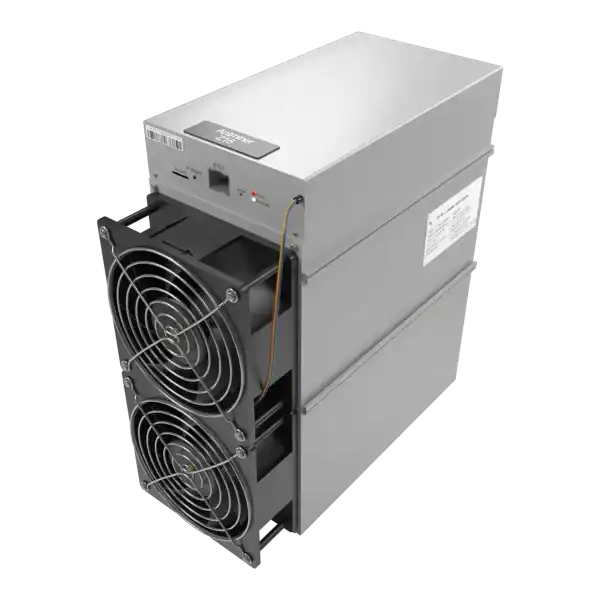
Overall rank#1of 100AvailableAll: #2 / 831

Pre-OrderFree Shipping
Hashrate
525KSOL
Efficiency
4.73W/KSOL
Power
2483W
Earns/kWh
42.2p
Avoid five costly Bitcoin mining mistakes involving tariffs, unsafe power, weak cooling, unverified sellers and missing operating or exit plans.
The most costly Bitcoin mining mistakes normally happen before the first share is submitted. An optimistic electricity assumption, unsuitable electrical supply, poor heat rejection, weak supplier evidence or no operating and exit plan can turn a technically working ASIC into an unsafe or cash-negative purchase. Each mistake can be reduced with a written check and evidence before payment.
Avoiding Bitcoin mining mistakes is less about predicting Bitcoin and more about controlling evidence. Use the delivered tariff, safe electrical design, full-load heat and noise plan, verified supplier records and written operating thresholds.
A miner wants to understand Bitcoin mining mistakes. The calculation should survive unfavourable inputs, and the site should remain safe even when the economics do not.
An ASIC uses electricity continuously and converts almost all of it into heat. A small error in pence per kilowatt-hour is repeated across every hour of the year. A cooling restriction or rejected-share problem can consume the same power while producing less credited work.
The original purchase price is visible. But operating risk is spread across electricity, installation, hosting, downtime, pool fees, repairs, tax records and eventual resale. Good due diligence tests the complete route from the circuit to the payout wallet.
The following five mistakes are common because each one looks harmless in isolation. They become costly when several occur together.

A tariff headline may exclude VAT, network charges, standing costs, demand charges, cooling or hosting fees. Use the price that changes when the miner operates, and keep fixed commitments visible in the wider cash forecast. If the bill has several components, model them separately.
Daily energy is power in kilowatts multiplied by 24. A 3.5 kW miner uses 84 kWh per full day before auxiliary cooling. A one pence error per kWh changes annual cost by about £306.60 at continuous operation. Across 100 machines, that is £30,660.
Revenue must also use a consistent boundary. Compare the pool’s accepted hashrate and credited revenue with measured wall power. A dashboard’s nominal hashrate or gross calculator result is not banked income.
| Input | Weak assumption | Better evidence |
|---|---|---|
| Electricity | Advertised unit rate | Complete invoice or hosting schedule |
| Power | Manufacturer typical value only | Measured wall or facility value |
| Hashrate | Nameplate figure | Accepted pool average |
| Revenue | One live calculator snapshot | Recorded method with stress cases |
| Availability | Continuous operation assumed | Measured uptime and maintenance allowance |
A connector that fits does not establish that the voltage, current, cable, protective device, socket, earthing and isolation are suitable for a continuous high load. Similar model names can have different input requirements. Use the exact manual and rating plate.
Ask a competent electrician to assess the installation. Avoid ordinary extension leads, adaptors and improvised connections. HSE guidance requires electrical equipment and its supply to be suitable, maintained and used in a way that prevents danger.
Record the circuit and miner allocation so a later equipment move does not overload the design. Include emergency isolation and a safe restart process after a trip, cooling failure or maintenance event.
A miner drawing 3.5 kW releases roughly 3.5 kW of heat into the space, apart from the small amount leaving as network signals and sound. Opening a window is not a designed year-round heat route. Recirculated exhaust raises inlet temperature and can reduce hashrate or cause shutdowns.
Plan intake, exhaust, pressure, filtration and replacement air at full load and the warmest expected condition. Liquid-cooled equipment still needs pumps, water or coolant quality, leak control and final heat rejection. Moving heat into water does not make it disappear.
Industrial ASIC fans can create significant continuous noise. Assess workers, neighbours, leases and planning constraints. HSE requires employers to assess and control workplace noise. Hearing protection is only one part of the hierarchy.
Confirm the legal supplier, invoice entity, payment destination and delivery terms. A price far below the market, pressure to pay an unrelated account or refusal to provide model and condition evidence should stop the transaction.
For used or refurbished equipment, request serials, photographs, board detection, firmware, test duration, hashrate, power, errors and pool acceptance where available. A cropped screenshot can be reused or taken under an unsustainable profile. Ask what refurbishment actually involved.
Read both seller and manufacturer warranty terms before paying. Confirm start date, covered parts, labour, carriage, diagnosis and exclusions. Bitmain’s current published warranty information notes that terms depend on the sales contract and distinguishes miner, PSU, control-board and end-of-service coverage.
Decide in advance when the miner should run, underclock, stop, be repaired, sold or recycled. The original purchase price is a sunk cost after acquisition. Future operation should depend on expected future contribution and risk, not a desire to recover the invoice at any cost.
Keep a cash reserve for electricity, hosting, repairs, tax and removal. A profitable month on paper does not help if a bill falls due before a pool payout clears. For hosted machines, read minimum terms, siting charges, storage and removal requirements.
Record who controls pool and wallet settings, how credentials are protected and how remote access is recovered. A miner that is profitable but pays an attacker or the wrong wallet is not an operational success.
Write down the model, condition, algorithm, intended pool, accepted price, delivered cost, electrical site, heat route, noise control, warranty, repair route and exit value. Attach the evidence rather than relying on memory or a sales conversation.
Run at least three scenarios: current inputs, a lower-revenue case and a combined lower-revenue plus higher-energy case. The purchase may still proceed when the stress case is negative. But only if the loss is understood and affordable.
Mining can make sense when the site is suitable, the tariff and accepted performance are evidenced, the downside is affordable and the machine has a clear operating purpose. That purpose may include heat reuse, controllable demand or learning as well as direct margin.
A suitable miner is not always the model with the highest hashrate. Efficiency, reliability and fit with the site determine the usable value.
Do not proceed when profitability depends on a guaranteed coin price, uninterrupted uptime or a tariff that is not contractually available. Avoid equipment that cannot be safely powered or cooled at the chosen site.
Mining is not a substitute for financial, tax, electrical or planning advice. Separate equipment guidance from promises about investment return.
At commissioning, capture serials, firmware, power profile, pool endpoints, wallet verification, electrical test records and photographs. During the first week, compare measured power and accepted hashrate daily and investigate rejects, restarts or temperature events.
At the end of the first month, reconcile the pool statement, wallet receipt, sterling valuation, electricity or hosting invoice and maintenance log. Update the forecast with actual data. A repeatable monthly control catches small losses before they become a year’s mistake.
Avoiding Bitcoin mining mistakes is less about predicting Bitcoin and more about controlling evidence. Use the delivered tariff, safe electrical design, full-load heat and noise plan, verified supplier records and written operating thresholds.
An ASIC uses electricity continuously and converts almost all of it into heat.
A tariff headline may exclude VAT, network charges, standing costs, demand charges, cooling or hosting fees.
A connector that fits does not establish that the voltage, current, cable, protective device, socket, earthing and isolation are suitable for a continuous high load.
Avoiding Bitcoin mining mistakes is less about predicting Bitcoin and more about controlling evidence. Use the delivered tariff, safe electrical design, full-load heat and noise plan, verified supplier records and written operating thresholds. The calculation should survive unfavourable inputs, and the site should remain safe even when the economics do not.
Use The Mining Shop UK’s profitability table and buyer guidance to compare machines, then speak to the team about electrical requirements, hosting or repair evidence before ordering.
Calculate with the delivered electricity price and pool-accepted revenue, then stress both before buying. Prove the electrical circuit, heat route and noise controls for continuous operation with competent advice.
Bitcoin mining community impact assessment: assess Bitcoin mining community impact through noise, traffic, visual change, electricity, water, air, jobs, heat.
What is mNAV? Learn how a Bitcoin treasury company compares enterprise value with its Bitcoin reserve, why definitions differ and which risks the ratio hides.
Strategy formerly MicroStrategy combines analytics software with a large Bitcoin treasury. Learn how its funding works and what risks UK readers should check.

Join the ASIC Mining Discussion
Members can read and join the discussion
Log in to read comments from other miners. Create a free account if you would like to ask a question or share your experience.
Membership helps us protect the discussion from spam and keep answers useful.