

Antminer Z15 Pro
Zcash & Horizen ASIC Miner
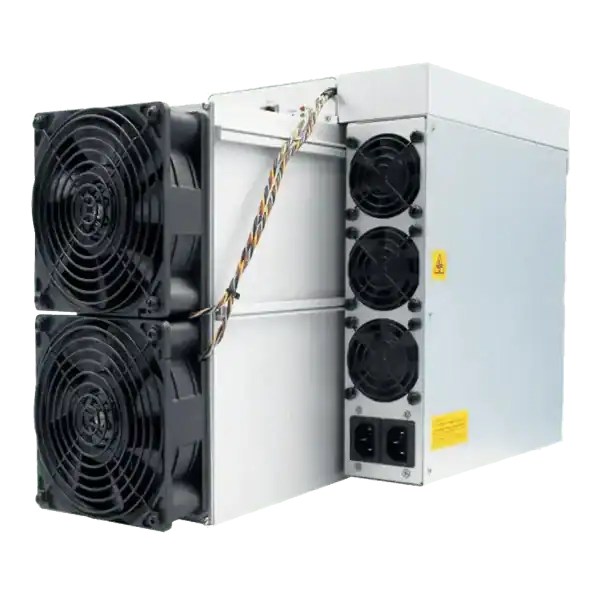

840KSOL
HASHRATE
3.3W/KSOL
EFFICIENCY
2772W
POWER
£1390.70
EST. MONTHLY
9
Months
EST. ROI
See how Bitcoin mining works from block templates and ASIC hashing to pool shares, node validation, payouts and the checks needed for a safe UK setup.
How Bitcoin mining works becomes easier to understand when the block, pool and machine are separated. The pool or local node supplies work. The ASIC tests SHA-256 block headers. A valid result is broadcast, and full nodes check it before accepting the block.
This article follows one job from the transaction set to an actual pool payment. It also explains what a Bitcoin miner can and cannot change, why dashboard hashrate moves, and which UK site checks belong before the power switch.
Estimated reading time: 7 minutes
A Bitcoin ASIC is a very fast guessing machine for one narrow calculation. Mining software gives it a candidate block header. The ASIC changes a number, hashes the header and checks the result. Most results fail; an extremely rare valid result can become a Bitcoin block.
An ASIC shows 200 TH/s locally, while the pool records accepted shares over several hours. The pool estimate moves above and below 200 TH/s because shares arrive randomly. The correct test compares a long enough pool period, rejected work, uptime and wall power with the specification.
| Block Template: | The transactions and rules used to assemble candidate mining work. |
|---|---|
| Nonce: | A header field miners vary during the search. |
| Target: | The threshold a hash must be below. |
| Share: | A pool proof that meets an easier target. |
| Stratum: | A family of protocols connecting miners, proxies and pools. |
A Bitcoin node checks transactions entering its mempool. Mining software chooses a valid set, creates the coinbase transaction and calculates a Merkle root. The candidate header also identifies the previous block, version, time and compact target.
A pool may construct the template and distribute jobs to many workers. A solo operator can use a local node and mining software. In either case, the candidate must stay within Bitcoin's consensus and block limits.
A SHA-256 ASIC contains many specialised hashing cores. Control software prepares work and sends it to hashboards. The chips repeatedly calculate double SHA-256 header results while changing nonce and related work fields.
The machine is not decrypting Bitcoin or solving one reusable equation. Every candidate is a separate trial. Efficiency is usually compared in joules per terahash, while total hashrate affects expected share and block frequency.
The Bitcoin target is hard enough to keep average network block time near ten minutes over the long run. A small miner could work for years without producing a network-valid result.
Pools therefore set an easier share target. A submitted share proves a measurable amount of work. It may earn pool credit without being a Bitcoin block. Occasionally a share also meets the network target.

The worker connects to a named endpoint and account, receives jobs and submits results. The pool classifies accepted, stale, duplicate and rejected shares. Those records are more useful than one instant hashrate display.
Payout methods allocate variance and transaction fees differently. PPS pays expected share value, PPLNS follows a contribution window, and other methods add their own rules. Read the exact current policy.
When a miner announces a block, nodes verify the proof of work, previous block, transaction rules, scripts, Merkle commitment and coinbase amount. A miner cannot make an excessive reward valid by spending more electricity.
This separation is important: miners order candidate transactions and produce work, while nodes enforce the rules they run. A pool or miner building invalid work wastes its own effort.
Local firmware estimates work from chip activity. A pool estimates hashrate from randomly arriving shares. Short windows can differ even when the machine is healthy. Network latency and rejected work can lower credited performance.
Use a representative period and compare local hashrate, pool accepted hashrate, rejects, uptime and energy together. Check manufacturer tolerance and operating mode before diagnosing a fault.
Nearly all ASIC electrical input leaves as heat. A 3.5 kW machine therefore creates roughly the heat of several electric heaters, continuously. The room must remove that heat in the expected summer condition.
Restricting air to reduce noise can raise chip and power-supply temperatures. Hydro and immersion systems move heat differently but still require pumps, heat exchangers and safe electrical design.
Place miners on a controlled network, restrict administration, change default credentials and use official firmware obtained through verified channels. Monitor pool destination, payout address and unexpected configuration changes.
A compromised miner can redirect work or expose a wider local network. Back up the approved configuration and record firmware versions and checksums so a change is detectable.
Before energising, verify model, voltage, connector, circuit, protection, earthing, ventilation and emergency isolation. Photograph serial numbers and inspect fans, hashboards, power supply and shipping condition.
Start with one known pool worker. Record wall power, board temperatures, fan speed, local and accepted hashrate, rejects and noise. Let the test reach a representative duration before copying settings across a fleet.
Reconcile pool credits and wallet receipts with the exact test period. Calculate electricity from measured kilowatt hours, not only a rated power label. Add fees, downtime, maintenance and cooling.
Repeat the case with lower revenue and higher difficulty. How Bitcoin mining works technically is stable, but the economic result is not. A safe installation can still be a poor purchase at the wrong cost.
A complete account of how Bitcoin mining works follows the template, ASIC search, pool shares, node validation and payment without merging them into one vague step.
To verify how Bitcoin mining works on a real machine, compare local performance with accepted pool work and measured wall energy over the same period.
Bitcoin targets, fees and pool policies must be checked live before relying on an example.
Pool dashboard hashrate is an estimate from shares and will vary over short periods.
Fixed electrical work and high continuous loads need a competent UK assessment.
| Stage | Main Evidence |
|---|---|
| Template | Valid transactions and previous block |
| ASIC search | Local hashrate, temperature and errors |
| Pool submission | Accepted, stale and rejected shares |
| Block acceptance | Independent full-node validation |
| Payment | Pool ledger and wallet receipt |
A table is a starting point, not a promise. Verify current official sources and apply each detail to the decision you are actually making.
It is hardware and software that performs proof-of-work searches and proposes valid blocks.
The mining system uses validated templates; full nodes independently enforce every block rule.
It is estimated from randomly arriving shares, so short windows naturally vary.
Only networks using a compatible SHA-256 proof-of-work design and supported pool or software.
Measure wall power, accepted hashrate, rejects, temperatures, uptime, noise and payout evidence.
How Bitcoin mining works is a chain of evidence: valid template, ASIC search, accepted shares, independent node checks and reconciled payment. Understanding each boundary makes faults and exaggerated claims easier to spot. Commission one machine with measured power and pool data before scaling.
Community built mini ASIC review: review a community-built mini ASIC through open design files, component provenance, firmware, board safety, reproducible.
NerdMiner V2 vs NerdNOS: compare NerdMiner V2 and NerdNOS by computing hardware, hashrate class, software provenance, power, cooling, pool support, learning.
NerdMiner alternatives: Choose an architecture first: ESP32 display, single-chip open ASIC, controller-dependent USB miner or compact home appliance.
Join the ASIC Mining Discussion
Members can read and join the discussion
Log in to read comments from other miners. Create a free account if you would like to ask a question or share your experience.
Membership helps us protect the discussion from spam and keep answers useful.