
Pre-order
Overall ranking

Equihash
·
ZEC
Overall rank#1of 100AvailableAll: #3 / 831
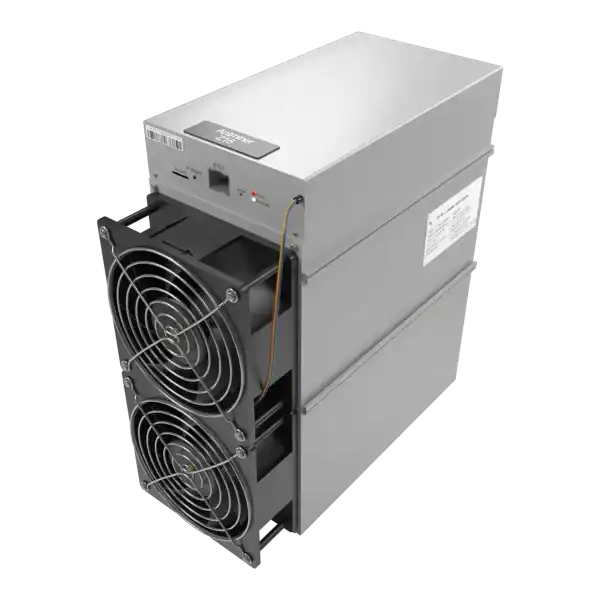

Pre-OrderFree Shipping
Hashrate
525KSOL
Efficiency
4.73W/KSOL
Power
2483W
Earns/kWh
39.8p
Bitcoin Core 0.16 listwallets guide covering loaded wallet names, identity selection, privacy, lifecycle races, readiness checks and multi-wallet monitoring.
This guide explains Bitcoin Core listwallets RPC in plain English. It shows what the command does, what its result means and what it cannot prove.
Bitcoin Core listwallets RPC: The array lists wallets loaded now, not every wallet directory or recoverable backup. Absence may mean unloaded rather than missing.
A miner is checking Bitcoin Core listwallets RPC. Never choose the first array entry or fall back silently when the expected wallet is absent. Inventory files and backups through separate secured procedures without exposing their names broadly.
The array lists wallets loaded now, not every wallet directory or recoverable backup. Absence may mean unloaded rather than missing. Inventory files and backups through separate secured procedures without exposing their names broadly.
Select the intended wallet explicitly for every balance, address, import or spend operation, then confirm walletname from getwalletinfo. Never choose the first array entry or fall back silently when the expected wallet is absent.
A loaded wallet may be rescanning, locked, depleted of keypool, incomplete, watch-only or on the wrong network context. Gate services on wallet-specific health, backup and chain state rather than list membership alone.

Wallets can load or unload between inventory and a subsequent RPC. Handle not-loaded and changed-set responses idempotently. Serialise lifecycle management with state-changing work and do not retry against a different wallet.
Wallet names may encode customers, roles, locations or recovery state. Restrict the endpoint, hash or alias names in routine metrics and avoid screenshots or logs that expose the full array.
Maintain an allow-list of expected role identifiers outside WordPress or customer systems, compare sets and alert on missing or unexpected entries. A newly unexpected wallet deserves investigation but is not automatically malicious.
Operators test the command on a non-production node first. They check a normal reply, an invalid request, a timeout and a restart. This shows what the response means and prevents one local result from being mistaken for a network-wide outcome.
Bitcoin Core listwallets RPC: The array lists wallets loaded now, not every wallet directory or recoverable backup.
The array lists wallets loaded now, not every wallet directory or recoverable backup.
Select the intended wallet explicitly for every balance, address, import or spend operation, then confirm walletname from getwalletinfo.
A loaded wallet may be rescanning, locked, depleted of keypool, incomplete, watch-only or on the wrong network context.
listwallets is a loaded-context inventory, not a readiness or discovery API. Safe multi-wallet operation requires explicit identity, per-wallet health gates, lifecycle handling and protection of wallet names.
Check the current specification status and the documentation for the exact implementation you operate before moving production funds or changing a mining node.

Bitcoin Core 23 restorewallet guide covering backup paths, wallet naming, startup persistence, warnings, rescans, duplicate restores and recovery verification.
Bitcoin Core 0.21 upgradewallet guide covering explicit versions, generated keys, backup rotation, result fields, compatibility testing and rollback planning.
Bitcoin Core 0.19 setwalletflag guide covering avoid_reuse, rescanning, used-address classification, coin selection, warnings, rollback and wallet safety.

Join the ASIC Mining Discussion
Members can read and join the discussion
Log in to read comments from other miners. Create a free account if you would like to ask a question or share your experience.
Membership helps us protect the discussion from spam and keep answers useful.