
Pre-order
Overall ranking

Equihash
·
ZEC
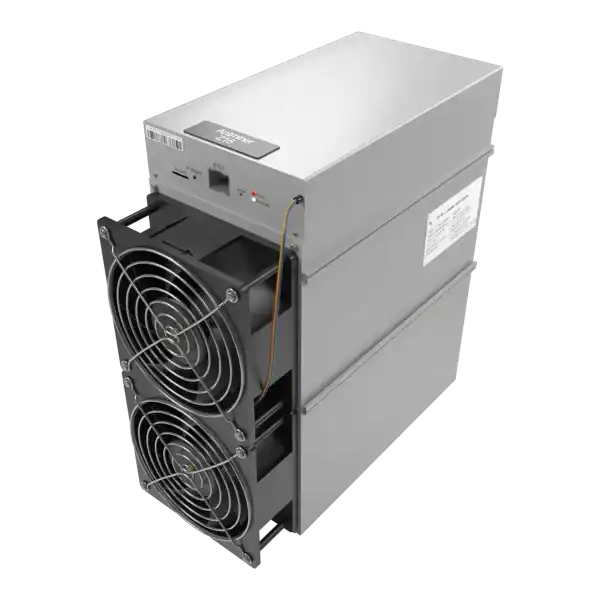
Overall rank#1of 100AvailableAll: #2 / 831

Pre-OrderFree Shipping
Hashrate
525KSOL
Efficiency
4.73W/KSOL
Power
2483W
Earns/kWh
42.2p
Bitcoin Core 0.17 listlabels guide covering all-label and send or receive purpose filters, empty-string behaviour, privacy, mutable metadata and account migration.
This guide explains Bitcoin Core listlabels RPC in plain English. It shows what the command does, what its result means and what it cannot prove.
Bitcoin Core listlabels RPC: Labels do not carry balances and cannot support send-from semantics. Use transaction, script and outpoint data for accounting and custody.
A miner is checking Bitcoin Core listlabels RPC. Omitting purpose returns every label in the selected wallet. An empty string has the same effect, so do not use empty input as a no-results filter.
Omitting purpose returns every label in the selected wallet. An empty string has the same effect, so do not use empty input as a no-results filter. Bind the request to one wallet and cap response handling to prevent accidental cross-wallet inventory aggregation.
The documented filters are send and receive. Validate exact values and reject typos rather than falling back to all labels. The filter means at least one address under that label has the purpose; it does not define the direction or ownership of every related transaction.
Expect an array of label strings and preserve exact spelling and encoding. Do not assume ordering, uniqueness after external normalisation or that the default empty label will be displayed like a named one. Sort only in presentation code.

Labels do not carry balances and cannot support send-from semantics. Use transaction, script and outpoint data for accounting and custody. Listlabels is appropriate for navigation and inventory, not a financial report or evidence that funds are segregated.
Labels can contain customer names, roles or internal case references. Limit RPC access and avoid exporting raw names to metrics, URLs or client-side logs. Use opaque identifiers in integrations and resolve display text only in authorised interfaces.
Labels appear and disappear as address assignments change. Capture time and wallet identity when auditing, and keep historical mapping outside the mutable wallet if regulatory or customer reporting depends on it. An absent label today does not erase past attribution.
Operators test the command on a non-production node first. They check a normal reply, an invalid request, a timeout and a restart. This shows what the response means and prevents one local result from being mistaken for a network-wide outcome.
Bitcoin Core listlabels RPC: Labels do not carry balances and cannot support send-from semantics.
Omitting purpose returns every label in the selected wallet. An empty string has the same effect, so do not use empty input as a no-results filter.
The documented filters are send and receive. Validate exact values and reject typos rather than falling back to all labels.
Expect an array of label strings and preserve exact spelling and encoding.
listlabels is a local metadata inventory with precise purpose-filter semantics. It remains safe when wallet context and privacy are controlled and accounting stays grounded in transactions and outpoints.
Check the current specification status and the documentation for the exact implementation you operate before moving production funds or changing a mining node.
Bitcoin Core 23 restorewallet guide covering backup paths, wallet naming, startup persistence, warnings, rescans, duplicate restores and recovery verification.
Bitcoin Core 0.21 upgradewallet guide covering explicit versions, generated keys, backup rotation, result fields, compatibility testing and rollback planning.
Bitcoin Core 0.19 setwalletflag guide covering avoid_reuse, rescanning, used-address classification, coin selection, warnings, rollback and wallet safety.

Join the ASIC Mining Discussion
Members can read and join the discussion
Log in to read comments from other miners. Create a free account if you would like to ask a question or share your experience.
Membership helps us protect the discussion from spam and keep answers useful.