
Pre-order
Overall ranking

Equihash
·
ZEC
Overall rank#1of 100AvailableAll: #2 / 831
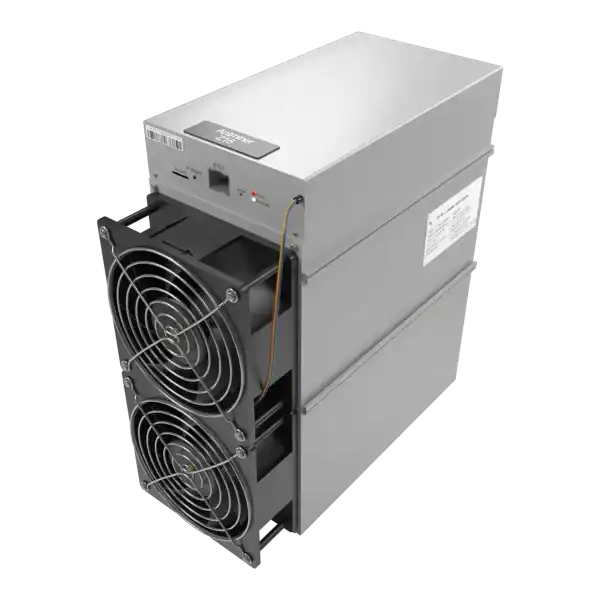

Pre-OrderFree Shipping
Hashrate
525KSOL
Efficiency
4.73W/KSOL
Power
2483W
Earns/kWh
40.2p
Bitcoin Core 0.16 getnettotals guide covering cumulative traffic, timestamps, upload cycles, targets, historical block serving and monitoring.
This guide explains Bitcoin Core getnettotals RPC in plain English. It shows what the command does, what its result means and what it cannot prove.
Bitcoin Core getnettotals RPC: totalbytesrecv and totalbytessent accumulate Bitcoin P2P traffic observed by the process. Calculate rates from two timestamped samples and handle restart or counter reset.
A node operator is checking Bitcoin Core getnettotals RPC. Use a monotonic collector clock for rate intervals where possible and compare host time health. Do not subtract across different node instances or convert large integers through unsafe precision.
totalbytesrecv and totalbytessent accumulate Bitcoin P2P traffic observed by the process. Calculate rates from two timestamped samples and handle restart or counter reset. Do not subtract across different node instances or convert large integers through unsafe precision.
timemillis is current Unix time in milliseconds from the node environment. Use a monotonic collector clock for rate intervals where possible and compare host time health. A clock jump can create false bandwidth spikes or negative elapsed time.
timeframe and target define the measuring cycle, while bytes_left_in_cycle and time_left_in_cycle show remaining budget and duration. Target_reached is a direct state indicator. Preserve byte and second units and expect boundaries to reset the cycle.

serve_historical_blocks indicates whether the node may serve old blocks under the target policy. Reaching the limit does not necessarily stop all network traffic. Monitoring must distinguish historical serving from headers, recent blocks and other messages.
The RPC excludes operating-system overhead, SSH, monitoring, package downloads and other services. Compare interface and provider counters for billing or link capacity. Encryption, tunnelling and retransmission can make wire usage differ from application bytes.
Warn before budget exhaustion according to the node’s public-serving role. Avoid recording per-peer traffic unless necessary because topology can be sensitive. A high total may reflect useful initial block service, attack traffic or repeated sync; investigate with bounded logs.
Operators test the command on a non-production node first. They check a normal reply, an invalid request, a timeout and a restart. This shows what the response means and prevents one local result from being mistaken for a network-wide outcome.
Bitcoin Core getnettotals RPC: totalbytesrecv and totalbytessent accumulate Bitcoin P2P traffic observed by the process.
totalbytesrecv and totalbytessent accumulate Bitcoin P2P traffic observed by the process. Calculate rates from two timestamped samples and handle restart or counter reset.
timemillis is current Unix time in milliseconds from the node environment. Use a monotonic collector clock for rate intervals where possible and compare host time health.
timeframe and target define the measuring cycle, while bytes_left_in_cycle and time_left_in_cycle show remaining budget and duration.
getnettotals supports dependable bandwidth monitoring when counters, clocks and upload cycles are handled explicitly. It is not a full host traffic meter or a per-peer service-quality report.
Check the current specification status and the documentation for the exact implementation you operate before moving production funds or changing a mining node.
Bitcoin Core 26 getaddrmaninfo guide covering new and tried address-manager tables, per-network counts, diversity monitoring, privacy and diagnostic limits.
Bitcoin Core 23 getblockfrompeer guide covering known headers, peer IDs, scheduled requests, peer replacement, validation, monitoring and failure recovery.
Bitcoin Core 0.16 stop RPC guide covering authority, service draining, state persistence, process supervision, shutdown verification and restart readiness.

Join the ASIC Mining Discussion
Members can read and join the discussion
Log in to read comments from other miners. Create a free account if you would like to ask a question or share your experience.
Membership helps us protect the discussion from spam and keep answers useful.