
Pre-order
Overall ranking

Equihash
·
ZEC
Overall rank#1of 100AvailableAll: #2 / 831
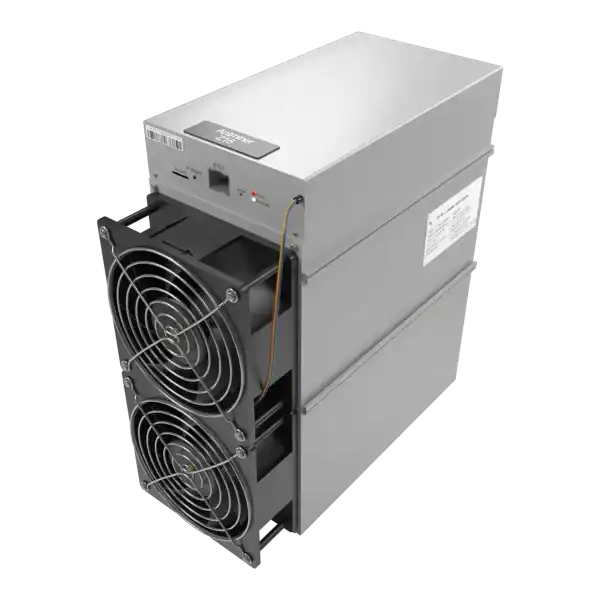

Pre-OrderFree Shipping
Hashrate
525KSOL
Efficiency
4.73W/KSOL
Power
2483W
Earns/kWh
39.8p
Bitcoin Core 0.16 getdifficulty guide covering minimum-difficulty multiples, targets, retargets, network identity, floating-point limits and mining context.

This guide explains Bitcoin Core getdifficulty RPC in plain English. It shows what the command does, what its result means and what it cannot prove.
Bitcoin Core getdifficulty RPC: Difficulty rises as the permitted proof-of-work target becomes smaller. The returned ratio compares the current target with the reference minimum-difficulty target.
A miner is checking Bitcoin Core getdifficulty RPC. Hash validity is decided against the encoded target in the block header, not by rounding or displaying this ratio.
Difficulty rises as the permitted proof-of-work target becomes smaller. The returned ratio compares the current target with the reference minimum-difficulty target. Hash validity is decided against the encoded target in the block header, not by rounding or displaying this ratio.
Mainnet, testnet and regtest follow different operating conditions and may show radically different values. Record chain identity, tip hash and height with every observation. A plausible mainnet-looking number from a node on another chain is not evidence of correct configuration.
Mainnet target changes at defined retarget intervals under consensus rules. Monitoring should expect plateaux followed by boundary changes rather than smooth adjustment. Testnet contains special minimum-difficulty behaviour in historical rules, so comparisons across networks require explicit rule awareness.

Difficulty and observed block interval can support a network hash-rate estimate, but neither predicts when the next block will arrive. Mining is probabilistic and short samples vary widely. Do not promise revenue or completion time from difficulty alone; state assumptions, uptime, fees and variance.
The RPC returns a numeric value suited to display and trend monitoring. Consensus verification should decode nBits and use exact integer target arithmetic. Avoid converting large targets or accumulated work through binary floating point in software that makes accept or reject decisions.
A pool may assign share targets easier than the network target to measure worker contribution. That share difficulty is a pool protocol setting and does not change Bitcoin consensus. Dashboards must label network and share difficulty separately and preserve their respective units.
Operators test the command on a non-production node first. They check a normal reply, an invalid request, a timeout and a restart. This shows what the response means and prevents one local result from being mistaken for a network-wide outcome.
Bitcoin Core getdifficulty RPC: Difficulty rises as the permitted proof-of-work target becomes smaller.
Difficulty rises as the permitted proof-of-work target becomes smaller. The returned ratio compares the current target with the reference minimum-difficulty target.
Mainnet, testnet and regtest follow different operating conditions and may show radically different values.
Mainnet target changes at defined retarget intervals under consensus rules. Monitoring should expect plateaux followed by boundary changes rather than smooth adjustment.
getdifficulty communicates the relative proof-of-work target clearly, but exact validation and mining decisions require network identity, header targets, probabilistic context and careful separation from pool share difficulty.
Check the current specification status and the documentation for the exact implementation you operate before moving production funds or changing a mining node.

Bitcoin Core waitfornewblock RPC made simple. See what the feature does, where its limits sit and which checks node or wallet operators should make.
Bitcoin Core waitforblockheight guide covering at-least height waits, timeout returns, response checks, reorganisations, client limits and reliable automation.
Bitcoin Core waitforblock RPC made simple. See what the feature does, where its limits sit and which checks node or wallet operators should make.

Join the ASIC Mining Discussion
Members can read and join the discussion
Log in to read comments from other miners. Create a free account if you would like to ask a question or share your experience.
Membership helps us protect the discussion from spam and keep answers useful.