
Pre-order
Overall ranking

Equihash
·
ZEC
Overall rank#1of 100AvailableAll: #2 / 831
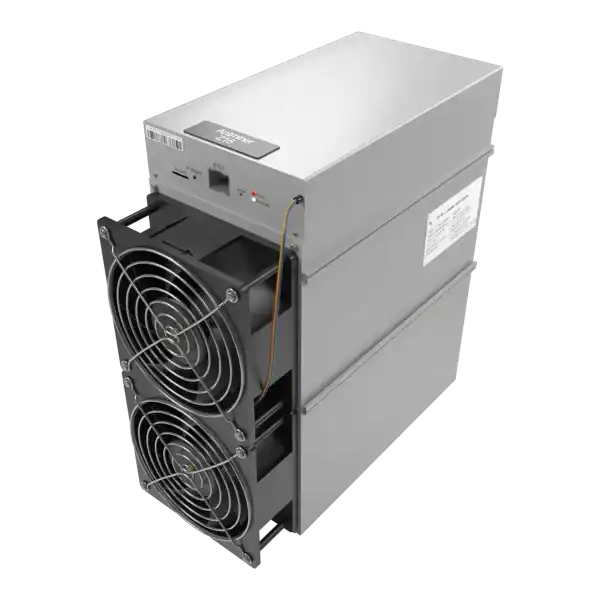

Pre-OrderFree Shipping
Hashrate
525KSOL
Efficiency
4.73W/KSOL
Power
2483W
Earns/kWh
39.8p
Bitcoin Core getconnectioncount RPC made simple. See what the feature does, where its limits sit and which checks node or wallet operators should make.

This guide explains Bitcoin Core getconnectioncount RPC in plain English. It shows what the command does, what its result means and what it cannot prove.
Bitcoin Core getconnectioncount RPC: Many peers controlled by one network or operator do not provide meaningful diversity. Review autonomous-system, address-family and connection-source concentration without publishing sensitive topology.
A node operator is checking Bitcoin Core getconnectioncount RPC. The result is a point-in-time peer connection count. It includes connections with different direction, age, capabilities and quality.
The result is a point-in-time peer connection count. It includes connections with different direction, age, capabilities and quality. A count of eight does not necessarily mean eight useful independent block sources, and a brief drop during restart is different from sustained isolation.
Outbound peers help a node get diverse network views; inbound peers indicate reachability and consume separate resources. Getconnectioncount merges them. Use getpeerinfo and network configuration to distinguish normal topology from a host connected only to manually configured or local peers.
A socket can remain connected while relaying stale tips, no useful services or excessive latency. Monitor last block and transaction activity, ping time, service flags, protocol version and chain progress. Define failure using service outcomes, not a universal minimum connection number.

Many peers controlled by one network or operator do not provide meaningful diversity. Review autonomous-system, address-family and connection-source concentration without publishing sensitive topology. Use Bitcoin Core connection management rather than automating frequent peer churn from a crude count threshold.
A low inbound count does not prove failure for a node that needs only outbound synchronisation. A public relay or mining service may have a different objective. Test firewall, NAT and advertised address independently and avoid enabling automatic port mapping solely to increase a dashboard number.
Set warning and stop thresholds from the node role, restart behaviour and observed baseline. Require persistence to avoid paging on transient rotation. Combine zero or low count with stale chain, lack of header progress, DNS or proxy errors and peer-manager logs before diagnosing isolation.
Operators test the command on a non-production node first. They check a normal reply, an invalid request, a timeout and a restart. This shows what the response means and prevents one local result from being mistaken for a network-wide outcome.
Bitcoin Core getconnectioncount RPC: Many peers controlled by one network or operator do not provide meaningful diversity.
The result is a point-in-time peer connection count. It includes connections with different direction, age, capabilities and quality.
Outbound peers help a node get diverse network views. Inbound peers indicate reachability and consume separate resources.
A socket can remain connected while relaying stale tips, no useful services or excessive latency.
getconnectioncount is a useful first signal, not a peer-health verdict. Reliable monitoring combines direction, quality, diversity and chain progress with role-specific persistence thresholds.
Check the current specification status and the documentation for the exact implementation you operate before moving production funds or changing a mining node.

Bitcoin Core 26 getaddrmaninfo guide covering new and tried address-manager tables, per-network counts, diversity monitoring, privacy and diagnostic limits.
Bitcoin Core 23 getblockfrompeer guide covering known headers, peer IDs, scheduled requests, peer replacement, validation, monitoring and failure recovery.
Bitcoin Core 0.16 stop RPC guide covering authority, service draining, state persistence, process supervision, shutdown verification and restart readiness.

Join the ASIC Mining Discussion
Members can read and join the discussion
Log in to read comments from other miners. Create a free account if you would like to ask a question or share your experience.
Membership helps us protect the discussion from spam and keep answers useful.