
Pre-order
Overall ranking

Equihash
·
ZEC
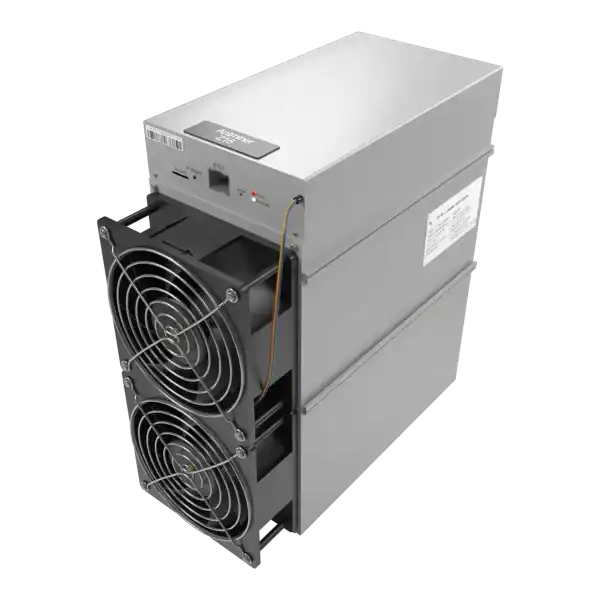
Overall rank#1of 100AvailableAll: #2 / 831

Pre-OrderFree Shipping
Hashrate
525KSOL
Efficiency
4.73W/KSOL
Power
2483W
Earns/kWh
39.8p
Bitcoin Core getchaintips guide covering active, valid-fork, valid-headers, headers-only and invalid tips, branch length and safe fork monitoring.
This guide explains Bitcoin Core getchaintips RPC in plain English. It shows what the command does, what its result means and what it cannot prove.
Bitcoin Core getchaintips RPC: For non-active tips, branchlen describes how many blocks connect the tip back to the active branch point.
A miner is checking Bitcoin Core getchaintips RPC. Do not delete a branch record when it disappears from the live RPC response. Walk header ancestry to locate the fork and measure which monitored payments or templates actually intersect it.
The active tip has branchlen zero and active status. Verify there is exactly one active entry in a coherent response and compare its hash with getbestblockhash. A mismatch across calls can be a normal tip transition, so sample with timestamps and retry under a bounded consistency procedure.
For non-active tips, branchlen describes how many blocks connect the tip back to the active branch point. It is not confirmation count, economic weight or number of affected transactions. Walk header ancestry to locate the fork and measure which monitored payments or templates actually intersect it.
invalid contains an invalid block; headers-only lacks block data; valid-headers has available blocks not fully validated; valid-fork is fully validated but inactive; active is the selected main tip. Preserve these distinctions. A headers-only branch is not evidence of a valid competing chain, and a valid fork is not necessarily dangerous.

The node reports branches it has learned about and retained. Another node may know different tips because of peers, pruning, restart or attack visibility. Compare several independent nodes and relevant logs. Absence from one response does not prove a branch never existed or was not seen elsewhere.
Short valid forks occur naturally when blocks race. Alert on depth, duration, chainwork proximity, invalid-source patterns and affected business state rather than every second tip. Escalate deep or persistent divergence and pause sensitive services when confirmation assumptions are threatened.
Record tip hash, height, branch length, status, active tip, chainwork and observation time without storing unrelated peer identities. Preserve detached headers and affected transaction references through the incident. Do not delete a branch record when it disappears from the live RPC response.
Operators test the command on a non-production node first. They check a normal reply, an invalid request, a timeout and a restart. This shows what the response means and prevents one local result from being mistaken for a network-wide outcome.
Bitcoin Core getchaintips RPC: For non-active tips, branchlen describes how many blocks connect the tip back to the active branch point.
The active tip has branchlen zero and active status. Verify there is exactly one active entry in a coherent response and compare its hash with getbestblockhash.
For non-active tips, branchlen describes how many blocks connect the tip back to the active branch point.
invalid contains an invalid block. Headers-only lacks block data. Valid-headers has available blocks not fully validated.
getchaintips is the correct local view for competing branch awareness, but it requires status, ancestry, chainwork and multi-node context. Short forks are evidence to evaluate, not automatic proof of attack.
Check the current specification status and the documentation for the exact implementation you operate before moving production funds or changing a mining node.

Bitcoin Core waitfornewblock RPC made simple. See what the feature does, where its limits sit and which checks node or wallet operators should make.

Bitcoin Core waitforblockheight guide covering at-least height waits, timeout returns, response checks, reorganisations, client limits and reliable automation.
Bitcoin Core waitforblock RPC made simple. See what the feature does, where its limits sit and which checks node or wallet operators should make.

Join the ASIC Mining Discussion
Members can read and join the discussion
Log in to read comments from other miners. Create a free account if you would like to ask a question or share your experience.
Membership helps us protect the discussion from spam and keep answers useful.