
Pre-order
Overall ranking

Equihash
·
ZEC
Overall rank#1of 100AvailableAll: #3 / 831
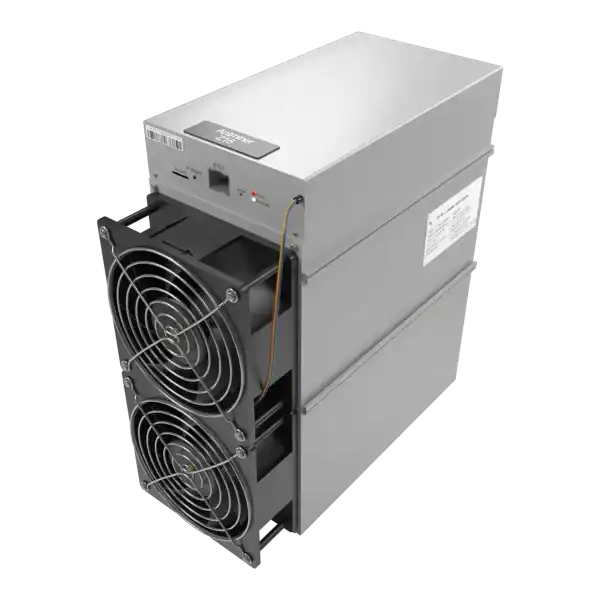

Pre-OrderFree Shipping
Hashrate
525KSOL
Efficiency
4.73W/KSOL
Power
2483W
Earns/kWh
39.9p
Bitcoin Core getblockchaininfo guide covering network, blocks and headers, progress, IBD, chainwork, pruning, soft-fork state, warnings and monitoring.
This guide explains Bitcoin Core getblockchaininfo RPC in plain English. It shows what the command does, what its result means and what it cannot prove.
Bitcoin Core getblockchaininfo RPC: chain identifies main, test or regtest under the historical naming. Check it before interpreting any hash, height or balance and bind the expected genesis identity in higher-assurance systems.
A node operator is checking Bitcoin Core getblockchaininfo RPC. Do not enable withdrawals because progress rounded to one or because IBD became false before monitoring and wallet rescans are complete.
chain identifies main, test or regtest under the historical naming. Check it before interpreting any hash, height or balance and bind the expected genesis identity in higher-assurance systems. A responsive node on the wrong network is an operational failure, not a degraded success.
blocks counts processed active-chain blocks while headers counts validated headers. A gap can be normal during initial sync or signal stalled block acquisition. Pair both with bestblockhash, median time and independent peer observations; equal heights alone do not prove equal chainwork or tip.
verificationprogress and initialblockdownload are estimates and debug-oriented signals. Use them with last-block age, chainwork and service-specific thresholds. Do not enable withdrawals because progress rounded to one or because IBD became false before monitoring and wallet rescans are complete.

chainwork provides cumulative work in hexadecimal and difficulty describes the current target relative to the reference. Compare chainwork across compatible nodes to detect a lower-work branch. Preserve big integers exactly; converting long hexadecimal work to floating point can erase meaningful differences.
pruned changes the availability contract. Pruneheight gives the lowest complete stored block, while automatic settings and target size appear conditionally. Archive-dependent services must refuse assignment to a pruned node whose retained range cannot satisfy them. Monitor actual disk headroom beyond the configured target.
The response included legacy softfork and BIP 9 deployment state plus warnings. Status fields are version- and period-dependent; interpret defined, started, locked-in, active and failed under the named deployment. Warnings should page an operator under policy, not be discarded because historical safe mode was disabled.
Test fresh, syncing, caught-up, pruned, stalled and forked regtest nodes. Validate conditional fields, schema changes, chainwork precision and warning handling. Gate each dependent service separately, because block explorers, mining templates, deposits and withdrawals have different readiness requirements.
Bitcoin Core getblockchaininfo RPC: chain identifies main, test or regtest under the historical naming. Check it before interpreting any hash, height or balance and bind the expected genesis identity in higher-assurance systems.
chain identifies main, test or regtest under the historical naming. Check it before interpreting any hash, height or balance and bind the expected genesis identity in higher-assurance systems.
blocks counts processed active-chain blocks while headers counts validated headers. A gap can be normal during initial sync or signal stalled block acquisition.
verificationprogress and initialblockdownload are estimates and debug-oriented signals. Use them with last-block age, chainwork and service-specific thresholds.
getblockchaininfo is the core chain-health summary, but readiness emerges from a consistent set of identity, chainwork, freshness, pruning and warning signals. No single boolean or progress value is enough.
Check the current specification status and the documentation for the exact implementation you operate before moving production funds or changing a mining node.

Bitcoin Core 26 getaddrmaninfo guide covering new and tried address-manager tables, per-network counts, diversity monitoring, privacy and diagnostic limits.
Bitcoin Core 23 getblockfrompeer guide covering known headers, peer IDs, scheduled requests, peer replacement, validation, monitoring and failure recovery.
Bitcoin Core 0.16 stop RPC guide covering authority, service draining, state persistence, process supervision, shutdown verification and restart readiness.

Join the ASIC Mining Discussion
Members can read and join the discussion
Log in to read comments from other miners. Create a free account if you would like to ask a question or share your experience.
Membership helps us protect the discussion from spam and keep answers useful.