
Pre-order
Overall ranking

Equihash
·
ZEC
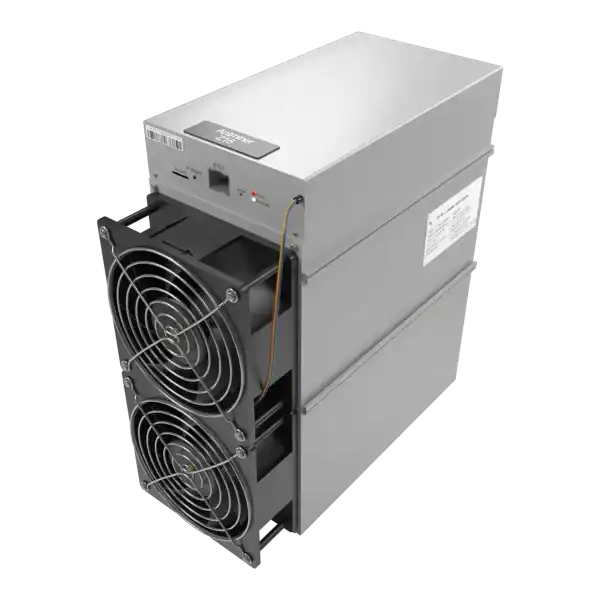
Overall rank#1of 100AvailableAll: #2 / 831

Pre-OrderFree Shipping
Hashrate
525KSOL
Efficiency
4.73W/KSOL
Power
2483W
Earns/kWh
39.8p
Bitcoin Core getblockcount RPC made simple. See what the feature does, where its limits sit and which checks node or wallet operators should make.
This guide explains Bitcoin Core getblockcount RPC in plain English. It shows what the command does, what its result means and what it cannot prove.
Bitcoin Core getblockcount RPC: Bitcoin selects the best valid chain by cumulative proof of work, not simple length. A lower-height branch can theoretically carry more work under different targets.
A miner is checking Bitcoin Core getblockcount RPC. Off-by-one assumptions can corrupt maturity, locktime and confirmation calculations even when the displayed chain appears plausible.
The genesis block is height zero, so the numeric height is one less than the number of blocks from genesis through the tip. Use the term height in APIs and dashboards. Off-by-one assumptions can corrupt maturity, locktime and confirmation calculations even when the displayed chain appears plausible.
Two competing branches can share a height while ending in different hashes. Always pair the value with getbestblockhash or blockchain info. Deposit and mining systems should anchor work to a specific block hash and ancestry, not a bare integer that can survive a reorganisation unchanged.
Bitcoin selects the best valid chain by cumulative proof of work, not simple length. A lower-height branch can theoretically carry more work under different targets. During divergence, compare chainwork and validation status rather than instructing operators to follow the largest number.

An unchanged height can mean no new block, a stale peer set, initial sync, RPC failure cached by a proxy or a stopped node. Check median or block time, headers, IBD, peer announcements and response freshness. Distinguish a valid long block interval from an infrastructure outage.
A reorganisation may reduce, retain or increase height while changing recent block identities. Store recent hash ancestry and recalculate confirmation depth for affected payments. Alerts based only on negative height movement miss same-height forks and can overreact to expected test-chain changes.
Compare independent nodes over a duration with hash and chainwork context. Temporary one-block differences are normal propagation; persistent lag or different tips need investigation. Use monotonic local observation timestamps and avoid a public explorer as the single truth source.
Operators test the command on a non-production node first. They check a normal reply, an invalid request, a timeout and a restart. This shows what the response means and prevents one local result from being mistaken for a network-wide outcome.
Bitcoin Core getblockcount RPC: Bitcoin selects the best valid chain by cumulative proof of work, not simple length.
The genesis block is height zero, so the numeric height is one less than the number of blocks from genesis through the tip.
Two competing branches can share a height while ending in different hashes.
Bitcoin selects the best valid chain by cumulative proof of work, not simple length.
getblockcount gives a useful scalar height, but it cannot establish chain identity or health by itself. Safe monitoring combines it with tip hash, ancestry, chainwork, freshness and explicit zero-based calculations.
Check the current specification status and the documentation for the exact implementation you operate before moving production funds or changing a mining node.

Bitcoin Core waitfornewblock RPC made simple. See what the feature does, where its limits sit and which checks node or wallet operators should make.
Bitcoin Core waitforblockheight guide covering at-least height waits, timeout returns, response checks, reorganisations, client limits and reliable automation.
Bitcoin Core waitforblock RPC made simple. See what the feature does, where its limits sit and which checks node or wallet operators should make.

Join the ASIC Mining Discussion
Members can read and join the discussion
Log in to read comments from other miners. Create a free account if you would like to ask a question or share your experience.
Membership helps us protect the discussion from spam and keep answers useful.