

Sealminer A4 Ultra Hydro
Bitcoin & Bitcoin Cash ASIC Miner
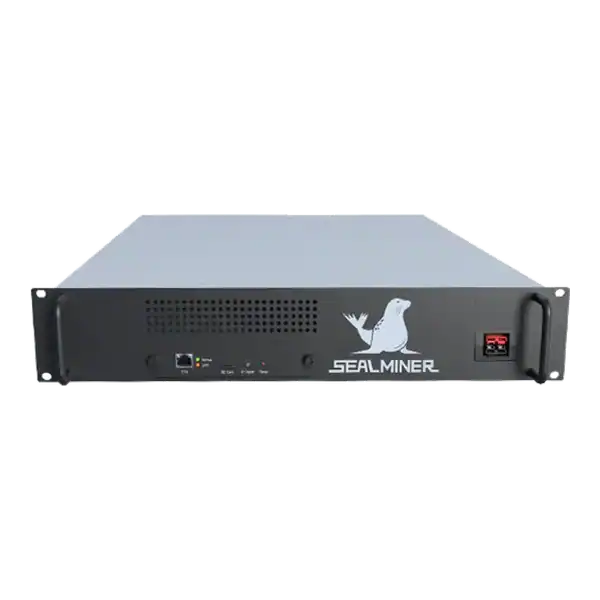

886TH
HASHRATE
9.45W/TH
EFFICIENCY
8373W
POWER
£898.19
EST. MONTHLY
NO PAYBACK
EST. ROI
Prepare ASIC mining in hot weather by measuring intake conditions, airflow, filter and fan performance, electrical load, alarms and safe power-down limits.
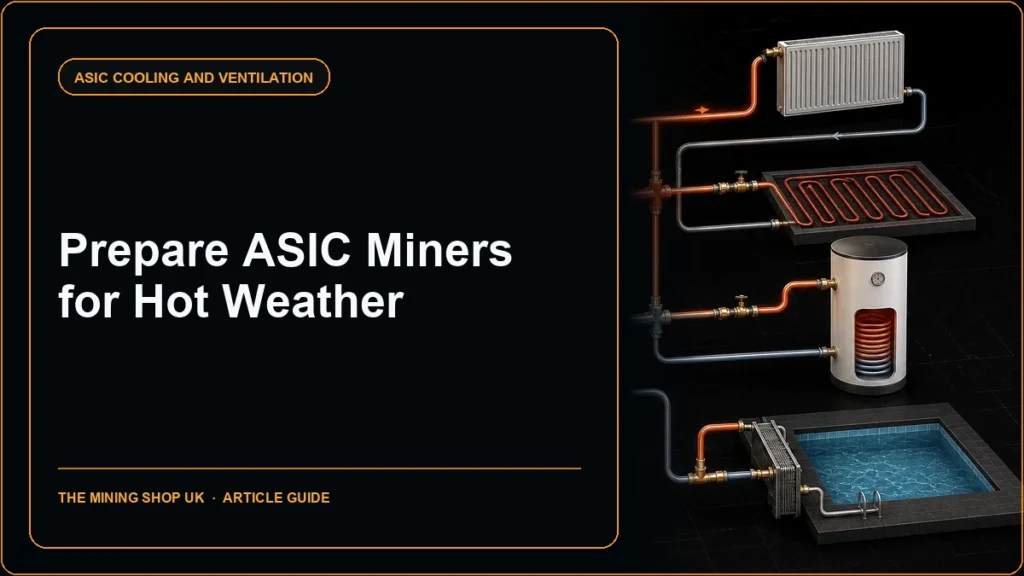
ASIC mining in hot weather needs preparation before the first heatwave. Rising intake temperature reduces cooling margin, increases fan and facility power and can expose recirculation, dust, connector or firmware problems that stayed hidden in winter. This guide provides a measured plan for air, hydro and immersion sites.
ASIC mining in hot weather is manageable when the site measures the actual intake, prevents recirculation, maintains airflow and liquid systems and uses staged controls.
A site operator wants to understand ASIC mining in hot weather. Prepare before peak weather, include auxiliary electrical demand and test curtailment and restart. If safe cooling or electrical integrity cannot be assured, power down and preserve the equipment.
Every miner and cooling system has an operating envelope that includes inlet temperature, humidity, altitude, flow and other conditions. Collect current manuals for the exact models and record their limits. The lowest limit across miners, power supplies, switchgear, pumps, dry coolers and network equipment can govern the room.
Do not use a manufacturer’s maximum temperature as a routine target. It is a boundary under specified conditions, not evidence that efficiency, component life and stability remain unchanged. Create warning, intervention and shutdown thresholds below the absolute limit, with hysteresis so equipment does not cycle rapidly around one temperature.
Review warranty and hosting terms before the season. Record who can change power profiles, curtail a rack and approve repairs. A heat response that depends on reaching one unavailable manager is not a reliable control.

Place calibrated or plausibly checked sensors at representative miner intakes, hot aisles, return paths and external air points. A single wall reading can miss a hot upper rack or a jet of exhaust returning around a barrier. Trend several locations over the day and correlate them with fan speed, chip temperature, hashrate and restarts.
Use smoke testing or other safe airflow methods under competent supervision to reveal bypass and recirculation. Seal gaps that allow hot exhaust to reach the cold side, maintain intended pressure and keep doors in their designed state. Adding extraction can fail if there is no equivalent clean make-up-air path.
| Measurement | Why it matters | Compare with |
|---|---|---|
| Miner inlet temperature | Actual cooling air delivered | Model operating envelope |
| Outlet or hot-aisle temperature | Heat removal and recirculation clue | Normal baseline |
| Fan speed and board temperature | Cooling response and restriction | Stable cool-day profile |
| Accepted hashrate and errors | Commercial and stability effect | Pool-side baseline |
| Facility auxiliary power | True cooling cost | Outdoor temperature and load |
Inspect filters, screens, fan guards, heatsinks, ducting and louvres before peak temperatures. Replace or clean filters by measured pressure or the site’s schedule. Removing a filter can lower resistance but allow conductive or abrasive dust into the miner. So do not trade a visible temperature problem for contamination.
Check every fan for speed, vibration and bearing noise. Confirm that replacement fans match the control and airflow requirement. Secure loose ducting and remove stored materials from intake and exhaust routes. Maintain fire separation and do not use unsuitable acoustic foam in hot airflow.
Power down and isolate equipment before physical cleaning or fan work. HSE guidance requires electrical work to be planned and energy sources securely isolated. Use cleaning methods approved for the hardware. Uncontrolled compressed air can drive debris deeper, overspeed fans or create electrostatic risk.
Higher ambient temperature can reduce electrical and electronic cooling margin. Inspect plugs, terminals, busbars, PDUs, PSUs and cables for heat, discolouration, odour or looseness under a competent maintenance programme. Thermal imaging can help when applied and interpreted by a competent person under safe procedures.
Cooling equipment adds load at the same time as the site is stressed. Include extraction fans, pumps, dry coolers and chillers in maximum-demand planning. A distribution system sized only for ASIC nameplate loads may not have enough headroom for summer auxiliaries.
Do not bypass over-temperature trips or force fan settings to hide a site problem. If the miner throttles or shuts down within its protection design, investigate airflow, inlet conditions and load. Repeated manual restarts can compound heat and connector damage.
Hydro and immersion systems move heat into liquid but still have to reject it. Check pumps, strainers, valves, dry coolers, heat exchangers, expansion capacity, leak detection and water or fluid quality. Confirm flow and temperature sensors against a reasonable reference and test the response to a failed pump or lost fan.
Compare inlet liquid temperature, flow, pressure, conductivity and pH with the exact manufacturer specification. Do not assume requirements carry across models. Keep mining fluid separated from potable or building systems through appropriate heat exchangers and controls. Repair leaks before the system reaches its hottest and highest-pressure condition.
Immersion fluid properties, fill level and material compatibility must remain within the system design. Hot weather can raise bulk fluid temperature even when the ASIC reports normal chip temperature. Plan safe handling, containment and cooling-plant capacity for the full electrical load.
A staged response preserves control. The first stage may raise alerts and verify airflow. The next can apply a supported lower-power profile. A later stage can curtail selected racks or the complete site. Define which temperature and duration triggers each stage, who is notified and how recovery is confirmed.
Measure the lower-power profile before summer. Record watts, accepted hashrate, fan speed, temperature and stability. An underclock that reduces watts and heat may improve site uptime even if hashrate falls. Do not assume a profile name guarantees efficiency or warranty support.
Restart gradually after a heat event so cooling and electrical systems are not hit by the entire fleet at once. Verify inlet conditions, pump or fan status and alarms first. Record lost time and the site or hardware cause consistently for uptime reporting.
Continue when measured intake conditions, electrical equipment, cooling plant and miner temperatures remain inside their approved envelope with stable accepted hashrate. Keep enhanced monitoring while outdoor conditions remain elevated.
A supported lower-power profile can be commercially sensible when it preserves efficiency and avoids an uncontrolled trip. Compare net revenue with extra cooling power.
Curtail when intake or liquid conditions approach intervention limits, auxiliary equipment loses redundancy, recirculation cannot be corrected or electrical components heat abnormally. Shut down under the site’s emergency procedure when protective limits or safe operation cannot be assured.
Do not keep mining to recover sunk electricity or meet an uptime target when safety or equipment damage is at risk. Preserve logs and investigate before restart.
Run a heatwave drill during moderate weather. Simulate sensor alert, fan or pump loss, staged curtailment and restart. Confirm that notifications reach the responsible person and that every action is logged.
ASIC mining in hot weather is manageable when the site measures the actual intake, prevents recirculation, maintains airflow and liquid systems and uses staged controls.
Every miner and cooling system has an operating envelope that includes inlet temperature, humidity, altitude, flow and other conditions.
Place calibrated or plausibly checked sensors at representative miner intakes, hot aisles, return paths and external air points.
Inspect filters, screens, fan guards, heatsinks, ducting and louvres before peak temperatures.
ASIC mining in hot weather is manageable when the site measures the actual intake, prevents recirculation, maintains airflow and liquid systems and uses staged controls. Prepare before peak weather, include auxiliary electrical demand and test curtailment and restart. Maximum temperature is a boundary, not an operating target. If safe cooling or electrical integrity cannot be assured, power down and preserve the equipment.
Compare cooling-specific ASIC categories and ask The Mining Shop UK to review hosting or cooling requirements before summer capacity is committed.
Measure temperature at miner intake, not just outdoors or at the room thermostat. Remove hot-air recirculation, blocked filters and failed fans before increasing extraction or changing firmware.

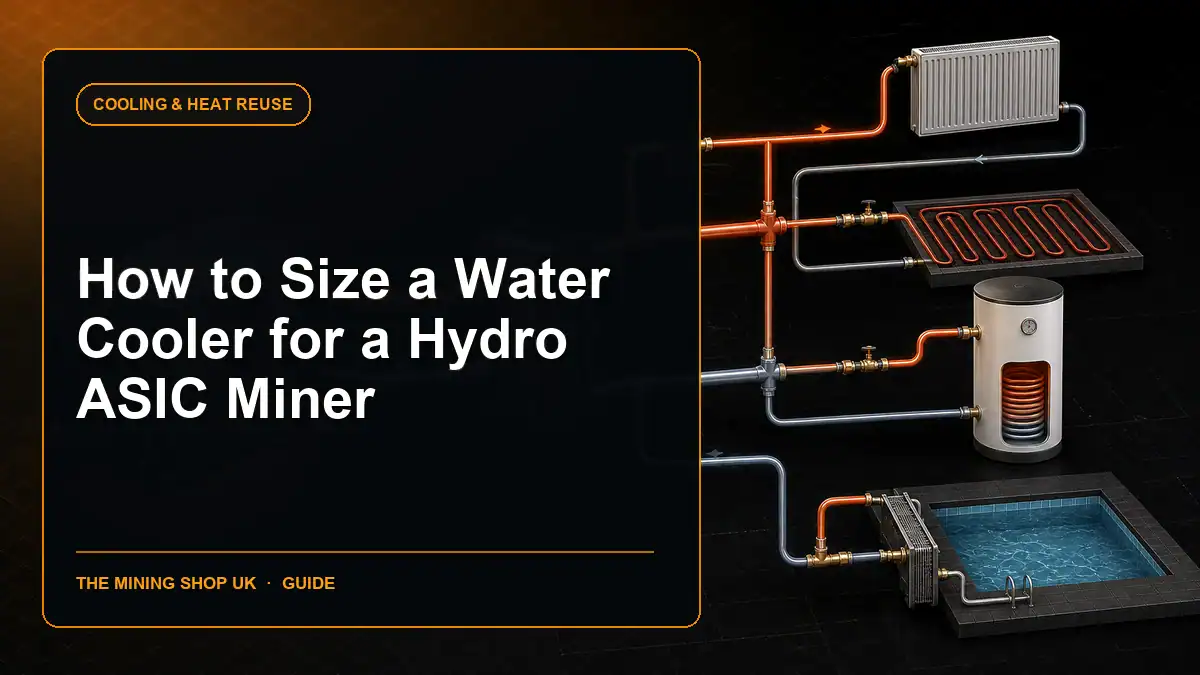
Calculate hydro ASIC water cooler sizing from measured kW, coolant flow, temperature rise, ambient design, pump head, redundancy and safe rejection margin.
Understand Immersion Cooled ASIC Miners for UK. Plan electrical load, airflow, heat, noise and cooling for a UK mining site before choosing equipment.
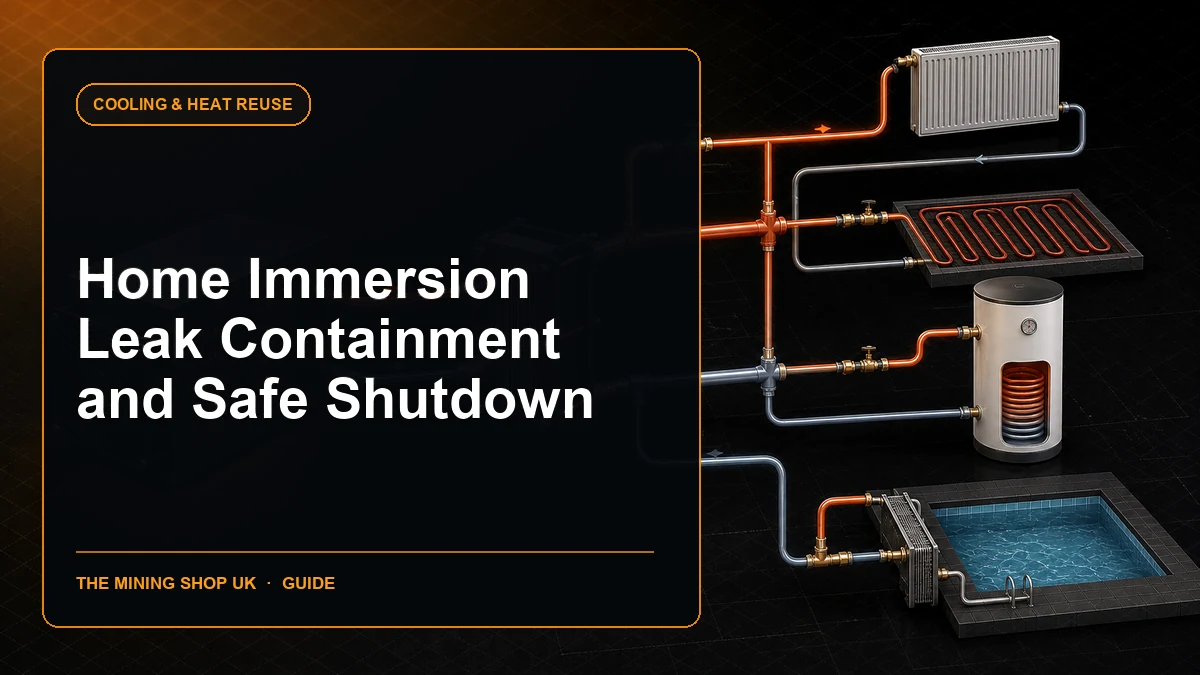
Plan home immersion leak containment through tank siting, secondary containment, sensors, isolation, fluid handling, heat rejection and emergency response.
Join the ASIC Mining Discussion
Members can read and join the discussion
Log in to read comments from other miners. Create a free account if you would like to ask a question or share your experience.
Membership helps us protect the discussion from spam and keep answers useful.