
Pre-order
Overall ranking

Equihash
·
ZEC
Overall rank#1of 100AvailableAll: #2 / 831
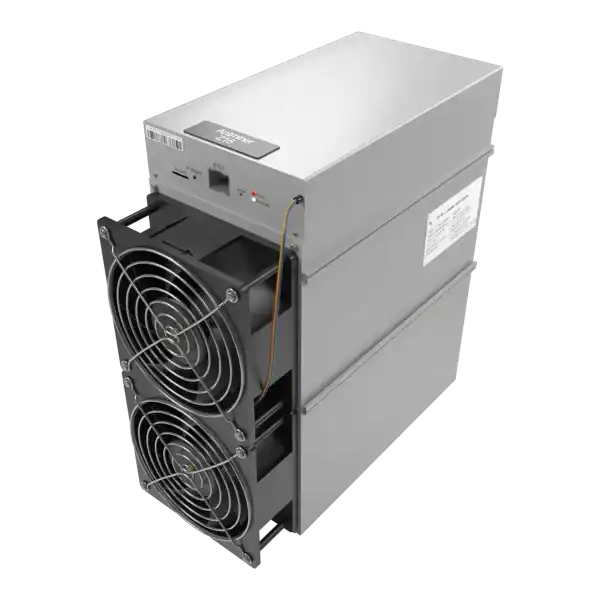

Pre-OrderFree Shipping
Hashrate
525KSOL
Efficiency
4.73W/KSOL
Power
2483W
Earns/kWh
42.0p
ASIC hot tub heating: Keep miner coolant, dielectric fluid and bathing water in separate circuits through a suitable heat exchanger.
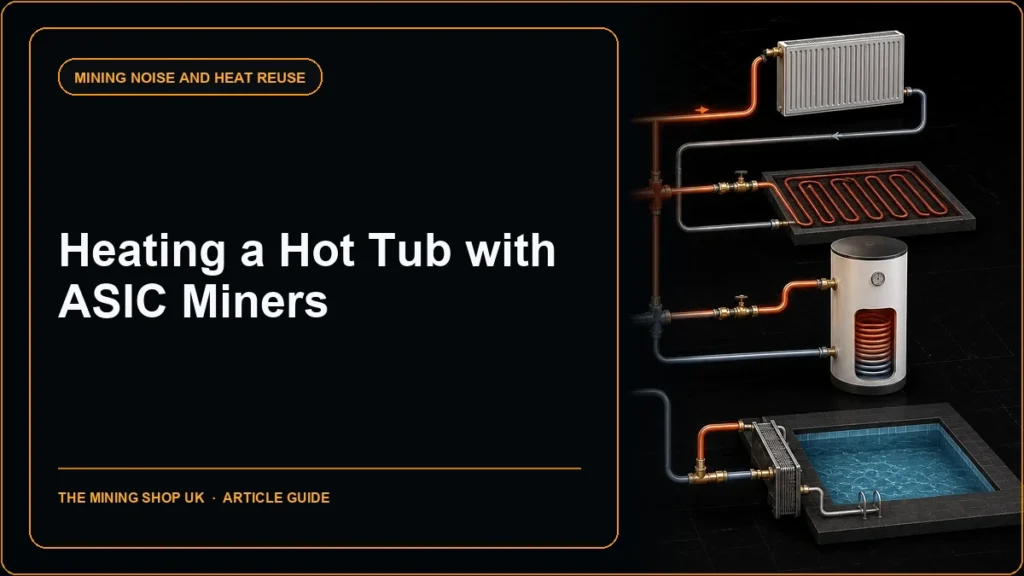
ASIC hot tub heating can recover useful low-grade heat. But the miner coolant or immersion fluid must not become bathing water. A safe design normally uses a closed miner circuit, a correctly selected heat exchanger and the hot tub's own controlled and sanitised circuit.
The economic value is the conventional heat genuinely displaced while the tub needs it, not the miner's full electrical input throughout the year. Electrical, water-hygiene, scalding, flow, leak and over-temperature controls remain essential.
ASIC hot tub heating: It does not make sense when the tub is rarely used, direct fluid mixing is proposed, the design relies on defeating spa controls, there is no safe heat sink, or the mining economics require all potential heat to be valued as useful.
A miner is checking ASIC hot tub heating. There is a tested alternative heat-rejection route when the tub is satisfied. Decide whether the miner will raise cold water to setpoint, maintain temperature between uses, preheat a separate buffer or contribute only when surplus heat is available.
Decide whether the miner will raise cold water to setpoint, maintain temperature between uses, preheat a separate buffer or contribute only when surplus heat is available. Each duty has different controls and economics.
Nearly all electrical input to an ASIC becomes heat. But not all of it reaches the hot tub. Heat remains in the miner room, pipes, pumps and exchanger, and the tub continues to lose heat through its shell, cover and exposed water.
Keep mining operation and bathing comfort separate. The tub must remain safe when the miner stops, the pool disconnects, the pump fails or the heat demand is satisfied. Retain an approved conventional heater or safe fallback.
| Question | Evidence | Design consequence |
|---|---|---|
| How much heat is available? | Measured miner wall power and coolant temperatures | Sets exchanger duty |
| When is heat needed? | Tub volume, setpoint, use and loss profile | Sets controls and storage |
| Can heat transfer safely? | Fluid, materials, pressure and hygiene review | Requires circuit separation |
| What happens on failure? | Pump, flow, leak, temperature and power states | Defines interlocks and bypass |
| What heat is displaced? | Existing heater efficiency and tariff | Sets economic value |

The ideal heat needed is water mass multiplied by 4.186kJ/kg°C and the required temperature rise. One litre of water is about one kilogram for a planning calculation.
For 1,500 litres raised from 25°C to 35°C, the ideal energy is 1,500 × 4.186 × 10 ÷ 3,600, or about 17.44kWh. A 3.3kW miner would need at least 5.29 hours if every unit of heat entered the water.
Real warm-up takes longer because the exchanger has an approach temperature, pipes and equipment lose heat and the hot tub loses energy to its surroundings. Cold, wind, an open cover and aeration increase those losses.
Maintenance duty can be more important than warm-up. Measure how many kWh the existing heater uses over comparable occupied and unoccupied days, with water temperature and weather recorded.
The primary miner loop should contain only the fluid and materials permitted by the miner or immersion-system manufacturer. The secondary hot-tub loop remains the manufacturer’s bathing-water circuit with its own filtration, dosing and temperature controls.
Transfer heat through a plate, shell-and-tube or other exchanger selected for duty, temperatures, pressure, fluid compatibility, cleanability and acceptable pressure drop. Double-wall separation may be appropriate where the risk assessment requires extra protection against cross-contamination.
Do not circulate chlorinated or brominated spa water through hydro miners, cold plates or an immersion tank. Do not expose bathing water to glycol, corrosion inhibitors, biocides intended for a closed technical loop or dielectric fluid.
Provide isolation valves, drains, vents and sampling points without creating a path that can accidentally join the circuits. Label both sides clearly and document fluid type and fill history.
Give the exchanger supplier the design heat load, primary inlet and outlet temperatures, secondary temperatures, both flows, fluid properties, pressure limits and fouling allowance. A headline kW rating without these conditions is not enough.
Low-grade miner heat may approach the hot-tub setpoint closely. This reduces the driving temperature difference and requires a larger exchanger. Design against the worst useful operating condition, not just a cold tub during first warm-up.
Confirm every hydro miner’s minimum flow and inlet limit. The hot-tub pump must also stay within the spa manufacturer’s flow range so filtration, dosing and heater interlocks continue to work.
Measure supply and return temperature and flow on both circuits. Heat transferred can then be estimated from flow, fluid heat capacity and temperature difference and compared with electrical input.
Use a temperature controller that requests heat only below the chosen setpoint. But retain the hot tub’s certified high-limit and flow protection. The heat-recovery controller must not bypass manufacturer safety devices.
Interlock miner operation or divert its heat when primary flow is low, secondary flow is absent, the tub reaches its limit, an exchanger valve fails, a leak is detected or a sensor is implausible. Decide where miner heat goes during every failure.
A dry cooler, radiator, buffer or controlled miner shutdown can provide the alternative heat path. Simply stopping the secondary pump while miners continue at full load can overheat the primary loop.
Use fail-safe valve positions and an independent over-temperature cut-out where the risk assessment requires it. Test power loss and power restoration so pumps, valves and miners do not restart in an unsafe sequence.
HSE describes hot tubs as warm aerated systems and identifies the 20 to 45°C range, stored or recirculated water and aerosols as conditions relevant to Legionella risk. Commercial or workplace systems require a suitable risk assessment, control scheme, monitoring and records.
Heat recovery does not replace filtration, disinfectant control, water replacement, cleaning or microbiological management. Keep the hot-tub manufacturer’s circulation and sanitation schedule active whether the miner is running or not.
Control outlet and surface temperatures to prevent scalding. Avoid local hot spots in the tub and verify mixing before use. Protect users from access to hot pipes, pumps, electrical equipment and technical fluids.
A domestic private tub and a workplace or commercial spa do not have identical duties. But both need safe water and equipment. Get competent water-hygiene advice for any system used by staff, customers, guests or the public.
High-power ASIC equipment, pumps and water create a serious combined hazard. Use competent electrical design, appropriate zoning, earthing, protective devices, isolation, ingress protection and cable routing.
Keep miners and distribution equipment away from splash, condensation and chemical storage. Detect leaks under miners, manifolds, pumps and exchangers and define the safe electrical shutdown sequence.
Ventilate the plant area for residual heat and humidity. Even a well-designed exchanger does not capture every watt, and an air-cooled miner still needs a separate air path before heat can be transferred to water.
Document pressure relief, expansion, freeze protection, maintenance isolation and safe draining. Water-system alterations can affect the hot-tub warranty and must comply with the equipment manufacturer’s instructions.

The heat value is the energy that the existing heater would otherwise consume, adjusted for its efficiency and tariff. If 15kWh of useful heat replaces an electric resistance heater at £0.25/kWh, the gross displaced cost is £3.75.
Do not credit all 79.2kWh produced by a 3.3kW miner every day if the tub accepts only 15kWh. The remaining heat still needs rejection and has no hot-tub value.
Subtract pump electricity, controls, exchanger and plumbing cost, maintenance, water treatment, downtime and any reduction in mining performance. Compare this with simply using the existing heater or another heat source.
Mining revenue and useful heat are separate outputs. Model mining at current accepted work and conservative future scenarios. Heat recovery can improve the combined case. But it does not remove cryptocurrency, hardware or network risk.
It does not make sense when the tub is rarely used, direct fluid mixing is proposed, the design relies on defeating spa controls, there is no safe heat sink, or the mining economics require all potential heat to be valued as useful.
ASIC hot tub heating: It does not make sense when the tub is rarely used, direct fluid mixing is proposed, the design relies on defeating spa controls, there is no safe heat sink, or the mining economics require all potential heat to be valued as useful.
Decide whether the miner will raise cold water to setpoint, maintain temperature between uses, preheat a separate buffer or contribute only when surplus heat is available.
The ideal heat needed is water mass multiplied by 4.186kJ/kg°C and the required temperature rise.
The primary miner loop should contain only the fluid and materials permitted by the miner or immersion-system manufacturer.
ASIC hot tub heating is credible when useful low-grade heat is measured, the miner and bathing-water circuits are separated and every loss-of-flow or over-temperature state is safe. The two variables most likely to change the decision are the tub’s genuine heat demand and the value of the heater energy displaced.
Keep the spa’s water-hygiene and certified safety controls intact, provide an alternative heat sink and model only useful seasonal heat. Direct plumbing or an unprotected improvised loop is not an acceptable shortcut.
Send The Mining Shop UK the miner model, measured power, coolant limits, hot-tub volume, setpoint and existing heater data before comparing hydro, immersion or air-to-water heat-recovery options.
Keep miner coolant, dielectric fluid and bathing water in separate circuits through a suitable heat exchanger. Preserve the hot tub manufacturer's heater, sanitation and safety controls. A 3.3kW miner can provide roughly 3.3kW of heat while it runs.
Raising 1,500 litres of water by 10°C needs about 17.4kWh ideally. So one miner needs at least about 5.3 hours before real losses.
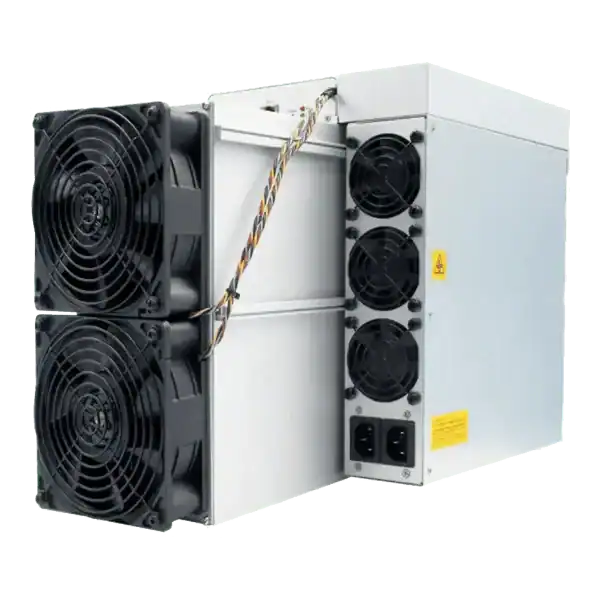
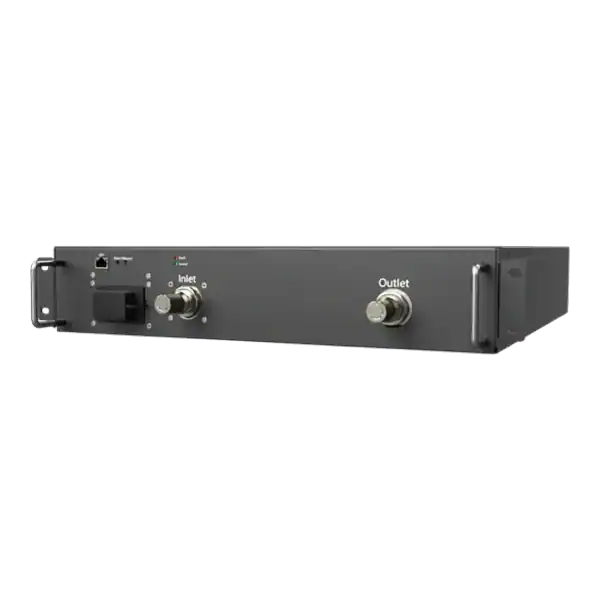

Bathhouse says it began a pool-heating mining pilot in 2022. Its technical explanation describes immersion-cooled ASICs, a dielectric-fluid circuit and heat exchangers that transfer heat into pool plumbing. The comparison is with its previous electric resistance heaters.
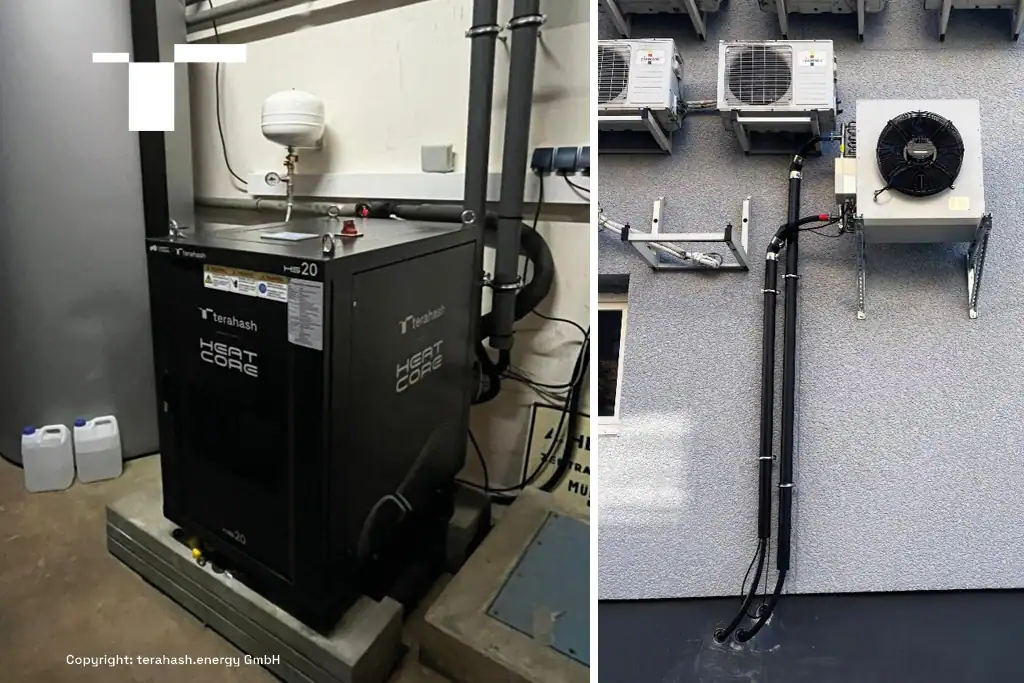
Terahash describes a commissioned system at Nebona’s spice factory: a Heatcore HS20 with two Whatsminer M63 units uses surplus rooftop solar power and supplies hot water to a buffer tank. The existing heating system remains available.

SunBit reports fitting a Bitcoin Boiler alongside the oil boiler in a 200 m² Kotka home. An outdoor unit rejects unwanted summer heat and allows additional use of solar surplus.

Join the ASIC Mining Discussion
Members can read and join the discussion
Log in to read comments from other miners. Create a free account if you would like to ask a question or share your experience.
Membership helps us protect the discussion from spam and keep answers useful.