
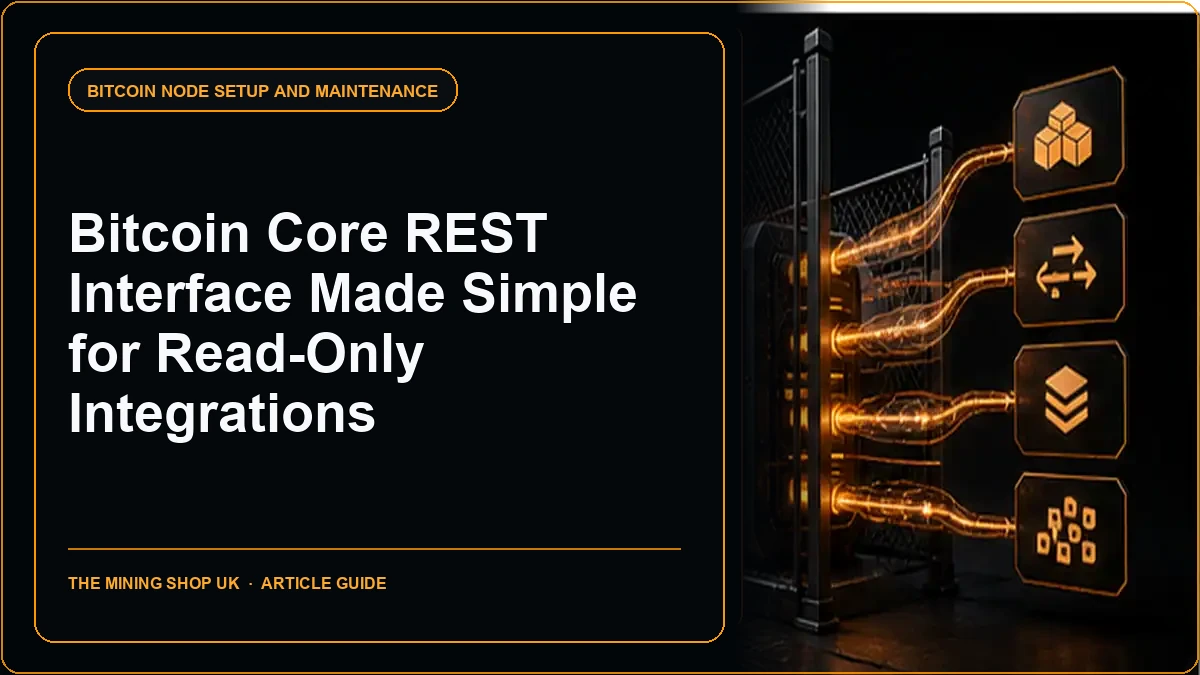
Bitcoin Core REST Interface Explained for Read-Only Integrations
Bitcoin Core REST Interface made simple. See what the feature does, where its limits sit and which checks node or wallet operators should make.
Read article
Within Blog Posts & Articles
Bitcoin Core REST Interface made simple. See what the feature does, where its limits sit and which checks node or wallet operators should make.
Bitcoin Core 0.12.0 release guide covering libsecp256k1, mempool limits, opt-in RBF, RPC cookies, pruning wallets and downgrade planning.

Learn how Bitcoin mempool fee selection works, what it can earn, the costs and security checks, and how a Bitcoin node can support SHA-256 miners.

BIP 133 fee filters explained: learn how Bitcoin peers announce feerate thresholds, reduce wasted transaction relay and preserve filter privacy.

BIP 126 mixed-input privacy explained: review standard and alternate transaction forms, equal outputs, UTXO controls and the Draft status.

BIP 2 process explained: learn its champion, editor, status, licensing and interoperability requirements and why BIP 3 now replaces it.
BIP 74 explained as a closed BIP 70 extension for zero-value OP_RETURN outputs, including payable-output rules, metadata risk and wallet checks.

BIP 109 explained as a closed hard fork proposing two-megabyte blocks, accurate sigop counting, sighash limits and a 75% miner trigger.

Lightning channels explained from funding through commitment updates and cooperative or force closure, including confirmations, reserves and backup risk.

BIP 144 SegWit relay made simple. See what the proposal changes, its current status and what it means for Bitcoin users and operators.

BIP 143 signature hashing explained: learn the SegWit digest fields, input amount commitment, performance gains and validation requirements.

BIP 142 SegWit addresses explained: review the closed Base58 design for native P2WPKH and P2WSH and why Bech32 became the deployed format.