

BIP 133 Fee Filters Explained: Why Bitcoin Peers Suppress Transactions
BIP 133 fee filters explained: learn how Bitcoin peers announce feerate thresholds, reduce wasted transaction relay and preserve filter privacy.
Read article
Within Blog Posts & Articles
BIP 133 fee filters explained: learn how Bitcoin peers announce feerate thresholds, reduce wasted transaction relay and preserve filter privacy.
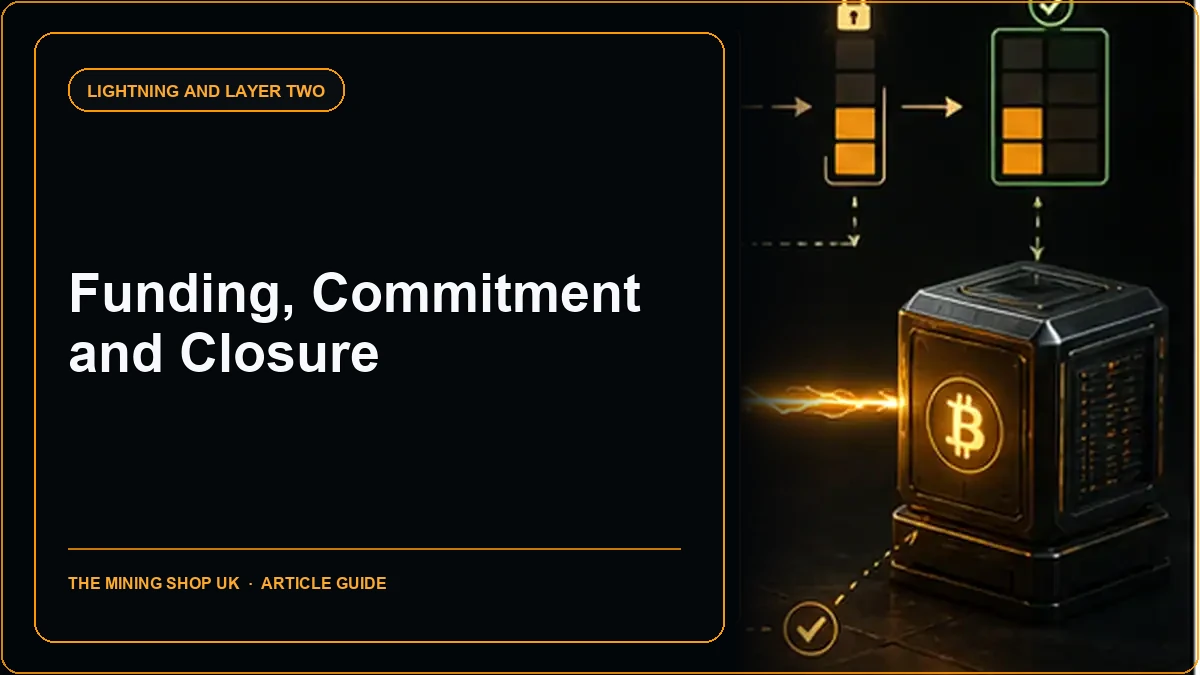
Lightning channels explained from funding through commitment updates and cooperative or force closure, including confirmations, reserves and backup risk.
BIP 144 SegWit relay made simple. See what the proposal changes, its current status and what it means for Bitcoin users and operators.
BIP 111 NODE_BLOOM explained: understand service-bit discovery, protocol version 70011, legacy SPV compatibility, privacy and node DoS controls.
BIP 112 CHECKSEQUENCEVERIFY made simple. See what the proposal changes, its current status and what it means for Bitcoin users and operators.

Learn how Bitcoin pruned nodes for miners works, what it can earn, the costs and security checks, and how a Bitcoin node can support SHA-256 miners.
BIP 130 Sendheaders made simple. See what the proposal changes, its current status and what it means for Bitcoin users and operators.
Learn how private CKPool solo mining works, what it changes for miners, the money and safety risks, and the checks to make before using it.

BIP 61 reject messages explained: understand codes, reasons, transaction or block hashes, privacy limits and why modern nodes may not send them.
BIP 37 Bloom filters explained: review filtered-block relay, false positives, privacy leakage, resource risk and why modern clients moved away.
BIP 36 custom services explained as a closed peer-extension framework, including service identifiers, namespaced commands and compatibility risks.
BIP 33 stratized nodes explained as a closed lightweight-node proposal, including service queries, quorum assumptions, privacy risks and modern context.