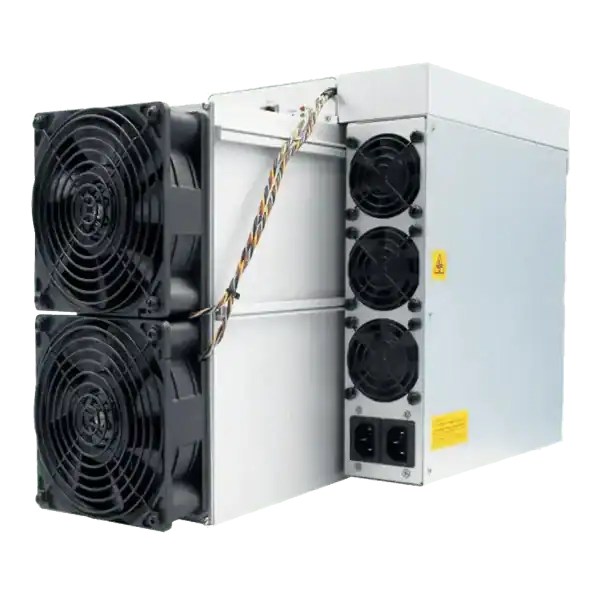
Sumokoin Mining Guide: RandomX Hardware and Risks explains where Sumokoin fits in proof of work, what hardware is relevant and which facts must be checked before committing power or equipment.
TL;DR
Sumokoin Mining Guide: RandomX Hardware and Risks explains where Sumokoin fits in proof of work, what hardware is relevant and which facts must be checked before committing power or equipment.
- Confirm the current Sumokoin consensus rules and active mining algorithm before choosing hardware.
- RandomX compatibility does not by itself prove that a network has useful liquidity, pool support or sustainable demand.
- Use current pool, wallet, exchange and network documentation because smaller projects can change or become inactive.
- Treat revenue estimates as a comparison only and include electricity, fees, downtime and hardware resale risk.

Project background
The tale about Sumokoin begins in 2017, during the height of what historians will probably remember as the “Great Cryptocurrency Explosion”, a time when launching a new coin was easier than ordering pizza and about as common. But unlike the countless copycat projects that flooded the market with promises of being the “next Bitcoin,” Sumokoin emerged with a clear mission and a name that nobody could pronounce correctly on the first try.
The project was born from a simple observation: while Bitcoin and its early derivatives were notable, they had one significant flaw for users who valued discretion, every transaction was permanently recorded on a public ledger for anyone to analyze. It was like having your bank statements published in the local newspaper every day, complete with your spending habits and account balance.
The name “Sumokoin” itself is a clever play on the traditional Japanese sport of sumo wrestling, where strength, strategy, and respect for tradition are paramount values. Just as sumo wrestlers train rigorously to perfect their craft, the developers about Sumokoin have continuously worked to refine their privacy-focused cryptocurrency to achieve maximum security and anonymity.
Technical design
Now, before your eyes start glazing over at the mention of technical specifications, let me assure you that understanding the technology about Sumokoin doesn’t require a PhD in cryptography. Treat it as learning about the engine of a really cool car, you don’t need to be a mechanic to appreciate what makes it special.
At its core, Sumokoin uses the CryptoNight algorithm family for mining, specifically CryptoNight-Heavy. This isn’t just a fancy name designed to impress people at cryptocurrency meetups, it’s a carefully designed proof-of-work algorithm that serves multiple important purposes in the Sumokoin ecosystem.
The CryptoNight-Heavy algorithm is like the bouncer at an exclusive club, but instead of checking IDs, it’s ensuring that mining remains accessible to regular people with standard computer hardware. Unlike Bitcoin’s SHA-256 algorithm, which has been completely dominated by specialised ASIC mining equipment, CryptoNight-Heavy is designed to be ASIC-resistant. This means that anyone with a decent CPU or GPU can participate in mining Sumokoin, keeping the network decentralized and democratic.
The algorithm also incorporates what cryptographers call “memory-hard functions,” which basically means that trying to mine faster requires exponentially more memory rather than just faster processors. This elegant design keeps mining profitable for individual miners while making it economically unfeasible for large-scale ASIC operations to dominate the network.
Privacy Features That Work
Here’s where things get really interesting about Sumokoin, the privacy features aren’t just marketing buzzwords thrown around to sound impressive. They’re sophisticated cryptographic techniques that protect user privacy in meaningful ways.
What sets the privacy approach about Sumokoin apart from some other privacy coins is the balance between security and usability. While some projects require users to jump through complicated hoops to achieve privacy, Sumokoin makes privacy the default setting. Every transaction is automatically private, you don’t need to remember to turn on privacy mode or pay extra fees for discretion.
Mining Sumokoin: A Democratic Approach to Cryptocurrency
The CryptoNight-Heavy algorithm used by Sumokoin is specifically designed to be “ASIC-resistant,” which is a fancy way of saying that it’s very difficult and expensive to create specialised mining hardware for it. This levels the playing field, allowing individual miners with standard computer equipment to compete fairly with larger operations.
For those interested in the technical details about mining Sumokoin, the CryptoNight-Heavy algorithm requires miners to use their computer’s CPU (central processing unit) rather than just graphics cards or specialised equipment. This democratizes the mining process because virtually every computer has a CPU, making mining accessible to anyone with a decent computer and an internet connection.
The algorithm works by requiring miners to solve complex mathematical puzzles that demand both computational power and memory. Treat it like a really difficult crossword puzzle that not only requires you to be smart but also forces you to use a lot of mental energy for each clue. This design makes it economically unfeasible to create specialised hardware because the memory requirements scale in a way that makes ASIC development prohibitively expensive.
The mining rewards about Sumokoin follow a carefully designed emission schedule that ensures a steady supply of new coins while preventing inflation from getting out of control. Unlike some cryptocurrencies that dump huge quantities of new coins onto the market, Sumokoin’s emission curve is designed to provide sustainable incentives for miners while maintaining long-term value for holders.
The Economics of Privacy: Understanding SUMO Tokenomics
Let’s talk money, specifically, the economic model about Sumokoin that makes the whole system work. The native cryptocurrency is called SUMO (because apparently “SUMOKOIN” was too many letters for crypto exchanges that charge by the character), and it serves as both the medium of exchange and the fuel that powers the entire privacy-focused ecosystem.
The total supply of SUMO is capped, meaning there will never be more than a predetermined number of coins in existence. This is fundamentally different from traditional fiat currencies, where central banks can print new money whenever they feel like it. The scarcity built into the economics about Sumokoin creates what economists call “deflationary pressure”, as demand increases and supply remains fixed, the value per unit tends to increase over time.
Transaction fees about Sumokoin are designed to be minimal, making it practical for everyday use rather than just large transfers. Unlike Bitcoin, where transaction fees can sometimes cost more than a fancy coffee, Sumokoin transactions typically cost a fraction of a penny. This makes it viable for regular commerce while still providing enough incentive for miners to process transactions.
Real-World Applications and Use Cases
Now, you might be wondering what people do with Sumokoin beyond just holding it and hoping the price goes up. The applications about Sumokoin extend far beyond simple speculation, touching on fundamental issues of financial privacy and freedom that affect everyone, not just cryptocurrency enthusiasts.
One of the most obvious use cases is protecting financial privacy in an increasingly surveilled world. Every time you use a credit card, make a bank transfer, or even pay with most cryptocurrencies, you’re creating a permanent record that can be analyzed, tracked, and potentially used against you. Sumokoin transactions, by contrast, are like paying with cash in a digital world, private, untraceable, and nobody’s business but your own.
For individuals living under authoritarian governments or in countries with unstable currencies, the privacy features about Sumokoin can be life-saving. Political dissidents, journalists, and human rights activists often need ways to receive funding and support without creating paper trails that could lead to imprisonment or worse. In these contexts, Sumokoin isn’t just a cool technology, it’s a tool for preserving human dignity and freedom.
The business applications about Sumokoin are equally compelling, though perhaps less dramatic. Companies often need to make payments or receive funds without revealing sensitive commercial information to competitors. Traditional banking systems create audit trails that can be subpoenaed, hacked, or leaked, potentially exposing valuable business intelligence. Sumokoin allows legitimate businesses to maintain confidentiality while still operating transparently where required by law.
International remittances represent another significant use case about Sumokoin. Traditional money transfer services often charge exorbitant fees and can take days to process, while also creating detailed records of every transaction. Sumokoin enables people to send money across borders quickly, cheaply, and privately, particularly valuable for individuals supporting family members in other countries who may not want their financial situation broadcast to the world.
The Community and Development Ecosystem
The development team operates with a level of transparency that’s both impressive and somewhat ironic for a privacy-focused project. While they protect user privacy religiously, they’re completely open about development progress, future plans, and technical challenges. Regular updates about Sumokoin development are published on GitHub, community forums, and social media, allowing anyone interested to track progress and contribute to the project.
Unlike some cryptocurrency projects that seem to be run by anonymous figures who communicate exclusively through cryptic social media posts, the Sumokoin team engages regularly with the community through multiple channels. They host regular AMAs (Ask Me Anything) sessions, participate in cryptocurrency conferences, and maintain active presence on platforms where users can ask questions and get direct responses from developers.
What’s refreshing about the community discussions about Sumokoin is how they focus on practical applications and technical improvements rather than just price predictions and moon phases. Conversations tend to revolve around privacy enhancements, mining efficiency, real-world adoption, and ways to make the technology more accessible to mainstream users.
Current status and outlook
Let’s be realistic about Sumokoin, it faces significant challenges in a cryptocurrency landscape that’s increasingly focused on regulatory compliance and mainstream adoption. The very privacy features that make it valuable to users also make it concerning to regulators who worry about money laundering, tax evasion, and other illicit activities.
The regulatory landscape about Sumokoin and other privacy coins is becoming increasingly complex. Some countries have already banned or restricted privacy-focused cryptocurrencies, while others are developing frameworks that attempt to balance privacy rights with regulatory oversight. Navigating this evolving regulatory environment requires careful strategy and ongoing dialogue with policymakers.
Technical challenges also persist in discussions about Sumokoin development. While the privacy features are robust, they come at the cost of increased transaction sizes and processing requirements compared to transparent cryptocurrencies. The development team continues working on optimizations that maintain privacy while improving efficiency and scalability.
Market adoption presents another ongoing challenge about Sumokoin. While privacy advocates and cryptocurrency enthusiasts appreciate the technology, convincing mainstream users to adopt privacy coins requires overcoming both technical barriers and misconceptions about legitimate use cases. Many people simply don’t understand why financial privacy matters until they lose it.
Competition in the privacy coin space is also intensifying, with projects like Monero, Zcash, and others developing their own approaches to financial privacy. The ongoing innovation about Sumokoin needs to stay ahead of both competing projects and potential attacks from those who would compromise user privacy.
Looking Ahead: the development of Financial Privacy
The long-term prospects about Sumokoin are closely tied to broader trends in digital privacy, government surveillance, and individual freedom. As more of our lives move online and governments expand their monitoring capabilities, the demand for financial privacy tools is likely to increase rather than decrease.
Technological developments about Sumokoin continue to focus on improving scalability, efficiency, and user experience while maintaining the rock-solid privacy features that define the project. Future updates may include lighter-weight transaction protocols, improved mobile wallet support, and enhanced integration with other privacy-focused technologies.
The global conversation about digital privacy is evolving rapidly, with increasing awareness about the importance of protecting personal information from both corporate surveillance and government overreach. As this awareness grows, projects like Sumokoin that prioritize privacy by design are likely to find expanding audiences among users who value discretion over convenience.
Whether Sumokoin will ultimately succeed in its mission to provide robust financial privacy for everyone remains to be seen. The challenges are significant, from regulatory pressure to technical complexity to simple user education. However, in a world where privacy is increasingly under attack from all directions, having tools like Sumokoin available may prove to be not just convenient but essential for preserving individual freedom and dignity.
What to verify before acting
Mining networks, pool support, firmware, exchange access and hardware availability can change. Verify the current network documentation, test with a small controlled configuration and do not rely on a historical profitability figure when purchasing equipment.
Useful next steps
Authoritative references
Check current official documentation alongside this article because network rules, product ranges and legal guidance can change.