

Sealminer A4 Ultra Hydro
Bitcoin & Bitcoin Cash ASIC Miner
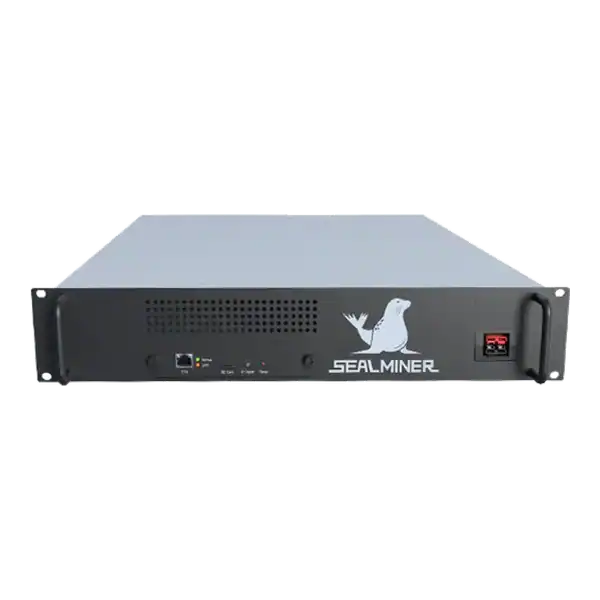

886TH
HASHRATE
9.45W/TH
EFFICIENCY
8373W
POWER
£933.57
EST. MONTHLY
NO PAYBACK
EST. ROI
Calculate solo Bitcoin mining odds from hashrate and network share, understand variance and expected time, and compare solo operation with pooled mining.
Solo Bitcoin mining odds depend on a miner's share of total network work and the number of block opportunities observed. Expected time is not a deadline: a solo miner can find a block immediately or wait far longer than the average. This guide explains the maths, variance and infrastructure needed for an informed decision.
Solo Bitcoin mining odds are probability, not a timetable. Calculate them from current difficulty or network share, use sustained hashrate and model the chance across several periods.
A miner wants to understand solo Bitcoin mining odds. In solo mining, the operator constructs block templates, directs ASIC work at them and submits a valid block to the Bitcoin network if one is found.
In solo mining, the operator constructs block templates, directs ASIC work at them and submits a valid block to the Bitcoin network if one is found.
The block subsidy and transaction fees belong to the destination specified by the solo setup, subject to the block becoming accepted and mature under the applicable software and network rules. Until a valid block is found, ordinary near-miss hashes earn nothing.
A pool also looks for valid network blocks. But it asks connected miners to submit easier shares. Bitcoin’s developer guide explains that these shares show contributed work. The pool applies a reward system so miners receive smaller, more frequent credits broadly related to their valid shares. The pool reduces income variance. It does not make the underlying block search deterministic.
Solo mining is therefore not simply pool mining without a fee. It changes cash-flow distribution, infrastructure ownership and error consequences. A stale block template, incorrect payout address or unavailable node can waste the rare result the operator is trying to capture.

A straightforward approximation divides the miner’s hashrate by total network hashrate, then multiplies that share by the expected number of network blocks in the period. Bitcoin targets roughly one block every ten minutes, or about 144 per day. Actual blocks arrive randomly, and the observed network-hashrate number is an estimate. So the result is an expectation rather than a schedule.
| Solo hashrate | Illustrative network share | Expected blocks per day | Approximate mean time |
|---|---|---|---|
| 200 TH/s | 0.0000002 | 0.0000288 | About 95 years |
| 1 PH/s | 0.000001 | 0.000144 | About 19 years |
| 10 PH/s | 0.00001 | 0.00144 | About 1.9 years |
| 100 PH/s | 0.0001 | 0.0144 | About 69 days |
| 1 EH/s | 0.001 | 0.144 | About 6.9 days |
The network value is deliberately illustrative and must be replaced with a current, timestamped source. One zettahash per second is 1,000 exahashes per second and one million petahashes per second. For 1 PH/s, the assumed share is one millionth. Multiplying by 144 gives 0.000144 expected blocks per day. Dividing one by that gives about 6,944 days, or roughly 19 years.
Hashing outcomes are random within the protocol target. A mean wait of 19 years does not mean a 1 PH/s miner will find a block on the nineteenth anniversary. It may find one in the first hour, find none in several mean periods, or find more than one unusually close together. Past failure does not make the next hash more likely to succeed.
A useful probability model treats block arrivals about as a Poisson process when the hashrate and difficulty assumption are stable. If the expected number of blocks over a period is λ, the probability of finding at least one is 1 minus e to the power of minus λ.
At one mean interval, λ equals 1 and the chance of at least one block is about 63.2%, not 100%. At three mean intervals it is about 95.0%.
Difficulty and hashrate do not remain stable for years. So a long mean should not be reported as precise. Recalculate with current difficulty, actual sustained hashrate and planned uptime. Present probabilities for several periods instead of one dramatic ‘days to block’ number.
Network-share estimates are easy to explain. At the same time, difficulty provides a more direct protocol input. At difficulty D, the expected number of hashes for a valid block is about D multiplied by 2 to the power of 32. Dividing that expected work by sustained hashes per second gives an expected time in seconds.
The Bitcoin Core getdifficulty RPC provides current difficulty as a multiple of minimum difficulty.
Use sustained hashrate after pool-side or local acceptance testing, not a turbo label. Apply expected uptime. A 1 PH/s installation expected to be available 95% of the time should not be modelled as a continuous 1 PH/s for a full year. If a tuning profile raises errors or restarts, the effective result may be worse than a stable lower profile.
Do not mix a current difficulty with an old network-hashrate chart and present both calculations as independent confirmation. They describe the same block process through related inputs. Record block height, difficulty, hashrate, software version and timestamp.
True independent solo operation normally requires a fully validated Bitcoin node, mining software that can get block templates and a secure path between the node and ASIC fleet. The operator must maintain storage, bandwidth, time synchronisation, backups and software updates. It should monitor chain state and template freshness without exposing administrative interfaces to the public internet.
A solo-pool service can provide stratum infrastructure while paying the successful miner according to its specific terms. This reduces some technical work but introduces a service dependency and possibly a fee.
Verify how the payout address is set, what happens to transaction fees, whether work is proxied, how outages are handled and which jurisdiction governs the relationship. Do not infer terms from the word ‘solo’.
Use redundant power and network paths where the economics justify them, and configure failover deliberately. A failover to an ordinary pooled account changes where hashrate is working and must be visible in records. Protect node wallets and payout credentials. Do not store private keys in miner interfaces or screenshots.
Solo operation may suit a technically capable operator who accepts extreme variance, can fund electricity without regular pool income and wants direct control over block-template and node infrastructure. It may also be used for education or a deliberately limited lottery-like experiment.
The decision is stronger when hashrate is large enough for the probability to be meaningful over the intended period and the operator can test every component before committing the fleet.
A pool is normally more practical where the business needs regular cash flow to pay electricity, has modest hashrate or does not want to maintain block-template infrastructure. Lower variance can make budgeting easier even though fees and counterparty risk remain.
Do not choose solo because a calculator shows an attractive full block value while hiding the probability. Do not choose a pool without reviewing payout method, fees, security and accepted-share performance.
Test the complete path with controlled hashrate before scaling: node synchronisation, template creation, stratum connectivity, share logs, payout configuration, alerts and failover. Keep configuration backups that do not expose keys. Solo mining magnifies the cost of rare operational mistakes because there may be no ordinary payout stream to reveal them quickly.
Solo Bitcoin mining odds are probability, not a timetable. Calculate them from current difficulty or network share, use sustained hashrate and model the chance across several periods.
In solo mining, the operator constructs block templates, directs ASIC work at them and submits a valid block to the Bitcoin network if one is found.
A straightforward approximation divides the miner's hashrate by total network hashrate, then multiplies that share by the expected number of network blocks in the period.
Hashing outcomes are random within the protocol target. A mean wait of 19 years does not mean a 1 PH/s miner will find a block on the nineteenth anniversary.
Solo Bitcoin mining odds are probability, not a timetable. Calculate them from current difficulty or network share, use sustained hashrate and model the chance across several periods. A mean interval still leaves a meaningful chance of no block. Solo operation can suit a technically capable, well-funded operator who accepts variance. Pooled mining is generally more practical when electricity requires regular cash flow.
Compare sustained hashrate and electricity cost with The Mining Shop UK tools, then decide whether the probability and infrastructure burden fit your operating objective before choosing solo or pooled mining.
A solo miner receives no gradual reward. It receives the block proceeds only when it finds and submits a valid block. Network share estimates expected frequency, not a guaranteed date or countdown.

Mining pool ownership due diligence: check mining pool ownership, legal entity, beneficial control, infrastructure, payout custody, related services, sanctions.
Plan a solo mining variance reserve around fixed costs, expected block intervals, uptime, liquidity, accounting and a documented stop or pool-switch rule.
Verify a mining pool Bitcoin chain policy made simple. See how the network works, which hardware matters and what to check before using electricity.
Join the ASIC Mining Discussion
Members can read and join the discussion
Log in to read comments from other miners. Create a free account if you would like to ask a question or share your experience.
Membership helps us protect the discussion from spam and keep answers useful.