

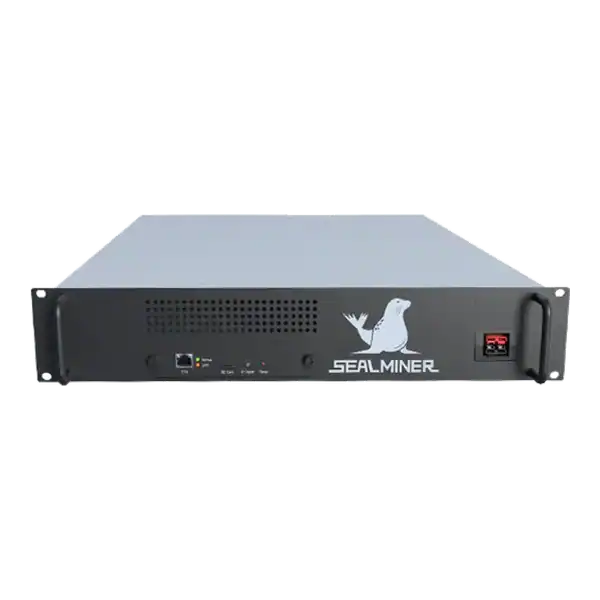
Sealminer A4 Ultra Hydro
Bitcoin & Bitcoin Cash ASIC Miner

886TH
HASHRATE
9.45W/TH
EFFICIENCY
8373W
POWER
£898.19
EST. MONTHLY
NO PAYBACK
EST. ROI
Plan solar Bitcoin mining at home with realistic ASIC demand, UK PV yield, battery limits, grid connection, electrical safety and cost checks.
Solar Bitcoin mining at home is possible. But a continuous ASIC load is far larger than the midday output suggested by a panel headline. A 3.3 kW miner consumes 79.2 kWh each day and 28,908 kWh in a 365-day year if it never stops. UK solar output is variable and strongly seasonal.
So most projects use grid import, deliberate curtailment or a substantial battery and inverter system. Design the electrical and DNO connection first, then model measured solar surplus rather than annual generation alone.
Solar Bitcoin mining at home works best as a controlled energy project, not a panel-count shortcut. Measure the ASIC's load, use hourly and seasonal PV data, respect inverter and battery limits and complete the correct grid-connection process.
A miner wants to understand solar Bitcoin mining at home. For genuine surplus-following, use a meter or energy-management system to start, stop or change an approved power profile when export crosses thresholds.
Record measured wall power at the intended firmware profile. Multiply kilowatts by operating hours for energy. A 3.3 kW miner uses 79.2 kWh per day, about 2,409 kWh per average month and 28,908 kWh per year at continuous operation.
Add ventilation, pumps, fans, network and conversion losses. A battery inverter and wiring also lose energy. So energy taken from panels or grid exceeds the miner’s wall requirement.
| Operating pattern | Daily energy | Annual energy | Use case |
|---|---|---|---|
| 24 hours | 79.2 kWh | 28,908 kWh | Grid-backed continuous mining |
| 12 hours | 39.6 kWh | 14,454 kWh | Long controlled window |
| 8 hours | 26.4 kWh | 9,636 kWh | Daytime or tariff window |
| 4 hours | 13.2 kWh | 4,818 kWh | Selective solar surplus |

Kilowatts describe instantaneous power. Kilowatt-hours describe energy over time. A 5 kWp array can approach 5 kW in favourable conditions but does not produce 5 kW throughout the day or at night.
Use site-specific yield from an accredited design, then get monthly and hourly estimates. Annual generation can hide a winter shortfall and midday export peak. Shading, orientation, temperature, inverter clipping and outages reduce usable output.
The miner needs the lower of available generation, inverter output, circuit capacity and its own demand at each moment. Do not divide annual PV generation by annual miner energy and assume the wiring works.
A grid-connected miner can operate when house demand plus ASIC demand exceeds PV, with the grid supplying the difference. That increases solar self-consumption but does not make all mining solar powered.
For genuine surplus-following, use a meter or energy-management system to start, stop or change an approved power profile when export crosses thresholds. Add delays and hysteresis so passing clouds do not repeatedly cycle the miner.
Check the machine’s restart behaviour and pool recovery. Frequent hard power cycling can increase wear or corrupt state. A controlled shutdown or low-power profile is preferable when supported.
A battery needs enough continuous inverter power for the miner and enough usable energy for the intended hours. A nominal 10 kWh battery cannot deliver ten hours to a 3.3 kW miner. Before losses it contains only about three hours of nominal load.
If usable battery energy is 9 kWh and round-trip delivery to the load is assumed at 90 per cent, about 8.1 kWh reaches the load. Dividing by 3.3 kW gives roughly 2.45 hours, before other household demand.
Battery cycling has a cost through capital, degradation and warranty throughput. Compare the value of mining from stored energy with export, later household use and tariff arbitrage.
Solar PV and battery inverters are generation devices for distribution-network purposes. The applicable G98 or G99 process depends on aggregate equipment and configuration, not the fact that the ASIC consumes power.
Government guidance directs owners and installers to register solar PV and battery storage and notes that the DNO may require extra evidence when equipment is not type tested. ENA guidance explains that G98 generally covers smaller generation below 16 A per phase, with G99 used for other projects.
Use an installer who can identify the current route, submit the required notice or application and coordinate export limitation. Do not add an unregistered inverter because the miner is expected to absorb generation.
An industrial ASIC needs its own assessed circuit, protective device, isolation, cable and connectors. PV on the property does not reduce the miner’s instantaneous circuit current.
A 3.3 kW miner releases about 3.3 kW of heat while operating. In summer, when PV is strongest, removing that heat can require more ventilation and reduce the value of running. Exhaust it outside without recirculation or nuisance.
Noise can affect occupants and neighbours. Plan location, ducting and attenuation before purchase, while maintaining airflow, fire safety and service access.
| Strategy | Strength | Limitation |
|---|---|---|
| Grid-backed continuous | Maximum uptime | Large annual import and summer heat |
| PV surplus following | Uses otherwise exported energy | Variable hours and control complexity |
| PV plus battery | Extends solar-time operation | Capital, losses, degradation and safety |
| Tariff plus PV control | Can avoid expensive periods | Needs accurate automation and tariff terms |
Choose by marginal energy cost and operating objective. A high uptime percentage is not useful if the extra hours consume electricity above the miner’s net energy breakeven.
Retain a manual stop and fail-safe state. If metering, internet or automation fails, the system should not exceed an import, export, thermal or circuit limit.
Solar used by the miner has an opportunity cost. It might otherwise reduce imported electricity, charge a battery or earn an export payment. Use the highest realistic alternative value for the same kWh.
If a surplus kWh would earn 15p on export and mining produces only 10p of net contribution before electricity, exporting is economically stronger. If export is constrained or worth 5p and mining contributes 10p, selective mining may add 5p per kWh before wear and overhead.
Recalculate with live hashprice, pool fee and measured efficiency. A profitable rule this month can become a loss after difficulty, price or tariff changes.
Solar Bitcoin mining at home works best as a controlled energy project, not a panel-count shortcut.
Record measured wall power at the intended firmware profile. Multiply kilowatts by operating hours for energy.
Kilowatts describe instantaneous power. Kilowatt-hours describe energy over time. A 5 kWp array can approach 5 kW in favourable conditions but does not produce 5 kW throughout the day or at night.
A grid-connected miner can operate when house demand plus ASIC demand exceeds PV, with the grid supplying the difference.
Solar Bitcoin mining at home works best as a controlled energy project, not a panel-count shortcut. Measure the ASIC’s load, use hourly and seasonal PV data, respect inverter and battery limits and complete the correct grid-connection process. Selective surplus mining can improve self-consumption where export value is low.
At the same time, continuous operation usually remains grid backed. Design the circuit, heat and noise route first, then automate against measured power and current mining economics.
Use The Mining Shop UK’s profitability calculator with your measured miner power and true marginal electricity value, then ask the team to compare a more efficient ASIC, hosted route or controlled home setup.
A 3.3 kW ASIC needs 79.2 kWh per day. An equal 3.3 kWp PV nameplate cannot power it continuously because solar output varies by hour, weather and season. The simplest route is often surplus-following control: mine when verified export or low-cost power is available and stop when the variable cost exceeds revenue.


Terahash describes Kläger Group’s Hartha energy park with a 1.6 MWp solar array, a 350 kWh battery and a mining container able to absorb up to 500 kW. The container is intended to buy surplus left by industrial production, with storage and grid export also available.
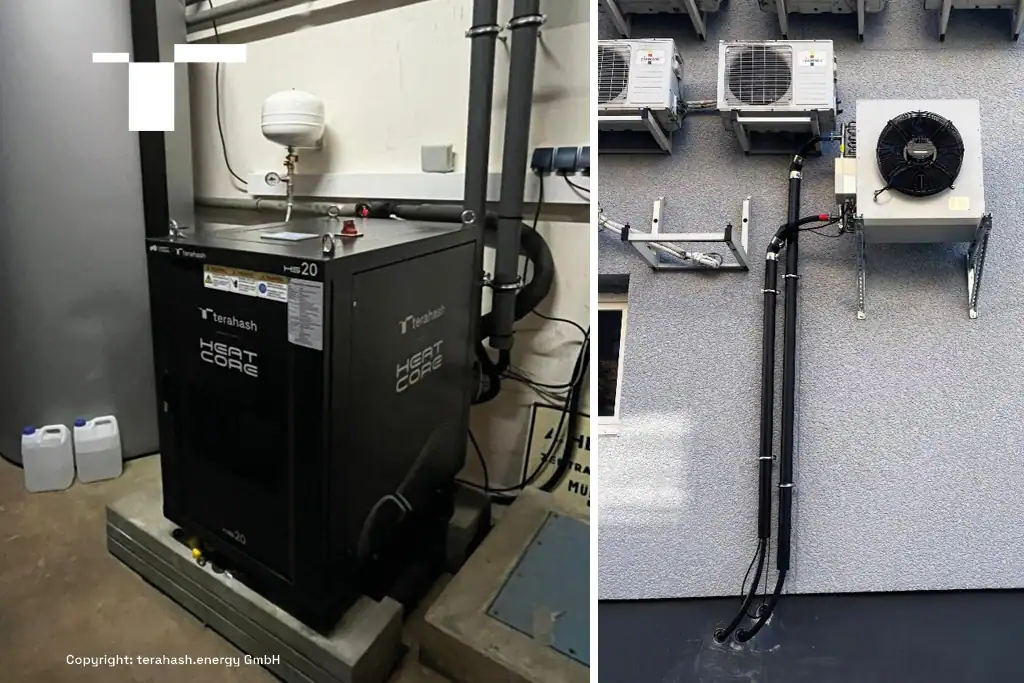
Terahash describes a commissioned system at Nebona’s spice factory: a Heatcore HS20 with two Whatsminer M63 units uses surplus rooftop solar power and supplies hot water to a buffer tank. The existing heating system remains available.

SunBit reports fitting a Bitcoin Boiler alongside the oil boiler in a 200 m² Kotka home. An outdoor unit rejects unwanted summer heat and allows additional use of solar surplus.
Join the ASIC Mining Discussion
Members can read and join the discussion
Log in to read comments from other miners. Create a free account if you would like to ask a question or share your experience.
Membership helps us protect the discussion from spam and keep answers useful.