Shaicoin mining uses the project's ShaiHive proof-of-work design, not ordinary Bitcoin SHA-256 hashing. The official repository describes Hamiltonian graph certificates inside the block header and a verifiable delay function intended to narrow the advantage of specialist hardware.
The supplied asset row labels Shaicoin as SHA-256, but the current official whitepaper and code describe a different route. A beginner should therefore use the current Rust Shaipot miner and ShaiHive documentation rather than point a Bitcoin ASIC at the network.
Estimated reading time: 7 minutes
TL;DR
Current official Shaicoin sources describe ShaiHive graph work rather than standard SHA-256 mining.
The project aims at CPU accessibility, but real efficiency still depends on processor, memory, software and accepted pool work.
Verify the live chain, current miner, pool payment and wallet recovery before valuing SHA rewards.
What This Means in Simple English
A Shaicoin processor is given a graph and searches for a route that visits every required point correctly. A delay step helps make the work harder to shortcut. Other nodes can check the submitted certificate much faster than the miner found it.
Simple Example
Imagine a delivery driver who must visit every house once and return to the start. Finding a valid route can take many attempts, but checking a completed route is quick. ShaiHive turns that difference into proof of work.
Key Terms in Plain English
ShaiHive:
Shaicoin's graph-based proof-of-work design.
Hamiltonian Cycle:
A path that visits each graph vertex once and returns to its start.
VDF:
A delay function intended to take a predictable amount of sequential work while remaining quick to verify.
Shaipot:
The official Rust mining software named by the project.
Kismet:
The smallest denomination described for SHA.
Why the SHA-256 Label Is Wrong
Shaicoin began from Bitcoin code, but a software ancestry does not fix the current mining algorithm. The official project repository now places ShaiHive certificates in the block header and provides separate Shaipot mining code.
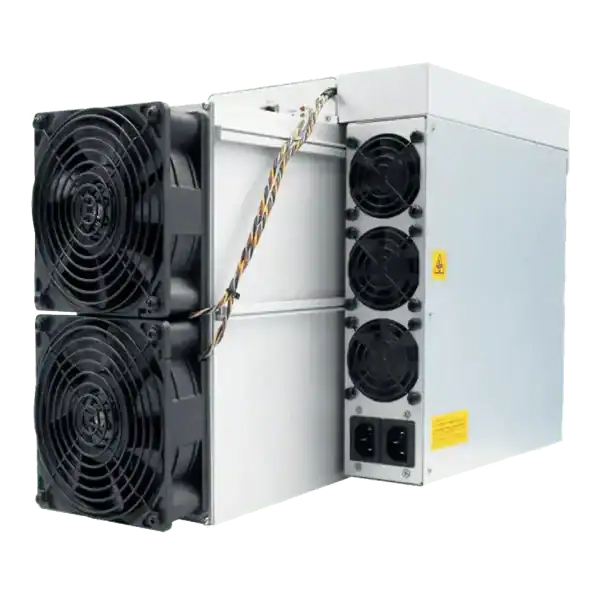
A Bitcoin ASIC performs double SHA-256 extremely efficiently and cannot be reprogrammed into an arbitrary graph solver. Treat the supplied SHA-256 field as stale until the live code proves otherwise.
How ShaiHive Uses Graphs
A Hamiltonian cycle visits every vertex in a graph once before returning to the beginning. The miner searches for a valid certificate, while the node verifies that the route obeys the graph and block rules.
The whitepaper also describes a verifiable delay function. Its aim is to make part of the work sequential, limiting easy parallel shortcuts. This is a design goal, not proof that every CPU earns equally.
Choose a Processor and Miner
Use the official Shaipot repository and confirm the release, pool protocol and operating system. Compare processor instruction support, memory, stable clocks and cooling rather than assuming the largest thread count wins.
Measure accepted work at the pool. Local attempts that fail certificate checks, miss deadlines or arrive late have no payout value. Keep wallet keys off the experimental mining account.
Quick reference for Shaicoin mining decisions.
Reward and Emission Checks
The official whitepaper describes an initial 11 SHA reward that declines towards a 0.1 SHA tail emission around block 888,420. Use the reward at the actual live height rather than leaving the launch figure in a calculator.
A tail emission means continued issuance after the main declining phase. It does not guarantee price, pool support or enough market depth to cover electricity.
Pool and Solo Evidence
The project organisation lists both a decentralised P2Pool fork and a pool backend. Check which route is active, its recent blocks and the exact worker format before connecting.
Solo work can be highly uneven. A pool can smooth results but adds software, accounting and payout dependencies. Prove one wallet receipt before trusting its dashboard.
Wallet and Network Safety
Use the current ShaiHive wallet from the official project and compare its height with a separate explorer. Back up the recovery material and test it away from the mining machine.
The ticker SHA can be confused with algorithm names and other assets. Record Shaicoin, the network and address together on every payout instruction.
Calculate a Real Net Result
A Shaicoin mining estimate should start with pool-side accepted work, the live network difficulty and the reward rules at the tested height. Subtract the complete CPU system electricity reading, pool and software fees, cooling, downtime, maintenance and withdrawal charges.
Value SHA at the amount a real buyer will take, not at an old high or a thin last trade. Test lower-price, higher-difficulty and no-pool cases. A technically compatible machine can still be a poor financial decision.
Run a Controlled First Test
Begin Shaicoin mining with one worker at conservative settings. Save the software version, pool endpoint, wallet network, accepted work, reject rate, temperature and wall power. Continue long enough to cover ordinary payout variance rather than judging one fortunate hour.
Complete a small SHA payment and test the wallet backup before scaling. Stop if recent blocks, maintained software, a usable payout route or executable market depth cannot be independently confirmed. Buying more hardware does not repair missing network evidence.
Repeat these checks after a node release, pool change, firmware update or long interruption. Keep the earlier measurements so the new result can be compared on the same basis. If a current source contradicts an old guide, record its date rather than quietly mixing two different sets of rules.
What the Current Data Can and Cannot Tell You
The supplied asset snapshot is a discovery list, not proof of a current earning route. The classification behind Shaicoin mining must agree with current Shaicoin documentation, recent blocks, maintained software, a usable wallet and a route that can complete a payment.
This Shaicoin mining article records the status as currently documented as ShaiHive proof of work. Keep the source date beside that conclusion. Network rules, pool support and repositories can change after publication, while an old market-data row can remain unchanged.
Historical prices show what happened, not what a miner will receive. Use the price and sale depth actually available for the tested payout. Record the coin amount, sterling value and conversion cost separately so later price movement is not mistaken for mining income.
Any current decision related to Shaicoin mining needs evidence collected over a representative period. Include accepted work where mining remains active, pool fees, electricity, cooling, downtime, withdrawal costs and tax records. A console peak or one fortunate payout is not enough evidence for buying equipment.
Decision Table
Claim
Evidence
Algorithm
Current ShaiHive code and miner
CPU result
Accepted certificates and wall power
Pool
Recent blocks and completed SHA payout
Wallet
Synced network and tested backup
A table is a starting point, not a promise. Verify every live input before spending money on Shaicoin mining hardware, software or hosting.
Frequently Asked Questions
Does Shaicoin Use Bitcoin SHA-256 Mining?
Current official sources describe ShaiHive graph certificates, not ordinary SHA-256 ASIC work.
Can a Bitcoin ASIC Mine Shaicoin?
Do not assume it can. ShaiHive requires its own supported miner and work design.
Is ShaiHive CPU Friendly?
It is designed around CPU access, but processor efficiency and live competition still vary.
What Is a Hamiltonian Cycle?
It is a route that visits every graph point once and returns to the start.
What Should I Verify First?
Confirm the live official miner, recent pool blocks and one wallet payment.
Conclusion: Shaicoin Mining
Shaicoin mining deserves a measured trial, not a promise of easy money. Confirm the live network rules, use compatible hardware and official software, protect the wallet, and calculate profit from accepted work and wall power. Keep dated records because rewards, difficulty, prices and pool terms change.
Darren Waggott is the visionary Founder and CEO of The Mining Shop UK, with over a decade of leadership in the cryptocurrency mining sector. Renowned for driving innovation, Darren has built a company dedicated to providing high-quality ASIC miners and comprehensive hosting services. His forward-thinking approach places The Mining Shop UK at the forefront of the industry.
Membership helps us protect the discussion from spam and keep answers useful.
ASIC MINING SUPPORT
Need Help Choosing an ASIC Miner?
Tell us what you want to mine, your electricity cost and where the machine will run. We can help you compare hardware, power requirements, hosting and repairs.
We use necessary cookies to run the shop and optional analytics cookies to understand how visitors use the site and improve shopping and checkout. You can accept analytics, use only necessary cookies, or choose settings. You can change your choice at any time.
Functional
Always active
The technical storage or access is strictly necessary for the legitimate purpose of enabling the use of a specific service explicitly requested by the subscriber or user, or for the sole purpose of carrying out the transmission of a communication over an electronic communications network.
Preferences
The technical storage or access is necessary for the legitimate purpose of storing preferences that are not requested by the subscriber or user.
Statistics
The technical storage or access that is used exclusively for statistical purposes.The technical storage or access that is used exclusively for anonymous statistical purposes. Without a subpoena, voluntary compliance on the part of your Internet Service Provider, or additional records from a third party, information stored or retrieved for this purpose alone cannot usually be used to identify you.
Marketing
The technical storage or access is required to create user profiles to send advertising, or to track the user on a website or across several websites for similar marketing purposes.






Join the ASIC Mining Discussion
Members can read and join the discussion
Log in to read comments from other miners. Create a free account if you would like to ask a question or share your experience.
Membership helps us protect the discussion from spam and keep answers useful.