
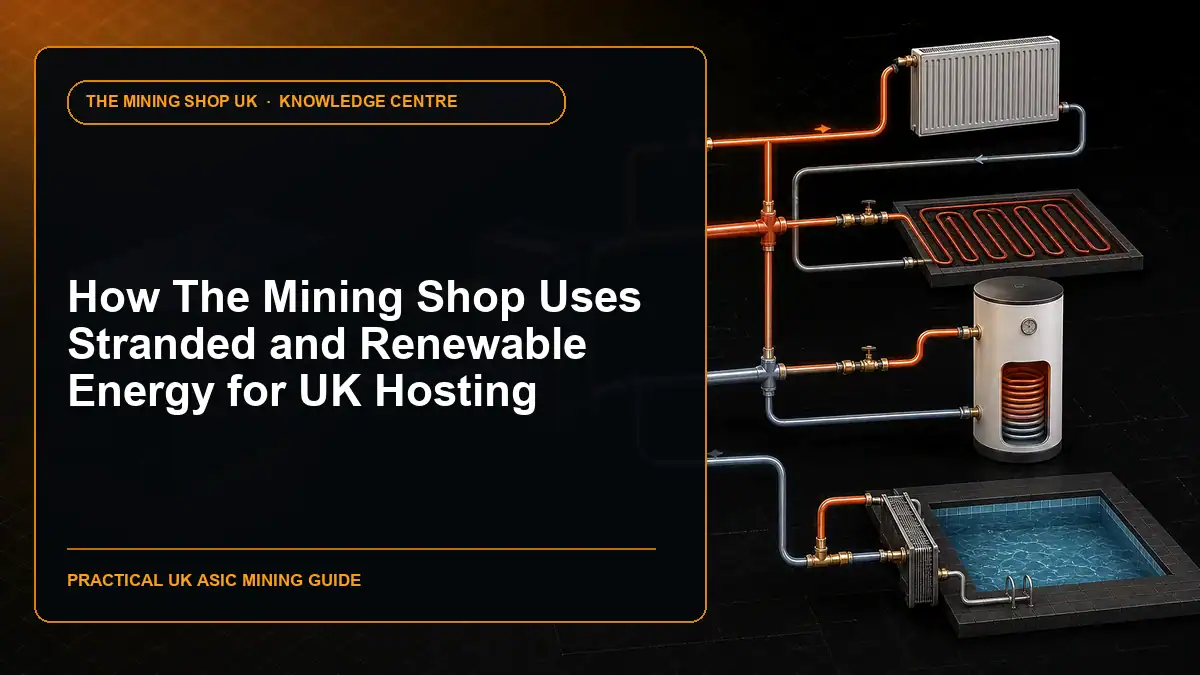
How The Mining Shop Uses Stranded and Renewable Energy for UK Hosting
How flexible UK Bitcoin mining hosting can use constrained or hard to export wind, solar and biogas generation, with honest evidence and operating controls.
Read article
Understand Scaling from Home Mining to a. Plan power, cooling, monitoring, contracts and resilient multi-miner operation before choosing equipment.
Scaling from Home Mining to a Professional ASIC Operation treats scale as an infrastructure and process decision. Power, cooling, network resilience, spares, monitoring, contracts and staffing must grow with the miner count.
Scaling from Home Mining to a Professional ASIC Operation treats scale as an infrastructure and process decision. Power, cooling, network resilience, spares, monitoring, contracts and staffing must grow with the miner count.
Scaling up is the dream of many hobbyist miners who dabble in cryptocurrency mining as a side gig. Moving from a small-scale operation to a professional ASIC (Application-Specific Integrated Circuit) mining setup can seem daunting, but with the right guidance, it’s achievable. This guide will walk you through every step of the process, ensuring you understand what it takes to scale up efficiently and profitably.

Scaling up in ASIC mining means transitioning from using a few small machines or GPUs to operating a professional setup. This involves leveraging ASIC miners—devices designed specifically for mining cryptocurrencies like Bitcoin or Litecoin. These machines are far more efficient than general-purpose hardware and are the backbone of serious mining operations.
If you’re ready to move beyond hobbyist status, scaling up involves understanding:
Before scaling up, take stock of your existing mining operation. Ask yourself:
Hobbyist setups often prioritize experimentation over efficiency. Scaling up means optimising for profitability. For example, if you’re mining Bitcoin, you’ll need ASIC miners like the Bitmain Antminer series, known for their high hash rates and energy efficiency.
Scaling up requires investment, so create a detailed budget. Here’s what to include:
Once you have your equipment, the next step is setting up a professional mining facility. This could be in your home, a rented warehouse, or a colocation facility specifically designed for crypto mining.
As a hobbyist, you might have mined solo or in small pools. Scaling up requires joining larger, more professional mining pools. These pools offer:
Some popular mining pools for professional miners include F2Pool, Slush Pool, and Poolin.
After setting up your professional ASIC mining operation, ongoing monitoring is crucial. Use mining software like Awesome Miner or Hive OS to track:
Regularly optimize your setup to ensure maximum profitability. This could mean tweaking your ASIC miners’ settings, cleaning the hardware, or even switching mining pools if payouts decrease.
As a professional miner, you’ll need to comply with local laws and regulations. This includes:
Visit government websites or consult a professional to ensure compliance.
The Bitmain Antminer S19 Pro and Whatsminer M30S are excellent choices for their efficiency and reliability.
Electricity costs depend on your location and the miner’s consumption, but expect monthly bills in the range of $150–$300 per machine.
Yes, but profitability depends on the coin being mined, energy costs, and market conditions. Use profitability calculators to estimate your earnings.
This varies by country and region. Check with local authorities to determine if you need to register your operation.
Look for pools with low fees, a good reputation, and servers near your location to reduce latency.
Scaling up from hobbyist to professional ASIC mining is an exciting journey filled with opportunities and challenges. By following this guide, you’ll be well on your way to running a profitable mining operation. For more tips and tools, visit The Mining Shop.
Happy mining!
Use these pages to move from research to a product or operating decision:
Use current official guidance alongside this article because network rules, tax guidance and safety duties can change.
How flexible UK Bitcoin mining hosting can use constrained or hard to export wind, solar and biogas generation, with honest evidence and operating controls.
Plan ASIC mining in another country with checks for legality, energy, tax, customs, ownership, insurance, connectivity, sanctions and repatriation.
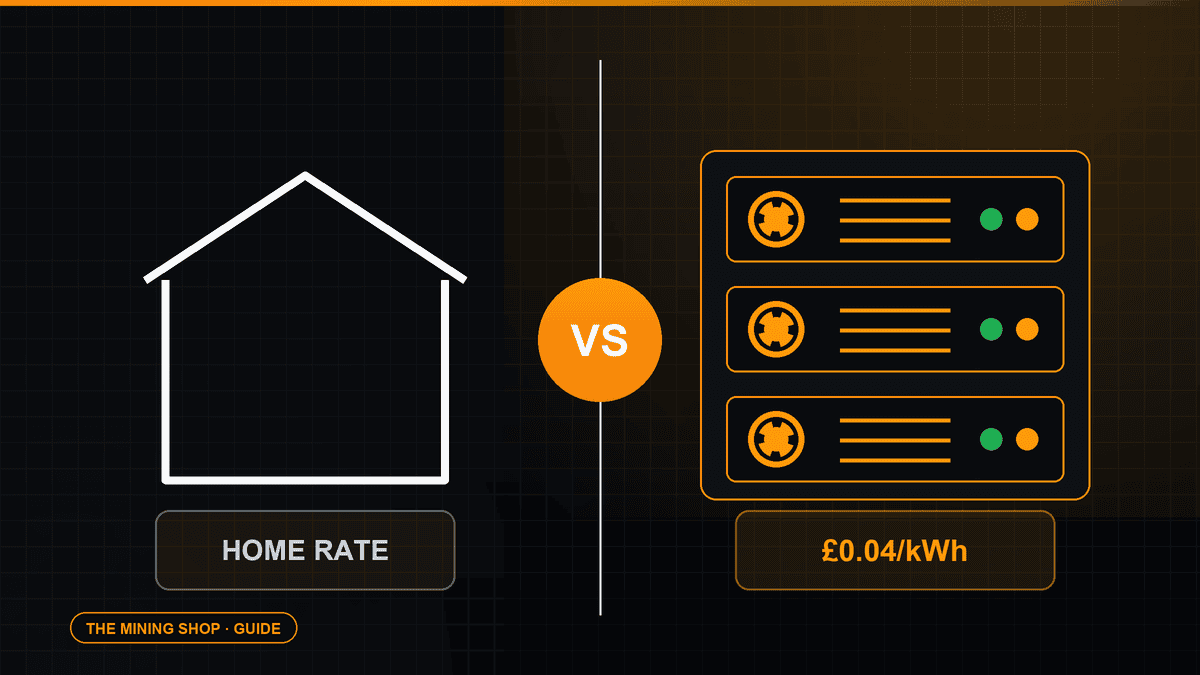
Every miner faces the same fork: run the machine yourself, or put it in a facility built for the job. The right answer is not the same for everyone, and anyone who tells you it is has something to sell you. This guide puts the two options side by side with real arithmetic, real machines […]