Immersion Cooling for ASIC Miners: Benefits and Trade-offs puts electrical capacity, heat rejection, airflow, noise and maintenance ahead of headline hashrate. These site conditions determine whether hardware can run reliably.
TL;DR
Immersion Cooling for ASIC Miners: Benefits and Trade-offs puts electrical capacity, heat rejection, airflow, noise and maintenance ahead of headline hashrate. These site conditions determine whether hardware can run reliably.
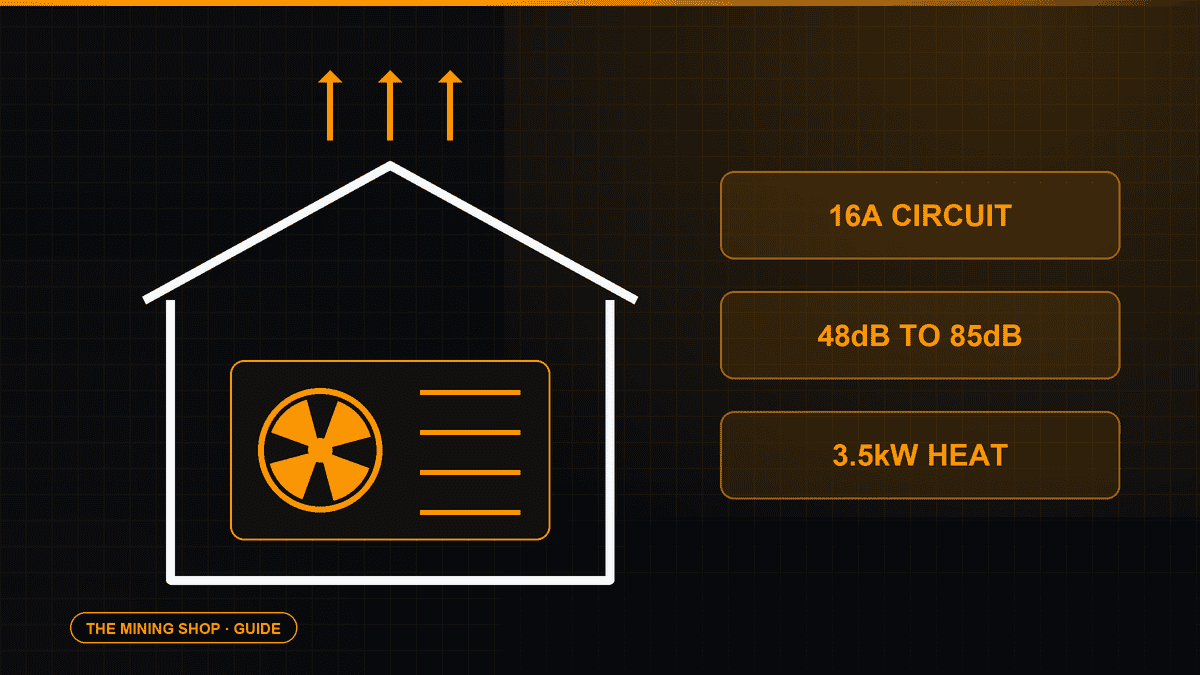
Electrical load and heat output must be designed for continuous operation, not estimated from a domestic appliance comparison.
Cooling choice changes noise, maintenance, infrastructure cost and the options for heat recovery.
Efficiency should be measured at the wall and reviewed as ambient conditions and firmware settings change.
A qualified electrician or competent site engineer should verify the installation where required.
In the fast-evolving world of cryptocurrency mining, cooling technology has a significant impact on efficiency and profitability. One of the most innovative methods gaining traction is immersion cooling. This system promises better energy efficiency, quieter operations, and longer hardware life, making it a potential significant change for miners using ASICs (Application-Specific Integrated Circuits).
Immersion Cooling for ASIC Miners: Benefits and Trade-offs 3
What Is Immersion Cooling?
Immersion cooling is a process where mining hardware is submerged in a specialised liquid that efficiently absorbs and dissipates heat. Unlike traditional air-based systems, this liquid does not conduct electricity, ensuring the safety of sensitive electronics.
For miners, the goal of any cooling system is to prevent overheating, which can slow performance and damage hardware. Immersion cooling directly addresses this issue by eliminating the need for airflow management and fans, providing a more consistent and efficient way to maintain ideal operating temperatures.
How Does It Work?
Here’s a step-by-step breakdown of how immersion cooling operates:
Submersion: ASIC miners are placed in a tank filled with a non-conductive liquid designed for cooling.
Heat Absorption: The liquid quickly absorbs heat generated by the hardware.
Heat Dissipation: The heated liquid is circulated through a cooling mechanism, such as a heat exchanger.
Cooling Cycle: The cooled liquid is returned to the tank, ready to absorb more heat.
This continuous loop ensures that mining rigs stay within optimal temperature ranges, even during heavy workloads.
Benefits for ASIC Miners
Immersion cooling offers several advantages that make it a compelling option for cryptocurrency miners:
1. Improved Efficiency
Stable temperatures allow ASIC miners to perform consistently at peak capacity, potentially increasing hash rates and mining profitability.
2. Noise Reduction
Fans used in traditional cooling systems can be extremely noisy. With immersion cooling, the need for fans is eliminated, resulting in a nearly silent operation.
3. Energy Savings
By reducing the power needed to cool mining hardware, this technology can lower electricity costs significantly.
4. Extended Hardware Lifespan
Excessive heat can wear out mining hardware quickly. With immersion cooling, components are kept at a steady, safe temperature, reducing stress and extending their usability.
5. Space Efficiency
Tanks used in immersion setups can house multiple miners in a compact area, streamlining facility layouts.
Challenges to Consider
While immersion cooling has clear benefits, there are challenges miners need to address:
Initial Investment: Setting up the system requires a significant upfront cost for tanks, liquids, and heat exchangers.
Maintenance: Dielectric liquids need regular monitoring and occasional replacement.
Scalability: Large-scale mining operations may face logistical hurdles when implementing this technology.
Comparing Cooling Systems
Feature
Immersion Cooling
Air Cooling
Efficiency
High
Moderate
Noise Levels
Silent
High
Energy Usage
Low
High
Hardware Longevity
Extended
Reduced
Initial Costs
Higher
Lower
Future of Cooling in Mining
The adoption of immersion systems is likely to grow as the industry seeks more efficient and sustainable solutions. Here are some trends to watch:
Improved Liquids: New formulations of dielectric fluids aim to enhance heat absorption while being environmentally friendly.
Smaller, Modular Systems: Compact designs make this technology accessible to small and medium-sized miners.
Integration with Renewable Energy: Pairing immersion setups with renewable power sources could further reduce the carbon footprint of mining.
FAQs About Immersion Cooling
What is immersion cooling?
It’s a cooling system where mining hardware is submerged in a non-conductive liquid to manage heat.
Is it better than air cooling?
Yes, it offers superior efficiency, reduces noise, and extends the life of mining hardware.
What are the costs involved?
The setup costs are higher, but savings on electricity and hardware maintenance can make it cost-effective in the long run.
Can small miners use this technology?
Yes, it is scalable and can be adapted for small operations with the right design and planning.
Where can I learn more about this solution?
Visit The Mining Shop for expert advice and tailored solutions.
Practical conclusion
For cryptocurrency miners looking to enhance efficiency, lower costs, and protect their hardware, immersion cooling is an innovative solution worth considering. While it requires an initial investment, its long-term benefits make it a forward-thinking choice for operations of all sizes. For more information, explore the resources at The Mining Shop.
Immersion Cooling for ASIC Miners: Benefits and Trade-offs 4
Useful next steps
Use these pages to move from research to a product or operating decision:
We use necessary cookies to run the shop and optional analytics cookies to understand how visitors use the site and improve shopping and checkout. You can accept analytics, use only necessary cookies, or choose settings. You can change your choice at any time.
Functional
Always active
The technical storage or access is strictly necessary for the legitimate purpose of enabling the use of a specific service explicitly requested by the subscriber or user, or for the sole purpose of carrying out the transmission of a communication over an electronic communications network.
Preferences
The technical storage or access is necessary for the legitimate purpose of storing preferences that are not requested by the subscriber or user.
Statistics
The technical storage or access that is used exclusively for statistical purposes.The technical storage or access that is used exclusively for anonymous statistical purposes. Without a subpoena, voluntary compliance on the part of your Internet Service Provider, or additional records from a third party, information stored or retrieved for this purpose alone cannot usually be used to identify you.
Marketing
The technical storage or access is required to create user profiles to send advertising, or to track the user on a website or across several websites for similar marketing purposes.