Energy Efficient ASIC Mining: Practical Ways to Reduce Waste puts electrical capacity, heat rejection, airflow, noise and maintenance ahead of headline hashrate. These site conditions determine whether hardware can run reliably.
TL;DR
Energy Efficient ASIC Mining: Practical Ways to Reduce Waste puts electrical capacity, heat rejection, airflow, noise and maintenance ahead of headline hashrate. These site conditions determine whether hardware can run reliably.
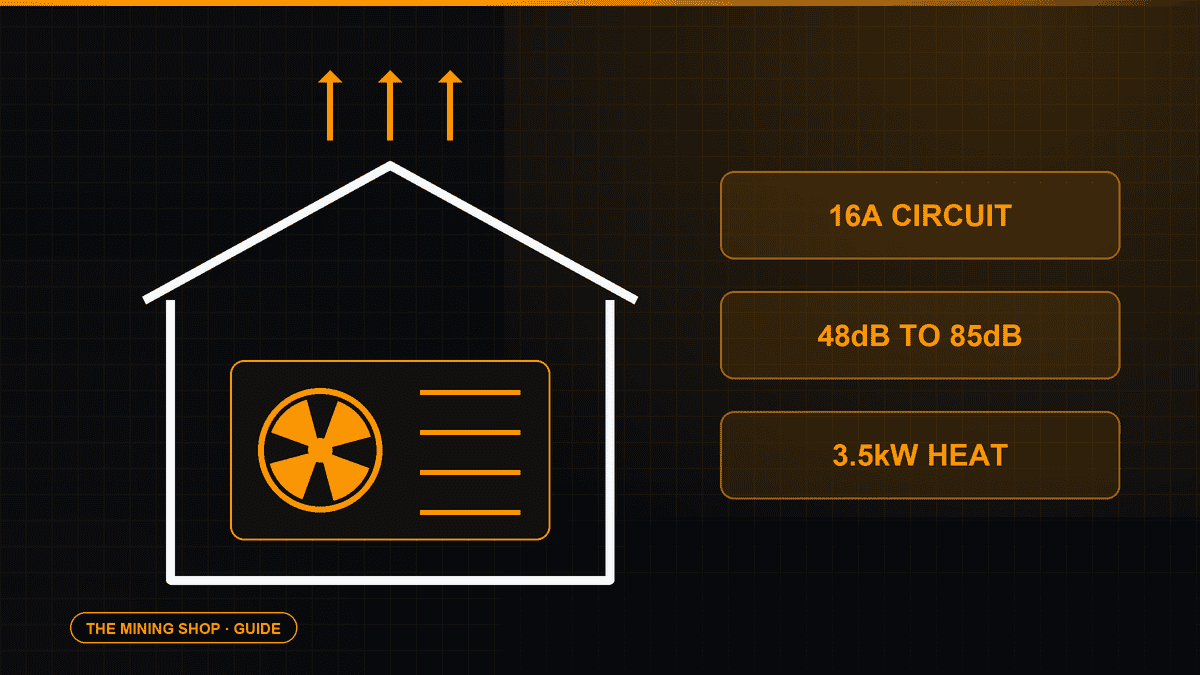
Electrical load and heat output must be designed for continuous operation, not estimated from a domestic appliance comparison.
Cooling choice changes noise, maintenance, infrastructure cost and the options for heat recovery.
Efficiency should be measured at the wall and reviewed as ambient conditions and firmware settings change.
A qualified electrician or competent site engineer should verify the installation where required.
Energy Efficient Mining has become a critical conversation in the cryptocurrency world. With the growing popularity of digital currencies like Bitcoin, the demand for mining is skyrocketing. However, traditional mining methods are often criticized for being energy-intensive and harmful to the environment. At The Mining Shop, we explore how ASIC (Application-Specific Integrated Circuit) mining can embrace greener, more energy-efficient solutions to tackle these pressing environmental challenges.
Energy Efficient ASIC Mining: Practical Ways to Reduce Waste 3
What is ASIC Mining?
ASIC mining refers to the use of specialised hardware designed specifically for mining cryptocurrencies. These devices are optimised to perform a single task—solving the complex mathematical equations that secure blockchain networks and generate new coins. While efficient in their function, ASIC miners consume significant amounts of electricity, leading to concerns about their sustainability.
Key Features of ASIC Mining:
High Performance: Designed to outpace GPU and CPU mining.
Energy Consumption: A single ASIC miner can consume over 2500 watts of power—comparable to a high-end gaming PC running 24/7.
Cost Efficiency: Although energy-intensive, they often produce higher returns due to their efficiency in mining.
The Environmental Cost of Traditional Mining
Mining operations powered by non-renewable energy contribute heavily to global carbon emissions. Studies have shown that Bitcoin mining alone uses more electricity annually than some small countries. (Source) This level of energy consumption makes energy efficiency in mining not just an option but a necessity.
Why is this a concern?
Most mining farms are located in regions where electricity comes from coal or natural gas.
The heat generated by ASIC miners requires additional energy for cooling systems.
Inefficient hardware increases energy use while delivering diminishing returns.
Can ASIC Mining Go Green?
Yes, ASIC mining can embrace sustainability through several innovative strategies. Below are some solutions already being implemented to promote Energy Efficient Mining:
1. Utilising Renewable Energy Sources
Transitioning to renewable energy, such as solar, wind, or hydroelectric power, is a critical step toward green mining. Several mining companies have already relocated their operations to regions rich in renewable resources.
Case Study: El Salvador’s Bitcoin Mining with Volcano Energy El Salvador is harnessing geothermal energy from its volcanoes to power Bitcoin mining operations. This approach demonstrates how renewable energy can support large-scale mining sustainably.
2. Advanced Cooling Systems
Traditional cooling systems consume excessive power to manage the heat generated by ASIC miners. Innovations such as liquid immersion cooling can significantly reduce energy use.
What is Liquid Immersion Cooling? This involves submerging ASIC miners in non-conductive liquid coolants. The system efficiently dissipates heat, reducing the need for power-hungry fans or air conditioning units.
3. Heat Reclamation for Secondary Uses
Another innovative approach is repurposing the heat produced by ASIC miners. For example:
Heating homes, greenhouses, or even swimming pools.
Providing industrial heat for manufacturing processes.
Real-world Example: Mining farms in Scandinavia have partnered with local municipalities to redirect heat toward district heating systems.
4. Efficient Hardware Design
Modern ASIC miners, such as the Bitmain Antminer S19 series, are designed to consume less power per hash while delivering higher output. These devices demonstrate that hardware optimisation is key to achieving Energy Efficient Mining.
5. Sustainable Mining Pools
Participating in mining pools that prioritise environmental responsibility is another way miners can contribute. Some pools now offer transparency about their energy sources and incentives green practices among members.
Barriers to Green ASIC Mining
Despite the promising innovations, several challenges remain:
High Initial Costs: Transitioning to renewable energy or purchasing new hardware requires significant investment.
Geographical Limitations: Access to renewable energy depends on the location of mining farms.
Outdated Equipment: Many miners continue to rely on older, less efficient machines due to budget constraints.
The Role of Regulations
Government policies can accelerate the adoption of energy-efficient mining practices. For example:
Tax Incentives: Offering tax breaks for using renewable energy in mining.
Energy Caps: Limiting the amount of non-renewable energy mining farms can consume.
Subsidized Green Tech: Encouraging miners to upgrade to energy-efficient hardware.
Future Outlook for Energy Efficient Mining
As technology advances, the prospect of truly sustainable ASIC mining becomes more achievable. With increasing public pressure and financial incentives, the industry is likely to see widespread adoption of green practices.
Emerging Trends to Watch:
AI-driven energy management systems.
Decentralized microgrids powered by renewable sources.
Community-based mining initiatives promoting local energy efficiency.
Why Energy Efficient Mining Matters
Switching to greener practices isn’t just good for the environment—it’s also good for business. Energy-efficient operations reduce electricity costs, improve public perception, and make mining more sustainable in the long run.
For those looking to explore energy-efficient ASIC mining solutions, visit The Mining Shop for the latest eco-friendly hardware options.
FAQs
1. What is Energy Efficient Mining?
Energy Efficient Mining involves using advanced technologies and renewable energy to reduce the environmental impact of cryptocurrency mining.
2. How can ASIC mining become more sustainable?
ASIC mining can adopt renewable energy, advanced cooling systems, heat reclamation, and efficient hardware to minimise its energy consumption.
3. What are the benefits of using renewable energy in mining?
Renewable energy reduces carbon emissions, lowers operational costs, and ensures a more sustainable mining process.
4. Are there any energy-efficient ASIC miners available?
Yes, newer models like the Bitmain Antminer S19 series and Intel’s Bonanza Mine ASIC chip are designed with energy efficiency in mind.
5. How can mining farms reduce cooling costs?
Innovative solutions like liquid immersion cooling and using waste heat for secondary purposes can significantly lower cooling expenses.
Energy Efficient ASIC Mining: Practical Ways to Reduce Waste 4
Useful next steps
Use these pages to move from research to a product or operating decision:
We use necessary cookies to run the shop and optional analytics cookies to understand how visitors use the site and improve shopping and checkout. You can accept analytics, use only necessary cookies, or choose settings. You can change your choice at any time.
Functional
Always active
The technical storage or access is strictly necessary for the legitimate purpose of enabling the use of a specific service explicitly requested by the subscriber or user, or for the sole purpose of carrying out the transmission of a communication over an electronic communications network.
Preferences
The technical storage or access is necessary for the legitimate purpose of storing preferences that are not requested by the subscriber or user.
Statistics
The technical storage or access that is used exclusively for statistical purposes.The technical storage or access that is used exclusively for anonymous statistical purposes. Without a subpoena, voluntary compliance on the part of your Internet Service Provider, or additional records from a third party, information stored or retrieved for this purpose alone cannot usually be used to identify you.
Marketing
The technical storage or access is required to create user profiles to send advertising, or to track the user on a website or across several websites for similar marketing purposes.