How Bitcoin Halving Affects ASIC Miners treats profitability as a changing operating model rather than a promised return. Revenue, electricity, pool fees, uptime and hardware cost all need to be tested together.
TL;DR
How Bitcoin Halving Affects ASIC Miners treats profitability as a changing operating model rather than a promised return. Revenue, electricity, pool fees, uptime and hardware cost all need to be tested together.
Gross mining revenue is not profit; electricity and every operating cost must be deducted.
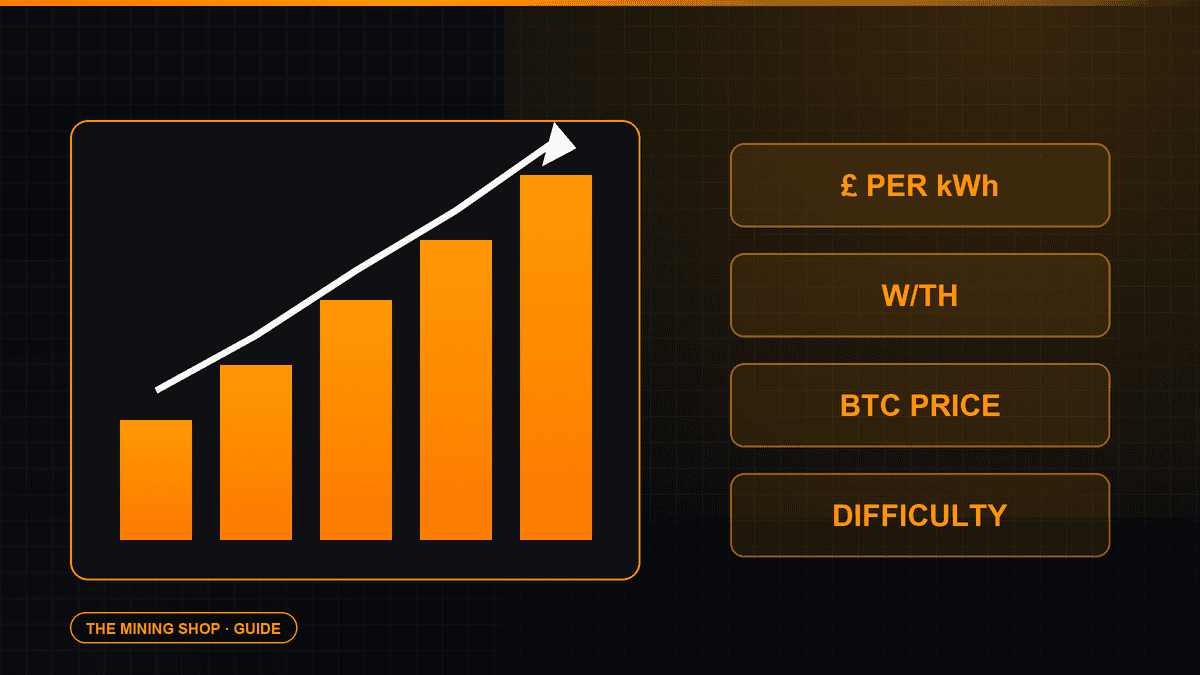
Network difficulty, coin price, pool luck, fees and uptime can change the result after purchase.
Model several energy prices and downside cases instead of relying on one break-even date.
Use live comparison data and keep written records of every assumption used in the model.
BTC halving affecting ASIC miners is a major topic of discussion in the cryptocurrency community. This pivotal event, which occurs roughly every four years, directly influences mining profitability and the dynamics of Bitcoin’s network. But why does it happen, and how does it reshape the profitability landscape for miners using ASICs?
In this guide, we’ll explore Bitcoin halving, ASIC mining, and the intricate relationship between the two, breaking down the concepts for everyone from beginners to seasoned professionals.
How Bitcoin Halving Affects ASIC Miners 2
What is BTC Halving?
BTC halving is a programmed event in the Bitcoin network that reduces the reward miners receive for validating a block by 50%. It is designed to control Bitcoin’s supply and simulate the scarcity of precious commodities like gold. For instance:
In 2012, the block reward dropped from 50 BTC to 25 BTC.
In 2016, it halved again to 12.5 BTC.
In 2020, it became 6.25 BTC.
In 2024, it decreased further to 3.125 BTC.
This periodic reduction continues until the total supply of Bitcoin reaches its cap of 21 million coins, projected around the year 2140.
The predictable reduction of new Bitcoin entering circulation makes halving a highly anticipated event. However, BTC halving affecting ASIC miners significantly alters their profitability.
What are ASIC Miners and Why Are They Important?
ASIC Mining: A Brief Overview
Application-Specific Integrated Circuits (ASICs) are devices explicitly designed for mining Bitcoin. Unlike general-purpose computers or GPUs, ASICs are fine-tuned for the SHA-256 algorithm used in Bitcoin mining, enabling them to perform at unparalleled efficiency.
ASIC miners are the backbone of the Bitcoin mining ecosystem. However, BTC halving affecting ASIC miners presents challenges that are critical to understand.
How BTC Halving Affects ASIC Miner Profitability
BTC halving affecting ASIC miners creates ripple effects across the mining industry. Here are the five major ways it impacts profitability:
1. Lower Block Rewards
With every halving, the number of bitcoins rewarded to miners for validating a block decreases. For example, after the April 2024 halving, the reward fell to 3.125 BTC per block, compared to 6.25 BTC previously. For miners, this means they need to work just as hard for half the rewards.
2. Rising Operational Costs
Mining Bitcoin using ASICs requires significant electricity, cooling systems, and maintenance. When block rewards are cut in half, operational costs weigh heavier on miners, particularly those with less efficient setups. As a result, only those with access to cheap electricity and state-of-the-art ASICs can maintain profitability.
3. Difficulty Adjustments
The Bitcoin network automatically adjusts mining difficulty every 2016 blocks (approximately every two weeks) to ensure blocks are mined at a steady rate of one every 10 minutes. After a halving event, some miners may shut down due to unprofitability, reducing the network’s overall hash rate. The subsequent difficulty adjustment can make mining slightly easier for those who remain.
4. The Role of Bitcoin’s Market Price
BTC halving affecting ASIC miners can also be cushioned by a rise in Bitcoin’s price. Historically, halvings have been followed by bull markets as scarcity drives up the coin’s value. If the price increases significantly, it can offset the reduced block rewards, maintaining profitability for miners.
5. Shift to Transaction Fees
As block rewards diminish, transaction fees—paid by users to incentivize miners to process transactions—become a more significant part of miners’ revenue. However, relying solely on fees introduces volatility, as they depend on network activity.
Adapting to BTC Halving: Strategies for ASIC Miners
Miners must evolve to remain profitable in the wake of BTC halving affecting ASIC miners. Here are some strategies:
Upgrading to Next-Gen ASICs
Newer ASIC models like the Antminer S19 or Whatsminer M50 offer better efficiency, ensuring miners get more hash power for less energy. Upgrading equipment is a crucial step for staying competitive.
Relocating to Energy-Efficient Zones
Miners often move operations to regions with lower electricity costs or renewable energy sources. Countries like Canada, Kazakhstan, and certain parts of the U.S. offer affordable energy solutions.
Diversifying Mining Pools
Joining mining pools spreads the risk and ensures more consistent payouts. Pools combine the resources of multiple miners, increasing the chance of earning rewards despite reduced block subsidies.
Future Outlook: BTC Halving and the Evolution of ASIC Mining
BTC halving affecting ASIC miners is part of a larger trend toward professionalization and efficiency in Bitcoin mining. As halving events continue, the industry is likely to see:
Technological advancements in ASIC hardware, pushing performance boundaries.
Increased reliance on transaction fees as the primary revenue source for miners.
Global shifts in mining operations due to changing regulations and energy dynamics.
For miners, adaptation is key. Those who can innovate and optimize will thrive in the post-halving era.
FAQs
What is Bitcoin Halving?
Bitcoin halving is an event that reduces the block reward miners receive for validating transactions by half, occurring roughly every four years. It ensures Bitcoin’s scarcity and maintains its deflationary nature.
Why Does BTC Halving Affect ASIC Miners?
BTC halving affecting ASIC miners leads to reduced rewards, heightened operational pressures, and changes in mining difficulty. Miners must adapt by embracing technological upgrades and implementing strategic adjustments to remain profitable.
Can Bitcoin Halving Make Mining Unprofitable?
Yes, for some miners with outdated hardware or high operational costs, halving can make mining unprofitable. However, efficient miners with access to low-cost energy can often adapt successfully.
How Can Miners Stay Profitable Post-Halving?
Upgrading to advanced ASICs, relocating to energy-efficient regions, and leveraging mining pools are some of the strategies miners use to sustain profitability after halving events.
Where Can I Learn More About ASIC Mining?
For expert guidance and a wide range of ASIC miners, visit TheMiningShop.co.uk.
Practical conclusion
BTC halving affecting ASIC miners is a complex but vital phenomenon in Bitcoin’s ecosystem. While it brings challenges such as reduced block rewards and heightened operational costs, it also presents opportunities for innovation and efficiency. By understanding the impacts and adapting to the changes, miners can continue to play a crucial role in securing the Bitcoin network and earning rewards.
We use necessary cookies to run the shop and optional analytics cookies to understand how visitors use the site and improve shopping and checkout. You can accept analytics, use only necessary cookies, or choose settings. You can change your choice at any time.
Functional
Always active
The technical storage or access is strictly necessary for the legitimate purpose of enabling the use of a specific service explicitly requested by the subscriber or user, or for the sole purpose of carrying out the transmission of a communication over an electronic communications network.
Preferences
The technical storage or access is necessary for the legitimate purpose of storing preferences that are not requested by the subscriber or user.
Statistics
The technical storage or access that is used exclusively for statistical purposes.The technical storage or access that is used exclusively for anonymous statistical purposes. Without a subpoena, voluntary compliance on the part of your Internet Service Provider, or additional records from a third party, information stored or retrieved for this purpose alone cannot usually be used to identify you.
Marketing
The technical storage or access is required to create user profiles to send advertising, or to track the user on a website or across several websites for similar marketing purposes.