

Sealminer A4 Ultra Hydro
Bitcoin & Bitcoin Cash ASIC Miner
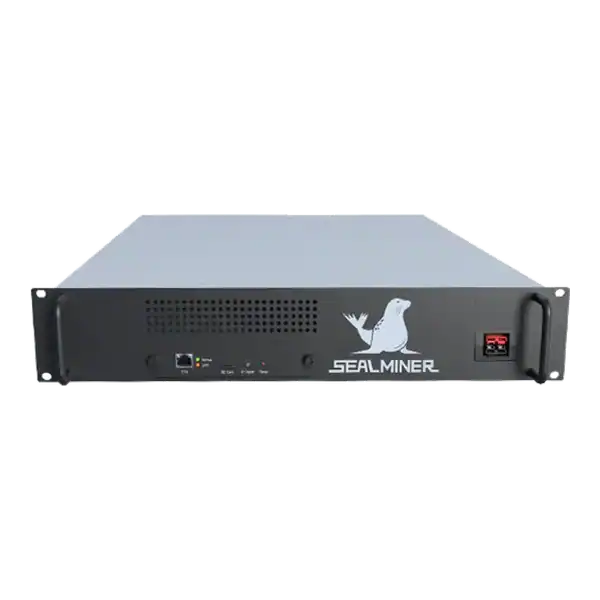

886TH
HASHRATE
9.45W/TH
EFFICIENCY
8373W
POWER
£898.19
EST. MONTHLY
NO PAYBACK
EST. ROI
Bitcoin payout address for miner: create and verify a Bitcoin payout address for a miner, choose the correct network, protect keys, understand pool thresholds.
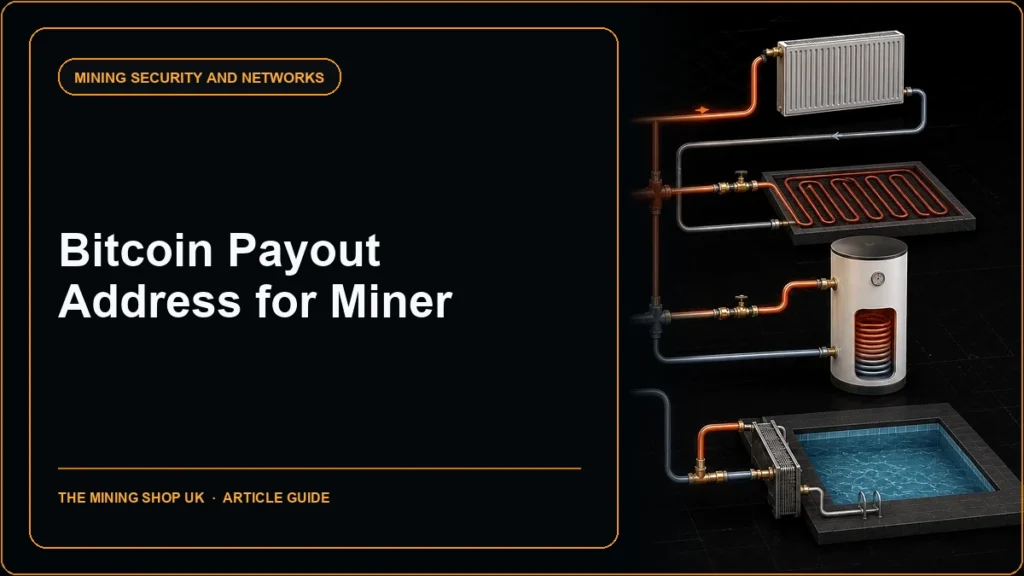
Bitcoin payout address for miner depends on a clear operating boundary and evidence that can be checked before money or equipment is committed. A Bitcoin payout address for a miner tells the pool where an eligible bitcoin payment should go.
It is not the wallet's private key and it does not belong in a seed phrase field on the miner. Create the address in a wallet or account the intended owner controls, verify the network and characters independently, secure recovery and pool access, then confirm thresholds and the first payment before scaling hashrate.
Bitcoin payout address for miner: A Bitcoin payout address for a miner should be created, verified and governed like any other payment destination.
A node operator is checking Bitcoin payout address for miner. For a company wallet, document how a new receive address is approved and reconciled with the pool before use.
For a personal learning miner, the individual may use a wallet they control. A business should use an approved custody and accounting process with named authority, recovery and access rules.
Choose between self-custody and a service account deliberately. Self-custody places key backup and transaction responsibility on the owner. A custodian adds counterparty, access and terms risk.
Do not send business receipts to an employee’s personal wallet or mix owners without a written arrangement. Correcting attribution later can be difficult.
Record the wallet purpose and responsible owner without copying the seed phrase into general business files.

Install or access the wallet from its verified official source on a clean supported device. Complete the wallet’s backup and recovery process before directing value to it.
Select Bitcoin on the correct network and choose Receive. Copy the newly displayed address and retain the wallet’s label or account context.
Bitcoin address formats can differ. Do not alter characters or assume that every string beginning similarly belongs to the intended network.
Use address reuse and privacy controls according to the wallet and pool support. A pool may permit a new address only after security checks or a waiting period.
A receive address is public information required for payment. The private key or seed phrase authorises spending and must remain secret.
A miner, pool worker field or ordinary support agent does not need the wallet seed phrase. A request for it is a strong fraud indicator.
Store recovery using the wallet’s supported secure method and test the documented process without exposing it. For a business, apply controlled access and succession rather than one person’s memory.
Screenshots, cloud notes, email and chat can leak secrets. Keep support evidence free of keys and seed words.
| Check | Evidence | Failure prevented |
|---|---|---|
| Network | Pool and wallet both state Bitcoin mainnet | Wrong-chain payment |
| Address | Independent wallet display | Clipboard substitution |
| Account | Correct pool identity and worker | Credit to wrong owner |
| Security | MFA and payout lock | Unauthorised change |
| Threshold | Current pool terms | Unexpected payment delay |
| Fee | Payout and network policy | Uneconomic small payment |
Compare more than the first and last characters where practical and use a QR or signed-address workflow only when supported and understood. Clipboard malware can substitute a plausible address.
Save the address through the pool’s authenticated official site. Do not follow a payout-change link from an unsolicited email.
Pools set minimum payouts to manage transaction costs and administration. A compact miner can submit valid shares yet take a very long time to accrue the threshold.
Some services offer Lightning or alternative payout routes with different limits and custody. Review the exact current method, fees and wallet compatibility rather than assuming it is universally better.
A solo pool normally pays only if the miner finds a valid block, subject to its terms. Accepted pool shares can prove work without creating a proportional solo payout.
Do not set an unrealistically low threshold simply to test where the fee or service disallows it. Use the pool’s balance and worker evidence until an eligible payment arises.
When a payout is created, compare pool amount, transaction identifier, destination and wallet receipt. Wait for the wallet’s appropriate confirmations before treating the transaction as settled for the intended purpose.
Reconcile the amount after pool and payout fees. Record date, bitcoin amount, transaction identifier, valuation source and business owner where accounting requires it.
A wallet can display an unconfirmed transaction before final inclusion. Do not send goods, distributions or reimbursements merely because an untrusted screenshot shows a pending payment.
After verification, retain the address-control and recovery record. Rotate or change only through the approved secure process.
Bitcoin payout address for miner: A Bitcoin payout address for a miner should be created, verified and governed like any other payment destination.
For a personal learning miner, the individual may use a wallet they control.
Install or access the wallet from its verified official source on a clean supported device.
A receive address is public information required for payment. The private key or seed phrase authorises spending and must remain secret.
A Bitcoin payout address for a miner should be created, verified and governed like any other payment destination. Keep recovery secrets out of the miner and pool, understand compact-miner thresholds and reconcile the first eligible payment. Strong pool account and address-change controls matter more than repeatedly pasting the same string.
For a company wallet, document how a new receive address is approved and reconciled with the pool before use. Address rotation can improve record separation. But an undocumented change can resemble theft. The approval should identify the wallet account, authorised person, pool and effective date without exposing recovery secrets.
Use The Mining Shop UK home-mining and risk resources alongside the current wallet and pool documentation before directing hashrate.
Use a reputable wallet appropriate to custody needs, back it up securely and generate a fresh Bitcoin receive address on the intended network. Verify the address through an independent wallet display before saving it at the pool. Never enter a seed phrase or private key into miner or pool configuration.

Bitcoin majority attack economics: Define the exact objective and duration before estimating resources because censorship, a short reorganisation.
ASIC Miner Security: Protecting a Mining Operation focuses on a safe, supportable setup. Read the practical UK guide before deciding.
does ASIC mining need 5G? High-Speed Internet? Use the practical checks in this UK guide before choosing equipment or changing an operating plan.
Join the ASIC Mining Discussion
Members can read and join the discussion
Log in to read comments from other miners. Create a free account if you would like to ask a question or share your experience.
Membership helps us protect the discussion from spam and keep answers useful.