
Pre-order
Overall ranking

Equihash
·
ZEC
Overall rank#1of 100AvailableAll: #3 / 831
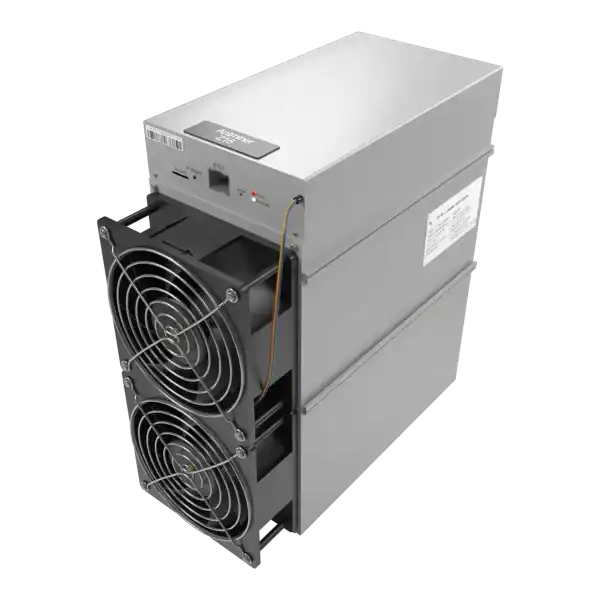

Pre-OrderFree Shipping
Hashrate
525KSOL
Efficiency
4.73W/KSOL
Power
2483W
Earns/kWh
39.8p
Bitcoin Core 0.16 savemempool guide covering mempool.dat persistence, local policy state, disk writes, restart filtering, privacy, failure and verification.

This guide explains Bitcoin Core savemempool RPC in plain English. It shows what the command does, what its result means and what it cannot prove.
Bitcoin Core savemempool RPC: The daemon writes its configured mempool persistence file in the data environment. Verify disk headroom, ownership and restrictive permissions.
A miner is checking Bitcoin Core savemempool RPC. Record tip, fee floors, size and count before saving and avoid presenting the file as consensus data.
The mempool contains transactions accepted under this node’s policy and peer history. Other nodes legitimately differ. Record tip, fee floors, size and count before saving and avoid presenting the file as consensus data.
The daemon writes its configured mempool persistence file in the data environment. Verify disk headroom, ownership and restrictive permissions. Never copy it into public diagnostics because transaction inventory can be sensitive.
Transactions can enter, confirm, replace or evict around the save. The dump is a point-in-time operational artefact, not an atomic business ledger. Use transaction-level state for payment decisions.

On load, entries may be dropped because they confirmed, conflict, expired or violate current policy. Compare restored count and known critical txids, but do not require exact equality as a health gate.
Disk-full, permission and I/O failures must surface to monitoring. Do not repeatedly retry at high frequency or stop the node solely because optional persistence failed. Preserve chain validation and diagnose storage safely.
The file exposes local unconfirmed inventory and timing context. Limit backups and retention and remove stale copies securely. It is not needed for long-term accounting or customer evidence.
Operators test the command on a non-production node first. They check a normal reply, an invalid request, a timeout and a restart. This shows what the response means and prevents one local result from being mistaken for a network-wide outcome.
Bitcoin Core savemempool RPC: The daemon writes its configured mempool persistence file in the data environment.
The mempool contains transactions accepted under this node’s policy and peer history.
The daemon writes its configured mempool persistence file in the data environment.
Transactions can enter, confirm, replace or evict around the save. The dump is a point-in-time operational artefact, not an atomic business ledger.
savemempool improves restart continuity but preserves only transient local policy state. Safe operation protects the file, expects filtering and never treats the dump as a payment or blockchain record.
Check the current specification status and the documentation for the exact implementation you operate before moving production funds or changing a mining node.


Bitcoin Core 31 getprivatebroadcastinfo guide covering queued transactions, txid and wtxid, raw hex, per-peer sent and acknowledgement times, privacy and monitoring.

Bitcoin Core 31 getmempoolcluster guide covering cluster membership, adjusted weight, mining-order chunks, fees, missing transactions and safe analytics.

Bitcoin Core 31 abortprivatebroadcast guide covering txid and wtxid matching, multiple removals, returned raw transactions, queue-only limits and safe operation.

Join the ASIC Mining Discussion
Members can read and join the discussion
Log in to read comments from other miners. Create a free account if you would like to ask a question or share your experience.
Membership helps us protect the discussion from spam and keep answers useful.