
Pre-order
Overall ranking

Equihash
·
ZEC
Overall rank#1of 100AvailableAll: #3 / 831
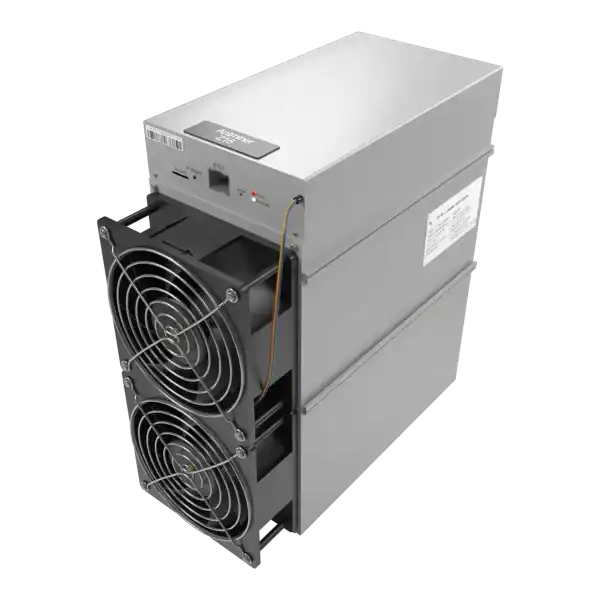

Pre-OrderFree Shipping
Hashrate
525KSOL
Efficiency
4.73W/KSOL
Power
2483W
Earns/kWh
39.8p
Bitcoin Core 0.16 ping guide covering all-peer requests, getpeerinfo results, decimal-second units, processing backlog, asynchronous sampling and alerts.
This guide explains Bitcoin Core ping RPC in plain English. It shows what the command does, what its result means and what it cannot prove.
Bitcoin Core ping RPC: The measurement includes time waiting behind other messages. High values can indicate network latency, local CPU pressure, blocked I/O or busy peer processing.
A node operator is checking Bitcoin Core ping RPC. Record the trigger time, poll getpeerinfo after a bounded interval and match by current peer connection identity.
The call requests work and returns before every peer result is available. Record the trigger time, poll getpeerinfo after a bounded interval and match by current peer connection identity. Reconnection can invalidate a previous sample.
One call targets all peers rather than one selected endpoint. Rate-limit diagnostic triggers so repeated sweeps do not add queue load. For a single-peer investigation, interpret the full set but retain only approved evidence.
pingtime and pingwait use seconds, not milliseconds. Convert once at the display boundary and retain the source value. Unit mistakes can create thousand-fold false alarms or hide genuine latency.

The measurement includes time waiting behind other messages. High values can indicate network latency, local CPU pressure, blocked I/O or busy peer processing. Correlate host load, message traffic and multiple samples before diagnosing the link.
Low ping does not prove useful service flags, valid chain data or diverse topology. Combine with last receive, synced headers and blocks, inflight requests and active-chain freshness. Do not select every peer by latency alone.
Use distributions and persistent thresholds, not a single maximum. Preserve inbound or outbound role and address-family diversity while redacting identities. Exclude startup and initial-sync periods from ordinary baselines.
Operators test the command on a non-production node first. They check a normal reply, an invalid request, a timeout and a restart. This shows what the response means and prevents one local result from being mistaken for a network-wide outcome.
Bitcoin Core ping RPC: The measurement includes time waiting behind other messages. High values can indicate network latency, local CPU pressure, blocked I/O or busy peer processing.
The call requests work and returns before every peer result is available.
One call targets all peers rather than one selected endpoint. Rate-limit diagnostic triggers so repeated sweeps do not add queue load.
pingtime and pingwait use seconds, not milliseconds. Convert once at the display boundary and retain the source value.
ping measures a combined peer-message round trip, including local queue delay. Useful monitoring therefore samples asynchronously, preserves units and correlates latency with processing, relay and chain health.
Check the current specification status and the documentation for the exact implementation you operate before moving production funds or changing a mining node.

Bitcoin Core 26 getaddrmaninfo guide covering new and tried address-manager tables, per-network counts, diversity monitoring, privacy and diagnostic limits.
Bitcoin Core 23 getblockfrompeer guide covering known headers, peer IDs, scheduled requests, peer replacement, validation, monitoring and failure recovery.
Bitcoin Core 0.16 stop RPC guide covering authority, service draining, state persistence, process supervision, shutdown verification and restart readiness.

Join the ASIC Mining Discussion
Members can read and join the discussion
Log in to read comments from other miners. Create a free account if you would like to ask a question or share your experience.
Membership helps us protect the discussion from spam and keep answers useful.