
Pre-order
Overall ranking

Equihash
·
ZEC
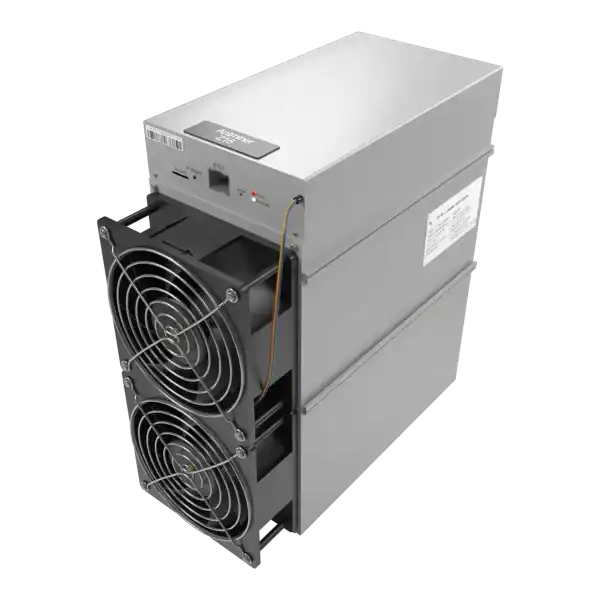
Overall rank#1of 100AvailableAll: #2 / 831

Pre-OrderFree Shipping
Hashrate
525KSOL
Efficiency
4.73W/KSOL
Power
2483W
Earns/kWh
40.2p
Bitcoin Core 0.16 getpeerinfo guide covering peer addresses, services, traffic, latency, direction, sync, inflight blocks, privacy and diagnostics.
This guide explains Bitcoin Core getpeerinfo RPC in plain English. It shows what the command does, what its result means and what it cannot prove.
Bitcoin Core getpeerinfo RPC: addr, addrbind and addrlocal can reveal remote peers, local interfaces, proxies and externally reported addresses. Keep the RPC private, redact routine exports and avoid public dashboards that fingerprint topology.
A node operator is checking Bitcoin Core getpeerinfo RPC. Verify actual headers, blocks and transactions received and distinguish block-relay roles from full transaction relay.
addr, addrbind and addrlocal can reveal remote peers, local interfaces, proxies and externally reported addresses. Keep the RPC private, redact routine exports and avoid public dashboards that fingerprint topology. Peer subversion strings are self-declared, not authenticated identity.
Decode services with version-specific definitions and use relaytxes to understand what the peer requested. Offered capability does not prove correct behaviour. Verify actual headers, blocks and transactions received and distinguish block-relay roles from full transaction relay.
lastsend, lastrecv and connection time use Unix seconds; byte counters are per connection. Calculate rates with a monotonic collector and handle reconnection resets. A quiet long-lived peer can still be useful, while frequent traffic can be redundant or hostile.

pingtime, minping and pingwait are conditional and measure round-trip behaviour, not validation speed. Avoid ranking peers by a single ping sample. Use distributions, duration and sync contribution, and do not disconnect diverse peers solely because a nearby peer is faster.
inbound distinguishes accepted from initiated connections; addnode identifies manual or connect-driven origins. Healthy topology needs role-appropriate outbound diversity and may include inbound reachability. Manual peers should not silently become the only chain view.
startingheight is the peer’s advertised initial height, while synced_headers and synced_blocks show common progress and inflight lists requested block heights. Compare with the local tip and request age. Stale values require context during initial download and reorganisations.
On an isolated network, create inbound, outbound, manual, lagging, non-relaying and high-latency peers. Rotate connections and block responses. Verify redaction, optional-field parsing, byte resets, sync alarms and that whitelist or ban score does not substitute for content validation.
Bitcoin Core getpeerinfo RPC: addr, addrbind and addrlocal can reveal remote peers, local interfaces, proxies and externally reported addresses.
addr, addrbind and addrlocal can reveal remote peers, local interfaces, proxies and externally reported addresses.
Decode services with version-specific definitions and use relaytxes to understand what the peer requested.
lastsend, lastrecv and connection time use Unix seconds. Byte counters are per connection.
getpeerinfo is the principal historical peer diagnostic, but it exposes topology and unauthenticated claims. Safe monitoring combines redaction, role-aware diversity and observed relay and synchronisation behaviour.
Check the current specification status and the documentation for the exact implementation you operate before moving production funds or changing a mining node.
Bitcoin Core 26 getaddrmaninfo guide covering new and tried address-manager tables, per-network counts, diversity monitoring, privacy and diagnostic limits.
Bitcoin Core 23 getblockfrompeer guide covering known headers, peer IDs, scheduled requests, peer replacement, validation, monitoring and failure recovery.
Bitcoin Core 0.16 stop RPC guide covering authority, service draining, state persistence, process supervision, shutdown verification and restart readiness.

Join the ASIC Mining Discussion
Members can read and join the discussion
Log in to read comments from other miners. Create a free account if you would like to ask a question or share your experience.
Membership helps us protect the discussion from spam and keep answers useful.