
Pre-order
Overall ranking

Equihash
·
ZEC
Overall rank#1of 100AvailableAll: #2 / 831
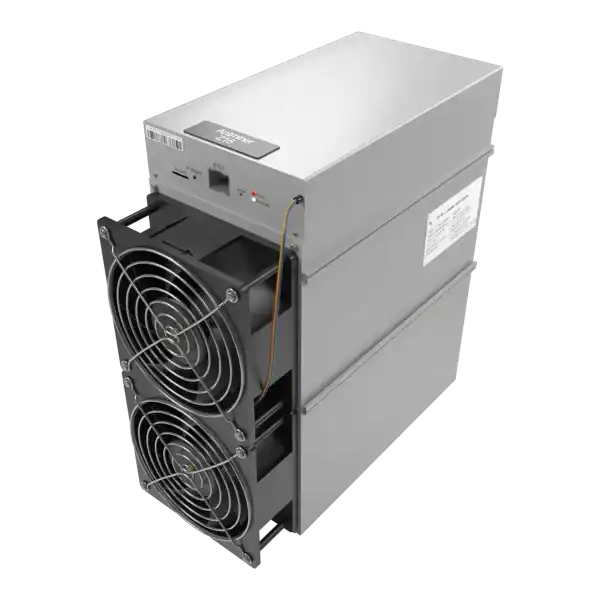

Pre-OrderFree Shipping
Hashrate
525KSOL
Efficiency
4.73W/KSOL
Power
2483W
Earns/kWh
39.8p
Bitcoin Core 0.16 getmempooldescendants guide covering unconfirmed children, verbose package fields, replacement, eviction, privacy and graph testing.
This guide explains Bitcoin Core getmempooldescendants RPC in plain English. It shows what the command does, what its result means and what it cannot prove.
Bitcoin Core getmempooldescendants RPC: A large descendant set can indicate chained payments, consolidation workflows or application fan-out. It is not inherently malicious.
A miner is checking Bitcoin Core getmempooldescendants RPC. Map direct dependencies and relevant outputs before deciding which business action is affected, and never infer customer identity from graph shape alone.
The target must currently exist in the node’s mempool. Descendants spend one of its outputs directly or through other unconfirmed transactions. The returned set excludes the target itself while verbose aggregate descendantcount fields include each described transaction in its own totals, a distinction tests must preserve.
False returns transaction IDs; true returns keyed entry objects with virtual size, fees, local admission metadata, package aggregates, wtxid and direct dependencies. Choose the mode explicitly and cap response size because a broad descendant graph can be expensive to serialise and process.
A large descendant set can indicate chained payments, consolidation workflows or application fan-out. It is not inherently malicious. Map direct dependencies and relevant outputs before deciding which business action is affected, and never infer customer identity from graph shape alone.

Replacement can remove a transaction and its descendants or introduce a different package under local policy. Monitor replacement evidence and conflicts alongside the graph. A vanished descendant may have confirmed, been evicted or become invalid after an ancestor change; absence alone does not identify the cause.
Package feerate and ancestor relationships affect block selection, while size and count limits can constrain admission. Descendant aggregates help explain local behaviour but do not promise confirmation. Compare template or acceptance results on the exact node and avoid extrapolating to every miner.
An unrestricted endpoint can reveal local unconfirmed inventory and enable repeated expensive traversal. Keep RPC private, authorise callers and rate-limit diagnostic layers. Redact customer mappings and peer details from retained incident records while preserving hashes required for technical reproduction.
Operators test the command on a non-production node first. They check a normal reply, an invalid request, a timeout and a restart. This shows what the response means and prevents one local result from being mistaken for a network-wide outcome.
Bitcoin Core getmempooldescendants RPC: A large descendant set can indicate chained payments, consolidation workflows or application fan-out.
The target must currently exist in the node’s mempool. Descendants spend one of its outputs directly or through other unconfirmed transactions.
False returns transaction IDs. True returns keyed entry objects with virtual size, fees, local admission metadata, package aggregates, wtxid and direct dependencies.
A large descendant set can indicate chained payments, consolidation workflows or application fan-out.
getmempooldescendants reveals downstream unconfirmed dependencies for local policy analysis. Reliable systems treat it as a changing graph, preserve count semantics and distinguish confirmation, replacement and eviction.
Check the current specification status and the documentation for the exact implementation you operate before moving production funds or changing a mining node.



Bitcoin Core 31 getprivatebroadcastinfo guide covering queued transactions, txid and wtxid, raw hex, per-peer sent and acknowledgement times, privacy and monitoring.

Bitcoin Core 31 getmempoolcluster guide covering cluster membership, adjusted weight, mining-order chunks, fees, missing transactions and safe analytics.

Bitcoin Core 31 abortprivatebroadcast guide covering txid and wtxid matching, multiple removals, returned raw transactions, queue-only limits and safe operation.

Join the ASIC Mining Discussion
Members can read and join the discussion
Log in to read comments from other miners. Create a free account if you would like to ask a question or share your experience.
Membership helps us protect the discussion from spam and keep answers useful.