
Pre-order
Overall ranking

Equihash
·
ZEC
Overall rank#1of 100AvailableAll: #2 / 831


Pre-OrderFree Shipping
Hashrate
525KSOL
Efficiency
4.73W/KSOL
Power
2483W
Earns/kWh
39.8p
Bitcoin Core getaddednodeinfo guide covering persistent added peers, onetry exclusion, connected addresses, direction, DNS, monitoring and topology audits.

This guide explains Bitcoin Core getaddednodeinfo RPC in plain English. It shows what the command does, what its result means and what it cannot prove.
Bitcoin Core getaddednodeinfo RPC: Combine added-node data with peer protocol version, services, ping, bytes, last block, network, ASN and chainwork evidence.
A node operator is checking Bitcoin Core getaddednodeinfo RPC. A manual list concentrated under one operator or network can increase eclipse risk even when every endpoint is reachable.
Without an argument the call returns every added node; with a node string it targets the supplied entry. Match the exact representation originally passed to addnode, including hostname or port. Normalising too early can merge distinct configured names or miss a retained entry whose DNS now resolves differently.
One-off connection attempts are explicitly absent from this list. An empty result therefore does not prove no manual connection was attempted or remains active. Correlate getpeerinfo, logs and the incident timeline when investigating an onetry peer, and avoid using this RPC alone as an exhaustive connectivity inventory.
connected indicates whether the added entry currently has a connection. It does not prove handshake quality, service suitability, recent block relay or chainwork agreement. Alert separately on management intent and operational usefulness so a persistently connected but stale peer is not reported healthy.

When connected, addresses shows the actual server endpoint and inbound or outbound direction. Compare hostname resolution with approved expectations and detect address changes or unexpected inbound state. Keep private topology out of broadly accessible dashboards and retain only the evidence required for network operations.
Peers added manually can receive protection from some ordinary disconnection logic and may have different service requirements. Review why each entry exists, its expiry or owner and its diversity contribution. Stale manual peers should be removed through a controlled addnode action, not tolerated because the connection flag is true.
Combine added-node data with peer protocol version, services, ping, bytes, last block, network, ASN and chainwork evidence. Ensure mining nodes retain multiple independent outbound paths. A manual list concentrated under one operator or network can increase eclipse risk even when every endpoint is reachable.
Operators test the command on a non-production node first. They check a normal reply, an invalid request, a timeout and a restart. This shows what the response means and prevents one local result from being mistaken for a network-wide outcome.
Bitcoin Core getaddednodeinfo RPC: Combine added-node data with peer protocol version, services, ping, bytes, last block, network, ASN and chainwork evidence.
Without an argument the call returns every added node. With a node string it targets the supplied entry.
One-off connection attempts are explicitly absent from this list. An empty result therefore does not prove no manual connection was attempted or remains active.
connected indicates whether the added entry currently has a connection. It does not prove handshake quality, service suitability, recent block relay or chainwork agreement.
getaddednodeinfo is a manual-peer inventory, not a peer-health verdict. Reliable monitoring combines its configured and connected state with resolved endpoints, negotiated services and independent chain-quality evidence.
Check the current specification status and the documentation for the exact implementation you operate before moving production funds or changing a mining node.
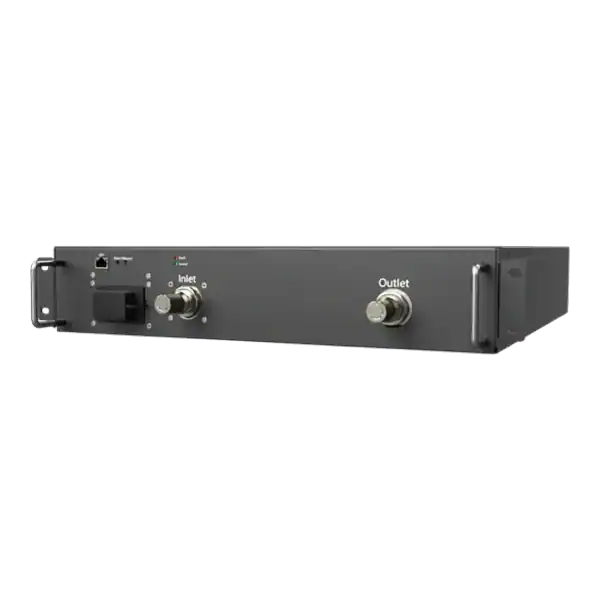



Bitcoin Core 26 getaddrmaninfo guide covering new and tried address-manager tables, per-network counts, diversity monitoring, privacy and diagnostic limits.
Bitcoin Core 23 getblockfrompeer guide covering known headers, peer IDs, scheduled requests, peer replacement, validation, monitoring and failure recovery.

Bitcoin Core 0.16 stop RPC guide covering authority, service draining, state persistence, process supervision, shutdown verification and restart readiness.

Join the ASIC Mining Discussion
Members can read and join the discussion
Log in to read comments from other miners. Create a free account if you would like to ask a question or share your experience.
Membership helps us protect the discussion from spam and keep answers useful.