What is a NerdMiner? It is an open-source ESP32 project that performs SHA-256 hashing in software and presents Bitcoin mining information on a small display. It teaches the relationship between candidate hashes, targets, difficulty, pools and shares. It is not equivalent to a Bitaxe. This contains a dedicated ASIC chip, or an industrial miner designed around revenue and energy efficiency.
what is a NerdMiner in simple English
A NerdMiner: ASIC means application-specific integrated circuit. A Bitcoin ASIC chip is designed to perform SHA-256 hashing extremely efficiently.
Simple example
A miner is checking a NerdMiner. Continue with The Mining Shop UK's hashrate, pool and ASIC buying guides when you are ready to move from a software learning device to real ASIC hardware.
Key terms in plain English
Bitcoin Core:
Widely used Bitcoin software. It can check blocks and transactions and provide wallet, network and operator tools.
ASIC:
A computer built to do one specialised job. A mining ASIC is designed for a particular proof-of-work algorithm.
Hashrate:
The amount of mining work a machine attempts each second. More hashrate does not guarantee more profit.
Efficiency:
How much electricity a miner uses for a set amount of work. Lower joules per terahash usually means better efficiency.
Mining pool:
A service that combines work from many miners and shares rewards using stated rules.
Define a NerdMiner accurately
NerdMiner V2 is an improved open-source implementation of the original ESP32 NerdMiner concept. It runs on supported ESP32 boards, commonly with an integrated colour display and Wi-Fi.
The microcontroller calculates SHA-256 candidate work, connects to compatible mining services and displays network or mining statistics. That is genuine computation. But not at industrial scale.
The name describes a project and firmware ecosystem rather than one standard manufacturer model. Different sellers can assemble different boards, cases and forks.
Quick reference for what is a NerdMiner.
See why it is not a Bitcoin ASIC
ASIC means application-specific integrated circuit. A Bitcoin ASIC chip is designed to perform SHA-256 hashing extremely efficiently. An ESP32 is a general-purpose microcontroller handling Wi-Fi, display and software tasks.
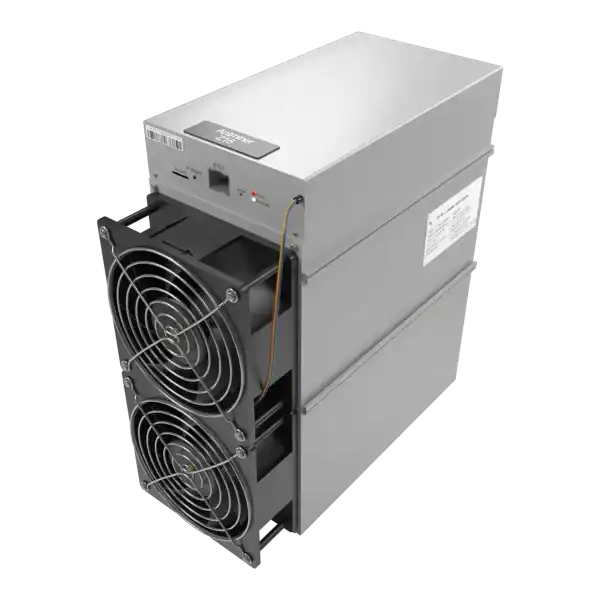
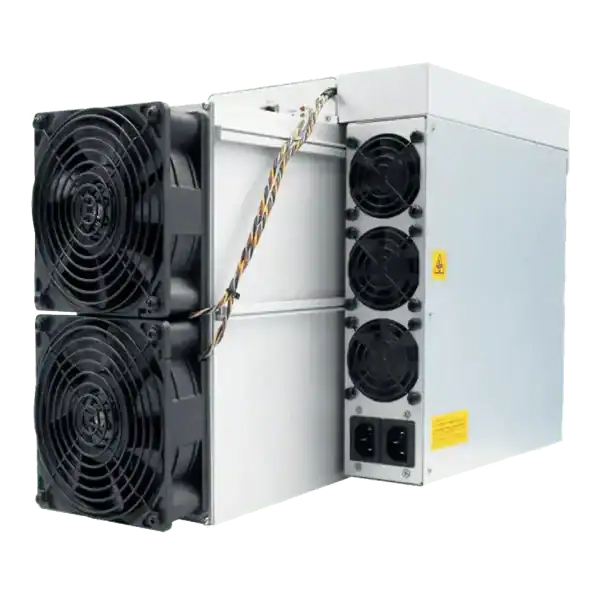
A NerdMiner performs its hashes on the microcontroller. A Bitaxe uses an ESP32 for control but sends hashing work to a dedicated ASIC chip. An industrial Antminer contains many ASIC chips plus powerful conversion and cooling.
NerdMiner, Bitaxe and industrial ASIC
Feature
NerdMiner
Bitaxe family
Industrial ASIC
Hashing
ESP32 software
Dedicated ASIC chip
Many dedicated ASIC chips
Power class
USB-scale
Low-voltage project
Kilowatt-scale
Primary value
Learning and display
Open-source real ASIC mining
Operating revenue
Site need
Normal device network
Suitable supply and cooling
Industrial electrical and airflow design
Revenue expectation
Negligible and probabilistic
Small and variable
Commercial but not guaranteed
Understand the screen values
Hashrate is the estimated attempts per second. Pool status shows whether the device can communicate. A share is evidence that submitted work met the pool’s easier target.
Best difficulty or best share records how strong the best submitted result has been. It can be an engaging progress measure. But a near-looking number does not make the next hash more likely.
Network difficulty, block height, price and other data can come from external services. A changing display is not proof that the local miner earned a payout.
Learn probability through solo mining
Each valid candidate hash is an independent attempt. A device with a tiny fraction of network hashrate has an extremely small chance of finding a valid block in any practical period.
Expected time is a statistical average, not a countdown. A block could theoretically be found immediately or not during the device’s useful life.
This makes a NerdMiner a vivid teaching tool for probability. It does not make it a rational way to forecast income.
Understand pool shares and community rewards
Pools use easier share targets to measure contributed work. A NerdMiner may submit shares to a compatible endpoint even though its economic share is extremely small.
Some community services use special reward drawings, points or shared events for small miners. Those are service-specific schemes, not ordinary proof that the device earned its proportional Bitcoin block reward.
Read the pool method, minimum payout, fees, custody and jurisdiction. Never assume a displayed share is withdrawable Bitcoin.
Use it as an educational project
A NerdMiner can teach Wi-Fi provisioning, open-source firmware, pool endpoints, wallet addressing, hash targets and device monitoring. It is small enough to observe without the electrical, heat and noise load of an industrial ASIC.
The project can also introduce source-code review and flashing. Keep a record of the board target and official release so experimentation remains recoverable.
A useful exercise is to compare local hashrate, share arrival and the Bitcoin network’s scale, then explain why specialised silicon exists.
Recognise its practical limits
The low hashrate means standard pool revenue will normally be negligible or below payout thresholds. The device should not be included in a household income or tax-saving plan on an assumed yield.
Firmware and pool compatibility can change. An assembled seller product may use a fork or screen target outside the core project.
Continuous display use, poor USB power and Wi-Fi issues can still cause faults. Low power does not remove the need for sound electronics and network practice.
When a NerdMiner makes sense
Good reasons
Choose it for a classroom, desk display, coding project, Bitcoin demonstration or a harmless way to experience solo-mining probability.
Judge the purchase by build quality, learning and enjoyment.
Wrong reasons
Do not choose it for regular income, a meaningful network contribution, home heating or an alternative to an efficient ASIC.
Avoid any claim that its low electricity automatically makes it profitable.
Common NerdMiner misunderstandings
Calling every small display miner a NerdMiner V2-compatible board.
Calling a software-hashing ESP32 an ASIC.
Treating best difficulty as account balance.
Converting one lucky share into a monthly forecast.
Comparing hashrate with another algorithm.
Assuming a preflashed seller build is the official repository release.
Using an important wallet address on an unreviewed device.
Frequently asked questions
What is the main point of a NerdMiner?
A NerdMiner: ASIC means application-specific integrated circuit. A Bitcoin ASIC chip is designed to perform SHA-256 hashing extremely efficiently.
For a NerdMiner, what should a beginner know about defining a NerdMiner accurately?
NerdMiner V2 is an improved open-source implementation of the original ESP32 NerdMiner concept.
For a NerdMiner, what should a beginner know about see why it is not a Bitcoin ASIC?
ASIC means application-specific integrated circuit. A Bitcoin ASIC chip is designed to perform SHA-256 hashing extremely efficiently.
For a NerdMiner, what should a beginner know about understand the screen values?
Hashrate is the estimated attempts per second. Pool status shows whether the device can communicate.
Key points to remember
A NerdMiner is a real but deliberately tiny demonstration of Bitcoin mining. It turns hashes, targets, shares and probability into something visible on a desk. Its ESP32 software hashrate cannot be compared with a dedicated Bitaxe or industrial ASIC, and it should not be sold on earnings.
Used within those limits, it is an accessible route into the technical ideas that larger miners implement at scale.
Next steps
Continue with The Mining Shop UK’s hashrate, pool and ASIC buying guides when you are ready to move from a software learning device to real ASIC hardware.
A NerdMiner is a microcontroller learning project that really attempts hashes. But at a rate far below dedicated ASIC hardware. Its useful outputs are understanding, display and experimentation. Best difficulty and shares do not create predictable income.
Darren Waggott is the visionary Founder and CEO of The Mining Shop UK, with over a decade of leadership in the cryptocurrency mining sector. Renowned for driving innovation, Darren has built a company dedicated to providing high-quality ASIC miners and comprehensive hosting services. His forward-thinking approach places The Mining Shop UK at the forefront of the industry.
Membership helps us protect the discussion from spam and keep answers useful.
ASIC MINING SUPPORT
Need Help Choosing an ASIC Miner?
Tell us what you want to mine, your electricity cost and where the machine will run. We can help you compare hardware, power requirements, hosting and repairs.
We use necessary cookies to run the shop and optional analytics cookies to understand how visitors use the site and improve shopping and checkout. You can accept analytics, use only necessary cookies, or choose settings. You can change your choice at any time.
Functional
Always active
The technical storage or access is strictly necessary for the legitimate purpose of enabling the use of a specific service explicitly requested by the subscriber or user, or for the sole purpose of carrying out the transmission of a communication over an electronic communications network.
Preferences
The technical storage or access is necessary for the legitimate purpose of storing preferences that are not requested by the subscriber or user.
Statistics
The technical storage or access that is used exclusively for statistical purposes.The technical storage or access that is used exclusively for anonymous statistical purposes. Without a subpoena, voluntary compliance on the part of your Internet Service Provider, or additional records from a third party, information stored or retrieved for this purpose alone cannot usually be used to identify you.
Marketing
The technical storage or access is required to create user profiles to send advertising, or to track the user on a website or across several websites for similar marketing purposes.





Join the ASIC Mining Discussion
Members can read and join the discussion
Log in to read comments from other miners. Create a free account if you would like to ask a question or share your experience.
Membership helps us protect the discussion from spam and keep answers useful.