SHA-256 Mining Explained: Bitcoin ASIC Hardware explains where SHA-256 mining fits in proof of work, what hardware is relevant and which facts must be checked before committing power or equipment.
TL;DR
SHA-256 Mining Explained: Bitcoin ASIC Hardware explains where SHA-256 mining fits in proof of work, what hardware is relevant and which facts must be checked before committing power or equipment.
- Confirm the current SHA-256 mining consensus rules and active mining algorithm before choosing hardware.
- Mining compatibility does not by itself prove that a network has useful liquidity, pool support or sustainable demand.
- Use current pool, wallet, exchange and network documentation because smaller projects can change or become inactive.
- Treat revenue estimates as a comparison only and include electricity, fees, downtime and hardware resale risk.
Background and purpose
What makes the origin story about SHA-256 particularly compelling is how it represents the perfect intersection of military-grade cryptography and civilian innovation. When Satoshi Nakamoto was designing Bitcoin in 2008, they needed a hash function that was secure, well-tested, and computationally intensive enough to provide network security. SHA-256 checked all these boxes while being simple enough to implement and understand.
The development philosophy about SHA-256 reflects the government’s need for long-term cryptographic security. Unlike commercial software that might prioritize flashy features or rapid iteration, government cryptography needs to work reliably for decades without modification. This conservative design approach accidentally created the perfect foundation for a currency system that needed to inspire confidence and trust over very long time periods.
What’s particularly brilliant about SHA-256 is how its government origins enhanced its credibility in the cryptocurrency world. When you’re trying to convince people to trust a new form of money, using cryptography that’s been thoroughly vetted by the world’s most paranoid security agency provides a level of confidence that no startup or academic project could match.
Technical design
Now, before your brain starts making that computer crashing sound when faced with complex cryptographic concepts, let’s break down what makes SHA-256 work without requiring a degree in mathematics or a security clearance from the NSA.
SHA-256 operates using what cryptographers call a “compression function” that takes input data of any size and produces a fixed 256-bit output. Treat it as the world’s most sophisticated paper shredder, no matter what you put in (a single letter or the entire works of Shakespeare), you always get exactly the same amount of confetti out, but the pattern of that confetti is completely unique and unpredictable.
The core innovation about SHA-256 lies in its iterative design using something called the “Merkle-Damgård construction.” This isn’t a fancy architectural firm, but rather a method of processing data in chunks through multiple rounds of mathematical operations. The algorithm breaks input data into 512-bit blocks and processes each block through 64 rounds of operations involving addition, bitwise operations, and logical functions.
What’s particularly elegant about SHA-256 is its use of eight initial hash values derived from the fractional parts of the square roots of the first eight prime numbers. This mathematical foundation ensures that the algorithm starts from a truly random state that can’t be manipulated or predicted. The mathematical purity about SHA-256 demonstrates the NSA’s commitment to creating cryptography that’s both secure and mathematically beautiful.
The compression process involves a series of operations that mix and scramble the data through what cryptographers call “confusion” and “diffusion.” Confusion means that each bit of the output depends on multiple bits of the input in complex ways, while diffusion means that changing any single input bit affects approximately half of the output bits. The security properties about SHA-256 ensure that even tiny changes in input create completely different outputs.
The computational characteristics of SHA-256 are designed to be “one-way”, easy to compute in one direction but computationally infeasible to reverse. This asymmetry is crucial for cryptocurrency mining, where miners need to find inputs that produce outputs with specific characteristics (like starting with a certain number of zeros) without being able to calculate those inputs directly.
The deterministic nature about SHA-256 means that the same input always produces the same output, which is essential for blockchain consensus. Every node in the Bitcoin network can independently verify that a miner’s solution is correct by running the same hash function and getting the same result, creating trustless verification that doesn’t require central authorities.
Network role and mining relevance

When we talk about SHA-256, we absolutely must talk about Bitcoin (BTC), because these two are more inseparable than cryptocurrency enthusiasts and checking their portfolio balance seventeen times a day. Bitcoin wasn’t just the first major cryptocurrency to implement SHA-256, it was the application that proved SHA-256 could secure something vastly more valuable than government documents: a completely new form of money.
The relationship about SHA-256 and Bitcoin is like that between a legendary engine and the iconic car that made it famous. Satoshi Nakamoto’s choice of SHA-256 for Bitcoin wasn’t random, it was a calculated decision to build the world’s first cryptocurrency on the most trusted and thoroughly tested cryptographic foundation available. This choice gave Bitcoin an immediate credibility advantage that many newer cryptocurrencies still struggle to match.
Bitcoin’s implementation of SHA-256 proved that government-grade cryptography could be democratized and used to create decentralized financial systems. The network has been running continuously since January 2009, processing millions of transactions and securing hundreds of billions of dollars in value, all protected by the same algorithm that the NSA designed for protecting state secrets. The track record about SHA-256 through Bitcoin is unmatched in the cryptocurrency world.
What’s particularly impressive about Bitcoin’s use of SHA-256 is how the algorithm has scaled with the network’s growth. From the early days when Bitcoin could be mined on personal computers to today’s industrial-scale operations consuming as much electricity as small countries, SHA-256 has maintained perfect security without requiring any modifications or updates.
The economic impact of SHA-256 through Bitcoin has been staggering. The algorithm has enabled the creation of a digital asset worth over a trillion dollars at its peak, spawned an entire industry of mining hardware and operations, and provided the foundation for thousands of other cryptocurrencies and blockchain projects. The value creation about SHA-256 through Bitcoin demonstrates how choosing the right technical foundation can enable enormous economic innovation.
The mining ecosystem that developed around Bitcoin and SHA-256 has become one of the most sophisticated and competitive industries in the world. From garage miners with a few ASIC units to massive facilities with hundreds of thousands of machines, SHA-256 mining has created opportunities for participants at every scale while maintaining the security that makes Bitcoin valuable.
The ASIC development and SHA-256's Industrial Evolution
The evolution about SHA-256 mining hardware tells the story of an entire industry built around optimising a single mathematical function. Starting with CPU mining in Bitcoin’s early days, the ecosystem progressed through GPU mining, FPGA experimentation, and eventually to purpose-built ASICs that can perform trillions of SHA-256 calculations per second.
The ASIC development process for SHA-256 has pushed the boundaries of semiconductor manufacturing, with leading mining hardware companies like Bitmain, MicroBT, and Canaan Creative investing billions of dollars in chip design and fabrication. These companies have created ASICs using current manufacturing processes, sometimes even ahead of consumer electronics companies, demonstrating the economic incentives that SHA-256 mining creates.
The industrial scale about SHA-256 mining has transformed it from a hobby activity to a professional industry with sophisticated facility management, power procurement, cooling systems, and financial planning. Mining operations now resemble data centers more than the garage setups of Bitcoin’s early days, reflecting the maturation of the ecosystem around SHA-256.
The geographic distribution of SHA-256 mining has also evolved, with operations spreading across the globe in search of cheap electricity and favorable regulatory environments. This distribution has made the Bitcoin network more resilient while creating economic opportunities in regions with abundant renewable energy resources.
Why This Algorithm Became the Gold Standard
One of the most compelling aspects about SHA-256 is its simplicity and transparency. Unlike complex algorithms that require extensive documentation and specialised knowledge to understand, SHA-256’s operation can be comprehended and verified by anyone with basic cryptographic knowledge. This transparency has been crucial for building trust in Bitcoin and other SHA-256-based cryptocurrencies.
The network effects about SHA-256 have created a self-reinforcing cycle of security and investment. As more miners join the network, the security increases, which attracts more users and increases the value of the cryptocurrency, which in turn attracts more miners. This positive feedback loop has made SHA-256 networks some of the most secure computing systems ever created.
The economic incentives around SHA-256 mining have also proven to be remarkably stable and sustainable. Unlike some newer algorithms that try to prevent specialised hardware or frequently change parameters, SHA-256’s consistent rules have allowed the development of efficient markets for mining hardware, electricity, and mining services.
The regulatory acceptance about SHA-256 has been enhanced by its government origins and proven security properties. When regulators and institutions evaluate cryptocurrency technology, the NSA-designed cryptography underlying Bitcoin provides a level of credibility that academic or startup-developed algorithms can’t match.
Setting Up Your SHA-256 Mining Empire
If you’re thinking about diving into SHA-256 mining today, you need to understand that this isn’t your grandfather’s cryptocurrency mining anymore. The landscape about SHA-256 mining has evolved into a highly professional, capital-intensive industry that requires serious planning and significant investment to be competitive.
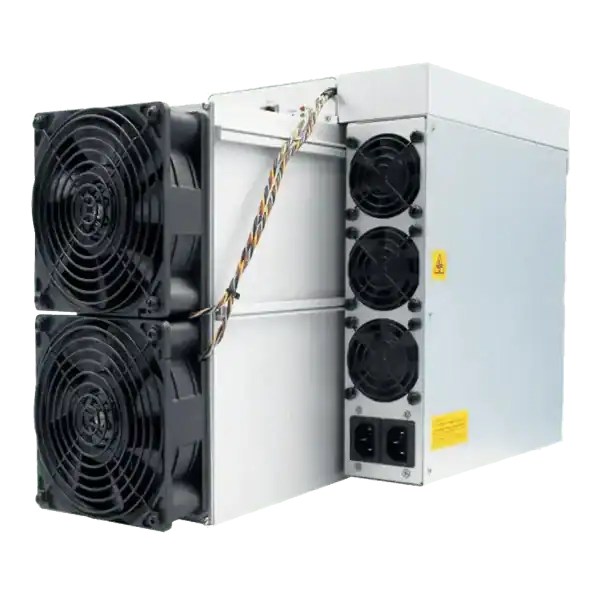
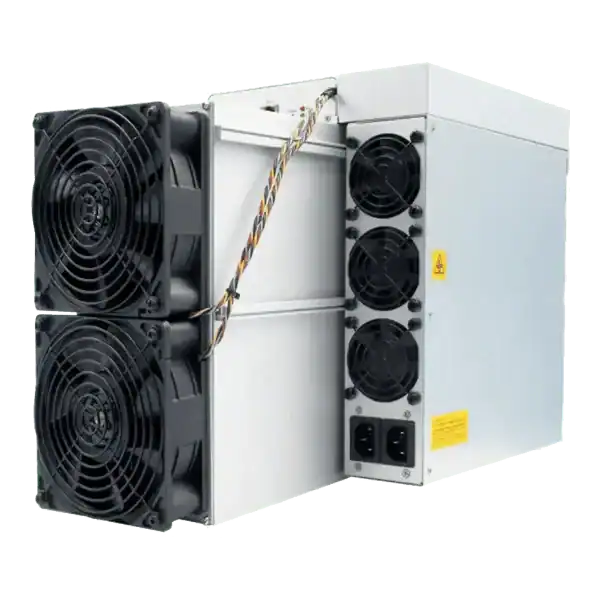
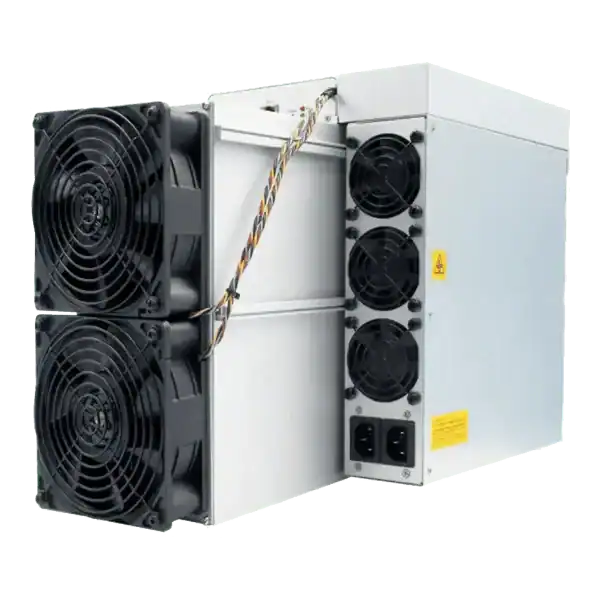
The most important consideration about SHA-256 mining today is understanding that it requires specialised ASIC hardware to be viable. The days of mining Bitcoin with GPUs or CPUs are long gone, modern SHA-256 mining demands purpose-built machines that can cost thousands of dollars each and consume enormous amounts of electricity.
When building a SHA-256 mining operation, scale matters enormously. The algorithm’s competitive landscape means that small operations often struggle to achieve profitability, while large operations can benefit from economies of scale in hardware procurement, electricity rates, and operational efficiency. The economics about SHA-256 mining favor professional operations with access to cheap electricity and efficient management.
Location selection is crucial for SHA-256 mining operations. Electricity costs often represent 70-80% of operational expenses, making access to cheap, reliable power the most important factor in profitability. Many successful operations locate near renewable energy sources like hydroelectric dams, solar farms, or wind installations to minimise costs and environmental impact.
The infrastructure requirements for SHA-256 mining are substantial. Operations need robust electrical systems, sophisticated cooling solutions, reliable internet connectivity, and security measures to protect valuable equipment. The facility considerations about SHA-256 mining are more similar to data center operations than traditional computing setups.
Hardware selection requires careful analysis of efficiency, reliability, and total cost of ownership. Modern SHA-256 ASICs like the Antminer S19 series, Whatsminer M30S series, and similar machines from other manufacturers offer different trade-offs between hash rate, power consumption, and purchase price. The hardware optimization about SHA-256 mining requires understanding both current profitability and long-term efficiency trends.
Pool mining is essential for most SHA-256 operations, as the network difficulty makes solo mining impractical except for the largest operations. The pool infrastructure about SHA-256 has matured to offer various options with different fee structures, payout methods, and geographical distributions to serve miners worldwide.
Network role and mining relevance
The profitability of SHA-256 mining depends on a complex interplay of factors including hardware costs, electricity prices, network difficulty, and Bitcoin’s market price. These variables create a dynamic system where mining profitability adjusts automatically through difficulty changes, ensuring that the network remains secure regardless of price fluctuations.
The capital requirements about SHA-256 mining have grown substantially as the industry has matured. Modern commercial mining operations often require millions of dollars in initial investment for hardware, facilities, and infrastructure. This high barrier to entry reflects the competitive nature of the industry and the substantial value being secured.
The operational costs of SHA-256 mining are dominated by electricity consumption, typically representing 60-80% of total expenses. This cost structure has driven innovation in energy efficiency and has made miners some of the world’s most sophisticated purchasers of electricity, often negotiating directly with power producers and even developing their own renewable energy projects.
The revenue streams about SHA-256 mining include both block rewards (newly created bitcoins) and transaction fees. The block reward follows a predictable halving schedule, decreasing by 50% approximately every four years, while transaction fees fluctuate based on network usage and demand for block space.
The market dynamics of SHA-256 mining create natural stabilizing mechanisms. When Bitcoin’s price rises, mining becomes more profitable, attracting more miners and increasing network security. When prices fall, less efficient miners exit the market, reducing difficulty and maintaining profitability for the most efficient operations.
The geographic arbitrage opportunities in SHA-256 mining have led to a global industry where operations relocate to access cheaper electricity or more favorable regulatory environments. This mobility has made SHA-256 mining a significant factor in global energy markets and renewable energy development.
Environmental Impact and Energy Innovation
The energy consumption of SHA-256 mining is often compared to that of small countries, reflecting the enormous computational effort required to secure the Bitcoin network. However, this energy use is increasingly being supplied by renewable sources as miners seek the lowest-cost electricity available, which is often wind, solar, or hydroelectric power.
The efficiency improvements about SHA-256 mining hardware have been dramatic, with each generation of ASICs providing significantly better performance per watt consumed. This technological progress has allowed the network to become more secure without proportionally increasing energy consumption.
The stranded energy utilization by SHA-256 miners has become a significant trend, with operations locating near energy sources that would otherwise be wasted. Flare gas from oil wells, excess renewable energy that can’t be transmitted to population centers, and off-peak hydroelectric power are all being monetized through Bitcoin mining.
The carbon intensity about SHA-256 mining varies significantly by location and energy source, leading to ongoing efforts to measure and reduce the carbon footprint of mining operations. Industry organizations have launched initiatives to promote sustainable mining practices and transparent reporting of energy sources.
Technical design
The technical community’s reception about SHA-256 has been overwhelmingly positive, with cryptographers and security experts consistently rating it as one of the most secure and well-designed hash functions available. The algorithm’s government origins and extensive peer review have provided confidence that has enabled billions of dollars in value to be secured.
The academic research around SHA-256 continues to validate its security properties, with no practical attacks discovered despite intensive analysis. The algorithm’s resistance to collision attacks, preimage attacks, and other cryptographic vulnerabilities has been thoroughly tested in both theoretical and practical contexts.
The software development ecosystem about SHA-256 is mature and sophisticated, with highly optimised implementations available for every major computing platform. Mining software developers have created incredibly efficient programs that can extract maximum performance from specialised hardware while providing sophisticated monitoring and management capabilities.
The hardware innovation driven by SHA-256 has pushed the boundaries of what’s possible in semiconductor design and manufacturing. The competitive pressure to create more efficient ASICs has resulted in chips that are among the most advanced and specialised ever created for any application.
Current status and outlook
The research and development around SHA-256 mining continues to push boundaries in areas like immersion cooling, renewable energy integration, and facility optimization. The economic incentives created by mining have resulted in some of the most innovative approaches to industrial-scale computing ever developed.
The influence of SHA-256 on other industries has been substantial, with the cooling technologies, power management systems, and facility designs developed for mining finding applications in data centers, high-performance computing, and other industries that require efficient operation of large-scale computing infrastructure.
The long-term outlook about SHA-256 suggests continued relevance as quantum computing and other advanced technologies develop. While theoretical quantum attacks on SHA-256 are possible, they would require quantum computers far more advanced than anything currently available or projected for the near future.
Current status and outlook
The future about SHA-256 in the cryptocurrency landscape looks extremely secure, anchored by its role in Bitcoin and the enormous infrastructure that has developed around it. The algorithm’s proven track record and conservative design make it likely to remain relevant for decades to come.
The continued development of SHA-256 mining technology suggests ongoing improvements in efficiency and sustainability. The industry’s focus on renewable energy and efficient operations aligns with global trends toward sustainable technology and could position SHA-256 mining as a driver of clean energy development.
The institutional adoption of Bitcoin and other SHA-256-based cryptocurrencies provides a strong foundation for continued investment in mining infrastructure and technology development. The regulatory clarity about SHA-256’s security properties makes it attractive for institutional applications that require the highest levels of security and auditability.
The network effects and switching costs associated with SHA-256 make it extremely resistant to displacement by newer algorithms. The enormous investment in mining hardware, infrastructure, and expertise creates powerful incentives to continue using and improving SHA-256 rather than switching to alternatives.
Community and Educational Impact
The community around SHA-256 mining has grown to encompass a global industry with participants ranging from individual miners to publicly traded corporations. This diverse ecosystem has created extensive educational resources, professional development opportunities, and technological innovation that benefits the broader technology community.
The educational value about SHA-256 extends far beyond cryptocurrency to include computer science, cryptography, economics, and energy systems. Many people have learned about these topics through their involvement with Bitcoin and SHA-256 mining, creating broader technical literacy and understanding of complex systems.
The integration between SHA-256 mining and various industries has created opportunities for cross-pollination of ideas and technologies. The mining industry’s innovations in cooling, power management, and facility optimization have found applications in data centers, manufacturing, and other industries that require efficient operation of large-scale equipment.
Practical setup checks
Research is absolutely critical when considering SHA-256 mining, as the industry’s complexity and capital requirements make mistakes extremely expensive. Understanding the technology, economics, regulatory environment, and operational requirements is essential for making informed decisions about participation in this industry.
Start with a clear understanding of your goals, risk tolerance, and available resources. SHA-256 mining can range from small-scale operations with a few machines to industrial facilities with hundreds of thousands of units. The scale and approach about SHA-256 mining should align with your objectives and capabilities.
Practical conclusion
The combination of technical excellence, economic incentives, and network effects has made SHA-256 one of the most important algorithms in the history of computing. Whether you’re a mining professional, cryptocurrency enthusiast, or technology student, understanding SHA-256 provides insights into how cryptographic engineering can create the foundation for entirely new forms of economic organization.
The legacy of SHA-256 extends far beyond cryptocurrency to include its influence on hardware design, energy systems, and our understanding of decentralized consensus mechanisms. The algorithm’s success in enabling Bitcoin has proven that well-designed technical systems can create enormous value while maintaining security and reliability over very long time periods.
As the cryptocurrency industry continues to evolve and mature, SHA-256’s position as the foundation of the world’s most valuable and secure cryptocurrency seems increasingly unassailable. The question isn’t whether SHA-256 will remain relevant, it’s whether you’ll be positioned to understand and potentially participate in the ongoing evolution of the most important cryptographic algorithm in the digital age.
What to verify before acting
Mining networks, pool support, firmware, exchange access and hardware availability can change. Verify the current network documentation, test with a small controlled configuration and do not rely on a historical profitability figure when purchasing equipment.
Useful next steps
Authoritative references
Check current official documentation alongside this article because network rules, product ranges and legal guidance can change.