
Pre-order
Overall ranking

Equihash
·
ZEC
Overall rank#1of 100AvailableAll: #2 / 831
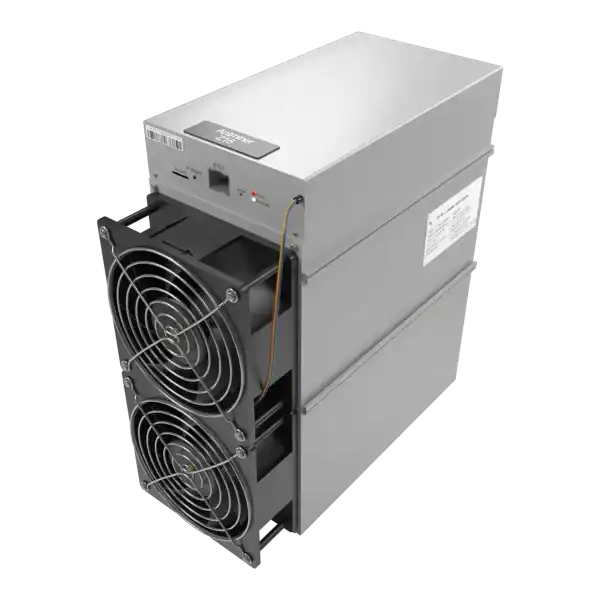

Pre-OrderFree Shipping
Hashrate
525KSOL
Efficiency
4.73W/KSOL
Power
2483W
Earns/kWh
42.2p
Meter mining made simple. Learn how SHA-256 ASICs create MTR, how MTRG validators finalise transactions and which pool, wallet and profit checks matter.
Meter mining uses SHA-256 ASIC work to create MTR, while a separate HotStuff-based proof-of-stake system using MTRG validates and finalises transactions. The official documentation calls this a dual-chain hybrid design.
The same hardware class used for Bitcoin can be pointed at a Meter pool, but rewards behave differently. Meter adjusts MTR creation around an energy-cost model, and the PoS committee records accounts and distributes mining results at epoch boundaries.
Estimated reading time: 7 minutes
A Meter ASIC solves SHA-256 puzzles and earns mining credit in MTR. Separately, staked MTRG selects validators that agree on transactions. The two systems pass results between them, so mining work and final transaction records are connected but not the same job.
A factory produces numbered vouchers while a committee checks the ledger and approves each batch. The factory uses electricity; the committee posts collateral. Both are needed, but their costs and rewards are different.
| MTR: | The SHA-256-mined asset used for fees and payments. |
|---|---|
| MTRG: | The governance asset used in staking and validator selection. |
| Epoch: | A Meter period ending with a proof-of-work key block and reward processing. |
| HotStuff: | The proof-of-stake consensus family used for transaction finality. |
| Cost Parity: | A project calculation comparing MTR production with SHA-256 mining alternatives. |
The proof-of-work chain maintains mining puzzles. The proof-of-stake chain records accounts and transactions, while committee nodes vote on finality. Winning mining results are carried into the account system.
This means a miner can use an ASIC without running a validator, while a pool operator normally needs a current full node that understands both processes.
MTR is the mined payment and gas asset. MTRG is the governance and staking asset. Similar names do not make balances or reward forecasts interchangeable.
Keep separate wallet, market and accounting entries. A rise in MTRG does not change the amount of electricity used to mine MTR, and an MTR reward does not create validator eligibility.
Official guidance says the same SHA-256 hardware class used for Bitcoin can mine Meter. Configure the exact pool URL and use a Meter account address as the worker where instructed.
Measure accepted terahashes and watts at the wall. A switch is sensible only if the net MTR outcome beats the alternative use of that hardware after every charge.

Meter describes MTR production as responsive to network hashrate and an energy target rather than Bitcoin's fixed subsidy path. Its documentation also refers to a curve that changes production parameters over time.
Use current explorer and pool figures. Do not copy an initial testnet rate or the project's long-term price expectation into a guaranteed income claim.
The published shared pool has fees and payout conditions that must be checked live. The sample private-pool implementation is explicitly not a general production service.
A private operator must secure Redis, RPC and node access, keep current software and monitor both chain processes. Exposed defaults can leak credentials or let an attacker redirect work.
Meter uses account-based payouts. Confirm the exact chain and address, then wait through the relevant epoch and pool payment process before judging a missing reward.
Compare wallet height with the official explorer and retain transaction records. Back up keys offline and never enter them in an ASIC or pool form.
A Meter mining estimate should start with pool-side accepted work, the live network difficulty and the reward rules at the tested height. Subtract the complete SHA-256 ASIC electricity reading, pool and software fees, cooling, downtime, maintenance and withdrawal charges.
Value MTR at the amount a real buyer will take, not at an old high or a thin last trade. Test lower-price, higher-difficulty and no-pool cases. A technically compatible machine can still be a poor financial decision.
Begin Meter mining with one worker at conservative settings. Save the software version, pool endpoint, wallet network, accepted work, reject rate, temperature and wall power. Continue long enough to cover ordinary payout variance rather than judging one fortunate hour.
Complete a small MTR payment and test the wallet backup before scaling. Stop if recent blocks, maintained software, a usable payout route or executable market depth cannot be independently confirmed. Buying more hardware does not repair missing network evidence.
Repeat these checks after a node release, pool change, firmware update or long interruption. Keep the earlier measurements so the new result can be compared on the same basis. If a current source contradicts an old guide, record its date rather than quietly mixing two different sets of rules.
The supplied asset snapshot is a discovery list, not proof of a current earning route. The classification behind Meter mining must agree with current Meter documentation, recent blocks, maintained software, a usable wallet and a route that can complete a payment.
This Meter mining article records the status as currently documented as SHA-256 mining for MTR within a dual-chain system. Keep the source date beside that conclusion. Network rules, pool support and repositories can change after publication, while an old market-data row can remain unchanged.
Historical prices show what happened, not what a miner will receive. Use the price and sale depth actually available for the tested payout. Record the coin amount, sterling value and conversion cost separately so later price movement is not mistaken for mining income.
Any current decision related to Meter mining needs evidence collected over a representative period. Include accepted work where mining remains active, pool fees, electricity, cooling, downtime, withdrawal costs and tax records. A console peak or one fortunate payout is not enough evidence for buying equipment.
| Component | Role |
|---|---|
| SHA-256 ASIC | Produces MTR proof of work |
| MTR | Mined payment and gas asset |
| MTRG | Governance and staking asset |
| PoS committee | Records and finalises transactions |
A table is a starting point, not a promise. Verify every live input before spending money on Meter mining hardware, software or hosting.
Yes, official guidance says SHA-256 ASIC hardware can be configured for an MTR pool.
No. MTRG is the governance and staking asset; MTR is mined.
Its production model changes with network conditions and project parameters.
A customer may rely on the pool, while a pool operator normally needs current node infrastructure.
Compare net MTR value with the best alternative use of the same SHA-256 hardware.
Meter mining deserves a measured trial, not a promise of easy money. Confirm the live network rules, use compatible hardware and official software, protect the wallet, and calculate profit from accepted work and wall power. Keep dated records because rewards, difficulty, prices and pool terms change.
For wider planning, see our mining profitability guides and GPU and alternative algorithm mining articles.
Understand why Bitcoin proof of work uses energy to create costly block proposals, easy verification, accumulated chain work and resistance to history changes.
Bitcoin Target Arithmetic made simple. See the main facts, costs, risks and practical checks before you make a decision.
Mining expansion and Bitcoin difficulty: ASIC guidance on compatibility, measurement, fees, reliability, security and checks before routing hashrate.

Join the ASIC Mining Discussion
Members can read and join the discussion
Log in to read comments from other miners. Create a free account if you would like to ask a question or share your experience.
Membership helps us protect the discussion from spam and keep answers useful.