kHeavyHash Mining Explained: Kaspa ASIC Hardware explains where kHeavyHash mining fits in proof of work, what hardware is relevant and which facts must be checked before committing power or equipment.
TL;DR
kHeavyHash Mining Explained: Kaspa ASIC Hardware explains where kHeavyHash mining fits in proof of work, what hardware is relevant and which facts must be checked before committing power or equipment.
- Confirm the current kHeavyHash mining consensus rules and active mining algorithm before choosing hardware.
- Mining compatibility does not by itself prove that a network has useful liquidity, pool support or sustainable demand.
- Use current pool, wallet, exchange and network documentation because smaller projects can change or become inactive.
- Treat revenue estimates as a comparison only and include electricity, fees, downtime and hardware resale risk.
Background and purpose
What makes the origin story about kHeavyHash particularly compelling is how it represents a fundamental rethinking of blockchain architecture. While most cryptocurrencies are still trying to optimize linear blockchain structures (like making a faster horse instead of inventing the car), Kaspa’s team decided to implement something called blockDAG, a Directed Acyclic Graph that allows multiple blocks to coexist and be processed simultaneously.
The development philosophy about kHeavyHash reflects a deep understanding of both the limitations of current blockchain technology and the potential for significant improvement. The team didn’t just want to create another cryptocurrency that was slightly faster or slightly more efficient, they wanted to prove that you could have instant transactions, high security, and true decentralization all at the same time.
What’s particularly brilliant about kHeavyHash is how it solves the fundamental tension between block speed and network stability. Traditional blockchains generate blocks slowly to avoid conflicts and maintain consensus, but Kaspa’s blockDAG architecture allows for multiple blocks to be generated simultaneously without creating chaos. The technical innovation about kHeavyHash enables this significant approach while maintaining the cryptographic security that makes blockchain technology trustworthy.
Technical design
Now, before your brain starts making that Windows error sound when faced with complex technical concepts, let’s break down what makes kHeavyHash work without requiring a PhD in distributed systems or a direct consultation with the ghost of computer science pioneers.
The clever part about kHeavyHash lies in its computational characteristics. Unlike algorithms that rely heavily on memory bandwidth or pure computational brute force, kHeavyHash is what developers call “compute-intensive”, it rewards faster processing speeds and efficient parallel computation. This means that GPUs with higher clock speeds and better parallel processing capabilities perform significantly better than those with just lots of memory.
The algorithm’s design also incorporates minimal memory requirements, which might seem counterintuitive in an era where many mining algorithms demand increasingly large amounts of GPU memory. The efficiency about kHeavyHash means that even older GPUs with less than 4GB of memory can participate effectively in mining, democratizing access to the network and preventing the centralization that often occurs when only the latest, most expensive hardware can compete.
The verification process about kHeavyHash is designed for speed and efficiency, which is crucial for Kaspa’s blockDAG architecture. Since the network generates blocks every second (and aims for even faster rates), the algorithm must allow for rapid verification without compromising security. This balance between speed and security is achieved through the mathematical properties of matrix multiplication combined with the proven security of Keccak hashing.
The energy efficiency characteristics about kHeavyHash also deserve attention. While the algorithm is compute-intensive, it’s designed to achieve maximum security per unit of energy consumed. This efficiency is enhanced by the blockDAG architecture’s ability to process multiple blocks simultaneously, creating more throughput per unit of mining energy compared to traditional linear blockchain architectures.
Kaspa: The Speed Demon Powered by kHeavyHash

When we talk about kHeavyHash, we absolutely must talk about Kaspa (KAS), because these two are more inseparable than coffee and Monday mornings, or cryptocurrency enthusiasts and checking prices every thirty seconds. Kaspa isn’t just the primary coin that uses kHeavyHash, it’s the reason kHeavyHash exists, and their relationship represents one of the most ambitious attempts to solve blockchain’s fundamental limitations.
The relationship about kHeavyHash and Kaspa is like that between a significant engine and the sports car it powers. Kaspa was designed from the ground up to implement the GHOSTDAG protocol, which allows parallel blocks to coexist and be ordered through consensus rather than competing with each other. This means that instead of miners competing to create the one “winning” block every few minutes, Kaspa’s network can process multiple blocks simultaneously every single second.
Kaspa’s implementation of kHeavyHash enables what many thought was impossible, a proof-of-work cryptocurrency that can process transactions faster than most proof-of-stake networks while maintaining the security and decentralization that make proof-of-work valuable. The network currently generates blocks every second, with plans to scale to 32 blocks per second and eventual visions of 100 blocks per second. The performance metrics about kHeavyHash make traditional blockchain speeds look like dial-up internet in a fibre optic world.
The economic model surrounding Kaspa and kHeavyHash is designed for long-term sustainability. Unlike cryptocurrencies that rely on high transaction fees to compensate for slow throughput, Kaspa’s high-speed processing allows for low fees while still providing adequate rewards for miners. The economic efficiency about kHeavyHash creates a positive feedback loop where faster processing enables lower costs, which encourages adoption, which increases network value.
The community that has formed around Kaspa reflects the technical sophistication of the kHeavyHash algorithm. The project attracts developers, researchers, and users who appreciate the technical innovation and practical benefits of high-speed, low-cost transactions. The user base about kHeavyHash tends to include people who understand that true blockchain innovation requires rethinking fundamental assumptions rather than just making incremental improvements.
Current status and outlook
One of the most appealing aspects about kHeavyHash is its GPU optimization characteristics. The algorithm favors higher GPU clock speeds over memory capacity, which means that miners can achieve better performance by optimising their cards for compute performance rather than memory bandwidth. This creates opportunities for fine-tuning that can significantly impact profitability, rewarding miners who understand hardware optimization.
The dual mining capabilities of kHeavyHash also create unique economic opportunities. Miners can simultaneously mine Kaspa and other cryptocurrencies that use memory-intensive algorithms, effectively maximising the utility of their hardware investment. The revenue diversification about kHeavyHash provides more stable income streams and reduces dependence on any single cryptocurrency’s market performance.
Another factor that makes kHeavyHash attractive is its accessibility to a wide range of hardware. Unlike algorithms that require current GPUs with massive memory capacities, kHeavyHash can be mined effectively with older hardware that might otherwise be considered obsolete. This democratization of mining access creates opportunities for smaller miners and helps maintain network decentralization.
The technical community around kHeavyHash is also particularly strong, with active development, regular optimizations, and transparent communication about network improvements and scaling plans. The development activity about kHeavyHash provides confidence that the algorithm and network will continue to evolve and improve rather than stagnating after initial enthusiasm wanes.
The mining software ecosystem for kHeavyHash has developed rapidly, with multiple popular miners supporting the algorithm and providing excellent optimization opportunities. Miners can choose from LolMiner, GMiner, BZminer, SRBminer, Team Red Miner, and KaspaMiner, each offering different optimization strategies and features. The software diversity about kHeavyHash ensures that miners can find tools that work well with their specific hardware configurations and preferences.
Setting Up Your kHeavyHash Mining Powerhouse
If you’re thinking about diving into kHeavyHash mining, you’re probably wondering what kind of setup you need. The in practice, the algorithm’s compute-intensive nature and minimal memory requirements mean you can optimize for performance without necessarily requiring the latest and most expensive hardware.
The most important consideration about kHeavyHash mining is understanding that it rewards GPU compute performance over memory capacity. This means that when selecting hardware, you should prioritize GPUs with higher clock speeds and better parallel processing capabilities rather than just focusing on memory size. Cards with excellent compute performance can achieve competitive hash rates even with smaller memory capacities.
When building a kHeavyHash mining rig, the algorithm’s characteristics influence every aspect of hardware selection. Unlike memory-hard algorithms that stress memory subsystems, kHeavyHash puts primary load on compute units, which means that cooling for the GPU cores becomes particularly important. The thermal management about kHeavyHash mining requires attention to both GPU core temperatures and power delivery systems.
Power efficiency considerations for kHeavyHash mining are somewhat different from other algorithms. The compute-intensive nature means that power consumption can be higher than memory-hard alternatives, but the efficiency gains from dual mining capabilities often offset these costs. The economic calculation about kHeavyHash should include potential revenue from mining multiple cryptocurrencies simultaneously.
The software configuration for kHeavyHash mining offers significant optimization opportunities. Since the algorithm favors compute performance, miners often achieve better results by increasing GPU clock speeds while reducing memory clocks. This counterintuitive approach can lead to substantial performance improvements with experienced tuning. The optimization potential about kHeavyHash rewards miners who invest time in learning hardware tuning techniques.
Pool mining is highly recommended for kHeavyHash, especially given Kaspa’s high block rate and the technical complexity of solo mining in a blockDAG environment. The pool infrastructure about kHeavyHash has developed rapidly, with major pools offering reliable service and competitive fee structures. Popular options include WoolyPooly and HashPool, among others.
Mining software selection can significantly impact performance, with different miners optimising for different hardware configurations. LolMiner and GMiner are often preferred for NVIDIA GPUs, while Team Red Miner and SRBminer provide excellent optimization for AMD hardware. The miner choice about kHeavyHash should be tested and optimised for your specific hardware configuration.
The Economics of High-Speed Mining
The economics about kHeavyHash are particularly interesting because the algorithm’s innovative characteristics and Kaspa’s unique market position create different financial dynamics compared to traditional mining operations.
The initial hardware investment for kHeavyHash mining can be optimised for price-performance rather than just raw specifications. Since the algorithm doesn’t require massive amounts of GPU memory, miners can often achieve competitive performance with mid-range cards that offer better price-performance ratios than flagship models. The hardware economics about kHeavyHash favor intelligent selection over just buying the most expensive equipment.
Operational costs for kHeavyHash mining include higher power consumption due to the compute-intensive nature of the algorithm, but this is often offset by the dual mining capabilities that allow simultaneous mining of other cryptocurrencies. The revenue diversification about kHeavyHash can improve overall profitability even when individual coin prices fluctuate.
The mining market for kHeavyHash benefits from Kaspa’s innovative technology and growing recognition in the cryptocurrency community. Unlike purely speculative projects, Kaspa’s technical innovation and practical benefits create more stable long-term value propositions. The market dynamics about kHeavyHash reflect genuine technological merit rather than just speculative trading.
The competitive landscape in kHeavyHash mining is influenced by the algorithm’s accessibility and the rapid growth of the Kaspa network. While the mining difficulty has increased as more miners join the network, the algorithm’s efficiency and dual mining capabilities help maintain profitability for well-optimised operations. The competition dynamics about kHeavyHash reward technical expertise and optimization over just raw computational power.
Hardware resale values for kHeavyHash mining equipment are generally strong because the GPUs used for mining retain value for gaming, content creation, and other cryptocurrency algorithms. The broad utility of mining hardware provides a hedge against changes in mining profitability and makes the initial investment less risky.
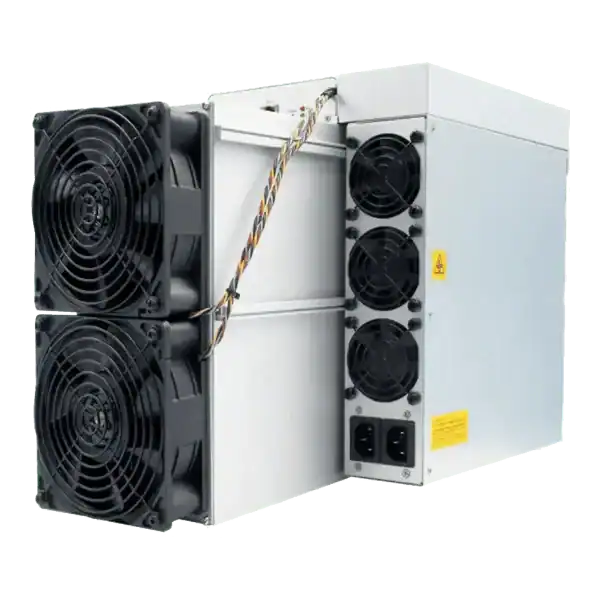
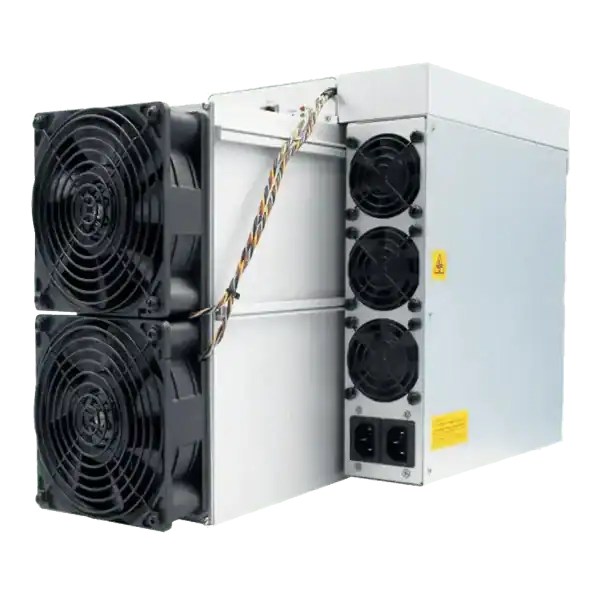
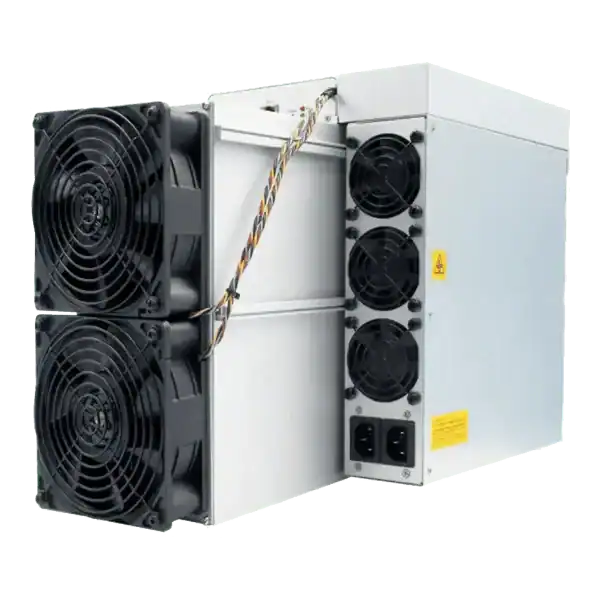
The transition to ASIC mining for kHeavyHash represents both opportunities and challenges for different types of miners. While ASIC efficiency can provide better returns for large-scale operations, the algorithm’s characteristics still allow GPU miners to remain competitive, especially when leveraging dual mining capabilities. The hardware evolution about kHeavyHash reflects the natural progression of successful mining algorithms while maintaining accessibility for different types of miners.
Environmental Considerations and Sustainable Mining
The environmental aspects about kHeavyHash deserve consideration, especially given the algorithm’s high-performance characteristics and the broader concerns about cryptocurrency mining’s energy consumption. The efficiency improvements and innovative architecture provide some environmental advantages compared to less optimised mining systems.
The compute-intensive nature of kHeavyHash means that energy consumption patterns are different from memory-hard algorithms, but the dual mining capabilities allow miners to achieve higher overall utility per unit of energy consumed. The energy efficiency about kHeavyHash is enhanced by the ability to mine multiple cryptocurrencies simultaneously, improving the overall return on energy investment.
The blockDAG architecture’s ability to process multiple blocks simultaneously also contributes to environmental efficiency. By processing more transactions per unit of mining energy consumed, Kaspa provides better environmental outcomes than blockchain systems that require proportionally more mining energy as transaction volumes increase.
Miners interested in environmental responsibility can apply standard efficiency practices to kHeavyHash mining: use renewable energy sources, optimize hardware efficiency, and consider the practical benefits of supporting innovative blockchain technology. The sustainability considerations about kHeavyHash should include the long-term benefits of supporting more efficient blockchain infrastructure.
Technical design
The technical community’s reception about kHeavyHash has been generally positive, with particular appreciation for the algorithm’s role in enabling Kaspa’s innovative blockDAG architecture. Researchers and developers have noted the sophisticated approach to balancing computational requirements with practical mining considerations.
The academic community has shown interest in kHeavyHash as part of broader research into DAG-based consensus mechanisms and high-throughput blockchain architectures. The research potential about kHeavyHash extends beyond just the mining algorithm to include distributed systems design, consensus mechanisms, and blockchain scalability solutions.
Mining software developers have embraced kHeavyHash, creating multiple optimised implementations that take advantage of the algorithm’s specific characteristics. The development ecosystem has matured rapidly, providing miners with sophisticated tools for optimising their operations. The software innovation about kHeavyHash demonstrates the algorithm’s appeal to developers and its potential for continued improvement.
Hardware manufacturers have also taken notice of kHeavyHash’s potential, with ASIC developers creating specialised miners for the algorithm. This industry attention validates the algorithm’s technical merit and market potential while also demonstrating the natural evolution of successful mining algorithms.
Current status and outlook
The algorithm’s foundation on proven cryptographic techniques, combined with innovative optimization for high-speed block processing, creates a stable platform for future development. As blockchain technology continues to evolve, kHeavyHash provides a framework for incorporating new technologies while maintaining security and decentralization.
The research and development about kHeavyHash continues as the Kaspa team works on scaling improvements, optimization enhancements, and integration with emerging blockchain technologies. This ongoing innovation ensures that the algorithm will continue to evolve and adapt to changing technological and market requirements.
The success of kHeavyHash in enabling Kaspa’s significant transaction speeds also encourages other blockchain projects to explore similar approaches to consensus and mining. The influence about kHeavyHash may extend beyond just Kaspa to inspire new approaches to blockchain scalability and mining algorithm design.
Current status and outlook
The future about kHeavyHash in the cryptocurrency mining landscape appears bright, thanks largely to its enabling role in Kaspa’s innovative blockchain architecture and the algorithm’s proven performance characteristics. As blockchain scalability becomes increasingly important, algorithms that enable high-throughput processing will become more valuable.
The algorithm’s compute-intensive design and dual mining capabilities position it well for future mining hardware developments. As GPU technology continues to advance with improvements in parallel processing and compute efficiency, kHeavyHash should benefit from these technological improvements.
Emerging trends in blockchain technology and growing demand for high-speed, low-cost transactions align well with kHeavyHash’s design philosophy and Kaspa’s capabilities. The technological trajectory about kHeavyHash suggests continued relevance as the cryptocurrency industry focuses more on practical utility and less on speculative features.
The mining community’s support for kHeavyHash provides a strong foundation for long-term network security and development. The sustainable mining economics about kHeavyHash create incentives for continued miner participation and network growth, supporting the algorithm’s long-term viability.
Community and Ecosystem Development
The community around kHeavyHash mining has grown rapidly, benefiting from Kaspa’s innovative technology and the practical benefits of high-speed transactions. This community includes both traditional cryptocurrency miners and users who appreciate the technical innovation and practical utility of the network.
The integration between kHeavyHash mining and Kaspa’s broader ecosystem creates unique opportunities for miners to engage with current blockchain technology while earning mining rewards. This alignment about kHeavyHash between mining incentives and technological innovation attracts participants who want their computational contributions to support genuinely significant blockchain development.
The educational resources and technical documentation around kHeavyHash reflect the project’s commitment to building practical, high-performance blockchain infrastructure. The learning materials about kHeavyHash cover both mining optimization and blockchain architecture concepts, providing comprehensive education for participants interested in next-generation cryptocurrency technology.
Practical setup checks
Research is crucial when getting started with kHeavyHash mining because the optimization strategies and market dynamics are different from traditional mining algorithms. Understanding the compute-intensive characteristics, dual mining opportunities, and Kaspa’s blockDAG architecture will help you make informed decisions. The learning curve about kHeavyHash includes both mining optimization and blockchain technology concepts.
Start with a clear understanding of your hardware’s capabilities and optimization potential, as kHeavyHash rewards technical expertise and careful tuning over just raw computational power. The algorithm’s characteristics about kHeavyHash create opportunities for miners who invest time in understanding hardware optimization and mining software configuration.
Practical conclusion
kHeavyHash represents one of the most innovative applications of mining technology to support next-generation blockchain architecture. The algorithm’s role in enabling Kaspa’s significant transaction speeds and blockDAG implementation demonstrates how mining can evolve to support entirely new approaches to cryptocurrency consensus and scalability.
The combination of technical innovation, practical utility, and sustainable mining economics makes kHeavyHash an attractive option for miners interested in supporting genuinely significant blockchain technology. Whether you’re a mining veteran looking for current opportunities or a newcomer interested in next-generation cryptocurrency infrastructure, kHeavyHash offers a unique combination of innovation and profitability.
The relationship between kHeavyHash and Kaspa’s blockDAG architecture also provides exposure to technology trends that could significantly impact the development of cryptocurrency and blockchain adoption. By mining kHeavyHash, you’re not just earning KAS tokens, you’re participating in an experiment that could prove high-speed, low-cost blockchain transactions are not just possible but practical for everyday use.
As the cryptocurrency industry continues to grapple with scalability challenges and the need for practical utility, projects like Kaspa that demonstrate innovative solutions to these problems will likely become increasingly important. The question isn’t whether high-speed blockchain infrastructure will become more valuable, it’s whether you’ll be positioned to participate in mining the algorithms that make it possible.
What to verify before acting
Mining networks, pool support, firmware, exchange access and hardware availability can change. Verify the current network documentation, test with a small controlled configuration and do not rely on a historical profitability figure when purchasing equipment.
Useful next steps
Authoritative references
Check current official documentation alongside this article because network rules, product ranges and legal guidance can change.