
Choosing the format
Fans move air through the coil while liquid carries heat from the mining installation. Available cooling duty depends on ambient temperature, fluid temperature and flow.
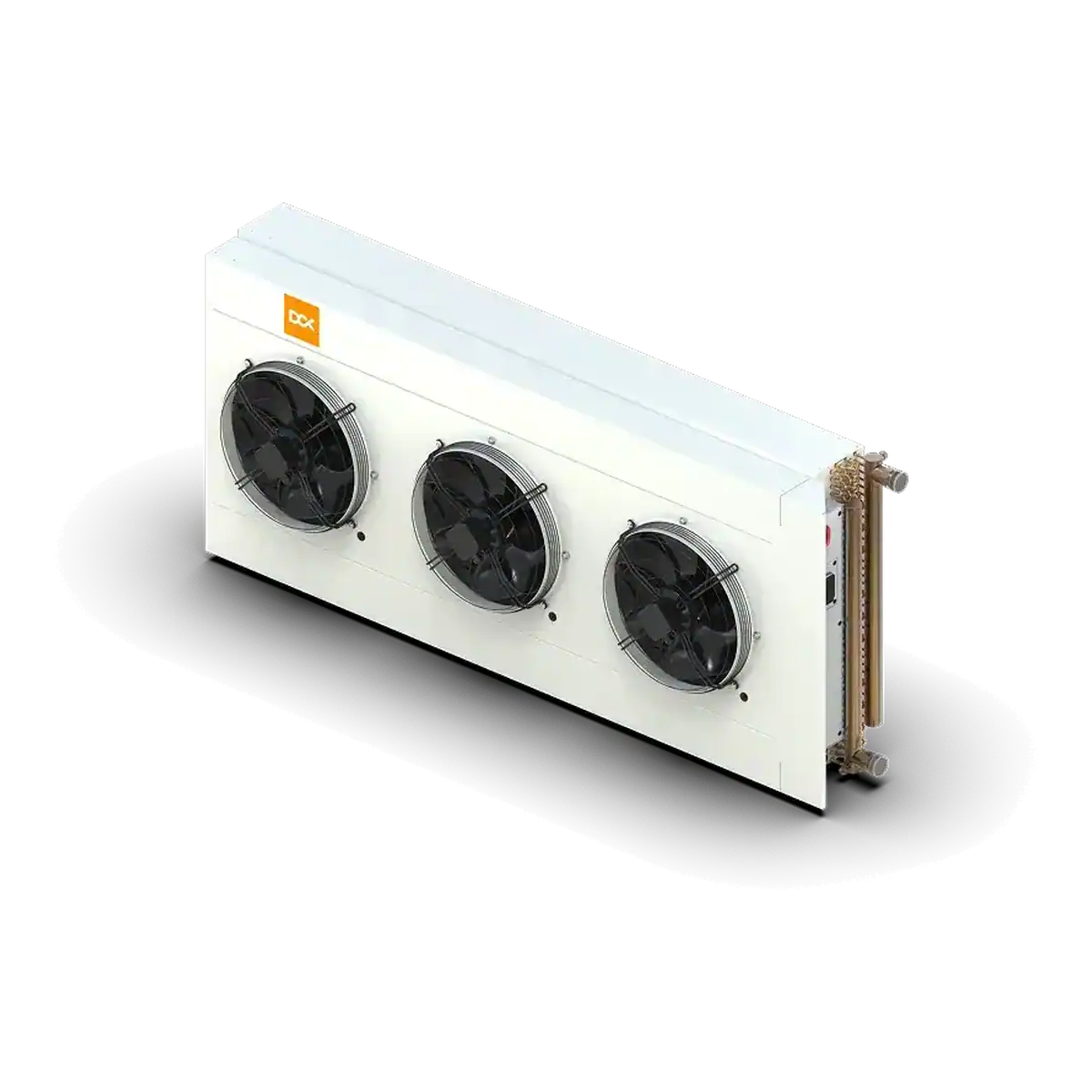
DCX · Mining systems
Dry Cooler
Subject to quotationThe DCX 120 kW Dry Cooler rejects heat from a liquid cooling circuit to the outdoor air. Its published duty at 35°C ambient is 120 kW.
Equipment price
01 / Technical reference
Match the delivered revision, electrical supply and cooling design to your selected fleet.
| Duty at 35°C ambient | 120 kW |
|---|---|
| Duty at 25°C ambient | 140 kW |
| Website envelope | 2400 W × 1400 D × 500 H mm |
| Fans | 3 |
| Maximum electrical input | 2.2 kW on web specification |
| Supply | 400 V three phase at 50 Hz or 460 V at 60 Hz |
| Connections | DN50 |
| Listed fluid flow | 5.2 m³/h, 86.67 L/min derived |
| Pressure drop | 0.39 bar, not working pressure |
| Fluid temperatures | 60°C and 40°C on web specification |
| Transport mass | 250 kg |
Reference figures are subject to the conditions and revision stated by the manufacturer.
02 / A place in your project
A tank rating and a cooler rating describe different parts of the system. Match the fluid, flow, ambient temperature and miner heat load before ordering.
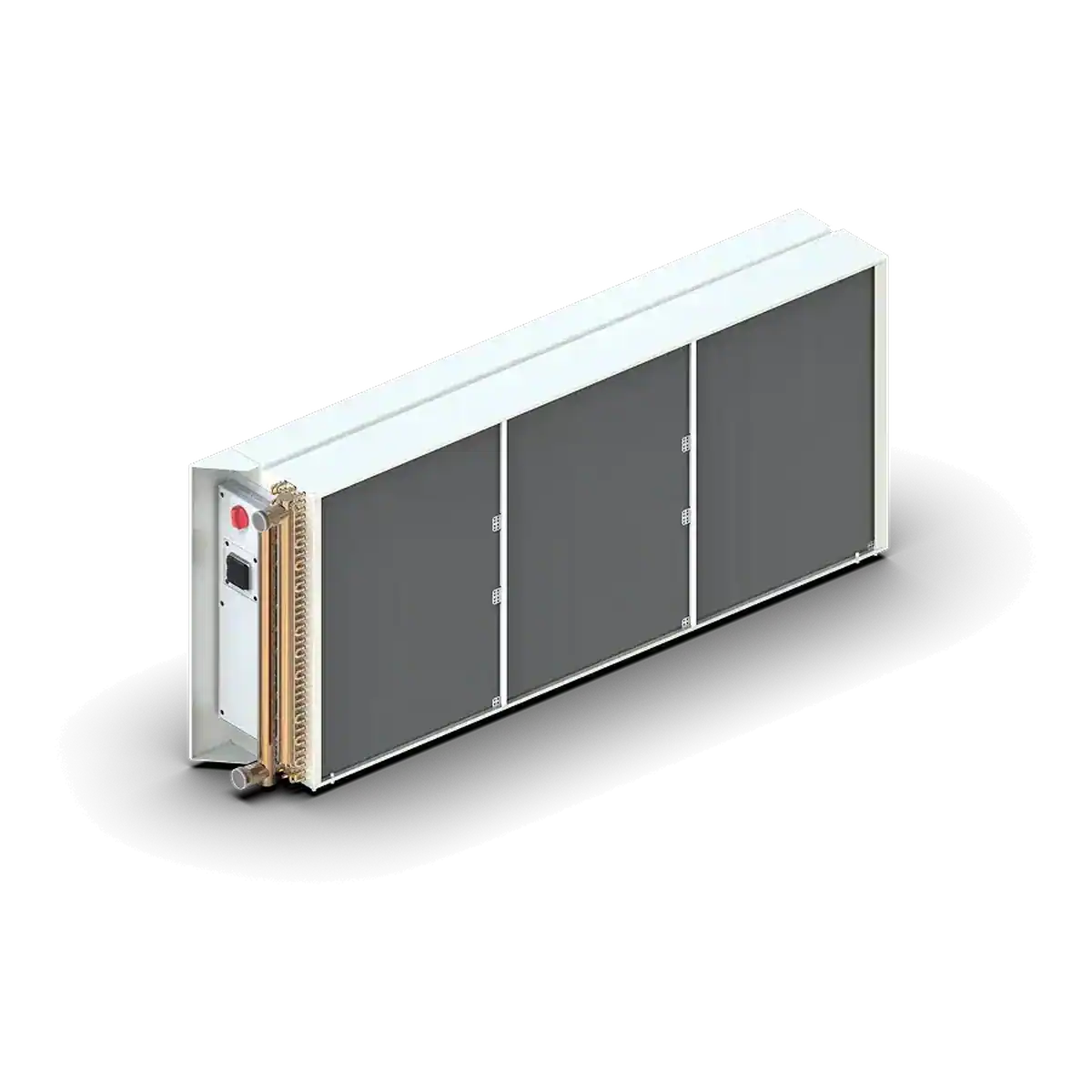
Fans move air through the coil while liquid carries heat from the mining installation. Available cooling duty depends on ambient temperature, fluid temperature and flow.
Build the quotation around the miner model, site location, available power and cooling conditions. Agree the equipment schedule, delivery arrangements and commissioning responsibilities before placing an order.
Cooling explained
Follow the heat from the liquid circuit to the outdoor air.
Warm fluid passes through a finned coil. Fans draw outdoor air across it, carrying away heat before the cooled fluid returns to the mining installation.
A suitable dry cooler can reject heat without evaporating process water during normal dry operation. It can serve a compatible hydro circuit or the secondary loop of an immersion system.
Select the duty at the local design temperature and with the correct fluid and flow. Hot weather reduces the cooling margin. Water assisted or hybrid modes have separate requirements.
Coolant flows through passages inside a compatible hydro miner. It carries heat into pipework and onward to the cooling equipment. The electronics are not submerged.
Liquid circuits suit dense installations and reduce reliance on fast fans inside each miner. They also provide a defined route for collecting useful heat.
Match the coolant, flow and pressure to the miner. Include pumps, leak monitoring and suitable outdoor cooling. Pumps and external fans still consume power and create noise.
Compatible hardware sits in a dielectric fluid that absorbs its heat. The fluid passes through a cooler directly, or transfers heat to a separate circuit through an exchanger.
Immersion can reduce miner fan noise and exposure to airborne dust. It also brings the heat into a liquid circuit that can support a planned heat reuse system.
Use fluid approved for the hardware, seals and circuit materials. Allow for filling, fluid handling and servicing, along with the electrical load and space required by pumps and external coolers.
Fans move air through the miners, collecting heat before discharging it outside. A clear path between the filtered inlet and exhaust helps prevent hot air returning to the machines.
The hardware remains directly accessible, and standard air cooled miners can be serviced without draining a liquid circuit. Filters can be selected for the site environment.
Size ventilation for the fleet and local temperature. Consider dust, filter resistance and sound at the site boundary. The sum of fan catalogue ratings is not a measurement of installed airflow.
Schematic illustration. Hydro and immersion diagrams show a separated circuit example; some systems connect directly to a compatible cooler. Heat reuse needs a suitable local demand and a separate engineered connection.
Power distribution and cooling equipment must be matched to the selected hardware. The published reference configuration is summarised below.
04 / Useful heat
These are applications to assess with a thermal designer, not promised outputs or evidence that recovery equipment is included.
Mining heat can be useful where there is a nearby demand at a suitable temperature. A separate heat exchanger can transfer useful heat to a compatible building or process circuit.
Keep independent heat rejection available when the receiving site cannot use the heat. Any recovery plant, temperature boost and additional pumps belong in the project specification and energy budget.
Assess whether a separate water circuit can accept useful heat before its normal heating stage.
Match the heating circuit to the crop schedule, seasonal demand and available water temperature.
Retain independent cooling when the receiving building or process cannot accept heat. Account for pumps, fans and any temperature boost in the project economics.
05 / Before delivery
A clear specification prevents the site and the equipment from being designed in isolation.
Plan the foundation, lifting route, service access, incoming power and external cooling together. Component weights and dimensions refer to the named parts and fill conditions, rather than automatically describing a complete operating installation.
Use the final general arrangement drawing for transport and installation clearances. The published duty is tied to its stated fluid and ambient temperatures.
Agree the foundation, delivery route, lifting plan and service clearances for the supplied equipment.
Confirm physical fit, connection type and continuous electrical load before committing to a fleet quantity.
Define who installs, tests and commissions each part of the system, including external plant and monitoring.
Project questions
Miners are separate unless expressly included in the written equipment schedule.
Availability and lead time require confirmation. This page does not represent confirmed stock allocation.
The written quotation confirms the supplied equipment, miner quantity where included, freight, tax treatment and commissioning responsibilities. Availability and dispatch timing are confirmed for the order.
06 / Fleet planning
Each fleet example is an alternative, not an additional group to combine. The final miner order needs an approved configuration.
Choose the tank or liquid cooling loop by heat load, fluid and flow. A cooler has no miner positions and its headline duty does not establish a fleet quantity.
We will confirm miner revision, connections, cooling requirements and supported quantity before showing a combined price. Earnings totals need an identified miner and a current base estimate.

Candidate equipment for a matched cooling quotation. Confirm the complete loop and operating conditions.
Price on application07 / Source and quotation
Manufacturer information is the starting point. The written quotation defines the supplied configuration.
Specifications are based on the manufacturer material linked below, using the configuration and conditions shown on this page.
Manufacturer images are reference illustrations or photographs. Equipment, accessories and layout must be confirmed in the final quotation.