BSV mining uses the same SHA-256 family of specialist machines used on other Bitcoin-derived networks. A miner does not simply switch on an ASIC and receive a fixed income. The machine sends hashes to a pool or mining node, while the node builds valid blocks from transactions and network rules.
The practical question is whether the expected share of block rewards and transaction fees can cover electricity, pool charges, cooling, repairs and hardware cost. BSV mining also has network-specific node rules and large-block ambitions, so a serious operator must check more than hashrate alone.
Estimated reading time: 7 minutes
TL;DR
BSV uses double SHA-256 proof of work and therefore needs modern SHA-256 ASIC hardware.
Income comes from a share of the block subsidy and transaction fees, never from a guaranteed daily return.
Check pool support, node policy, electricity cost, stale work and payout terms before committing machines.
What This Means in Simple English
BSV mining is a race to find a valid number for the next block. An ASIC tries huge numbers of guesses. A mining node prepares the block and checks transactions. If the pool finds a winning answer, the reward is divided under that pool's rules.
Simple Example
Imagine that one hundred machines buy tickets for the same draw every second. A faster machine buys more tickets, but it can still lose a short run. The sensible owner works from average results over time and subtracts every electricity and operating bill.
Key Terms in Plain English
HASH-256:
Double SHA-256 hashing used to test BSV block headers.
ASIC:
A specialist machine built to perform one mining algorithm efficiently.
Block template:
The proposed set of valid transactions and header details a node gives to hashing equipment.
Difficulty:
The moving target that keeps average block discovery near the network's intended pace.
Coinbase:
The first transaction in a block, which creates the subsidy and collects permitted fees.
What BSV Mining Does
A BSV mining node collects transactions, checks them against consensus rules and local policy, then prepares a candidate block. Hashing equipment repeatedly changes parts of the header and tests the result. A valid result must fall below the current difficulty target.
Finding a valid hash does not give an operator permission to include invalid spending. Other nodes check the proposed block before building on it. That separation matters: ASICs perform the repetitive hashing, while node software makes and validates the candidate block.
Hardware and Algorithm
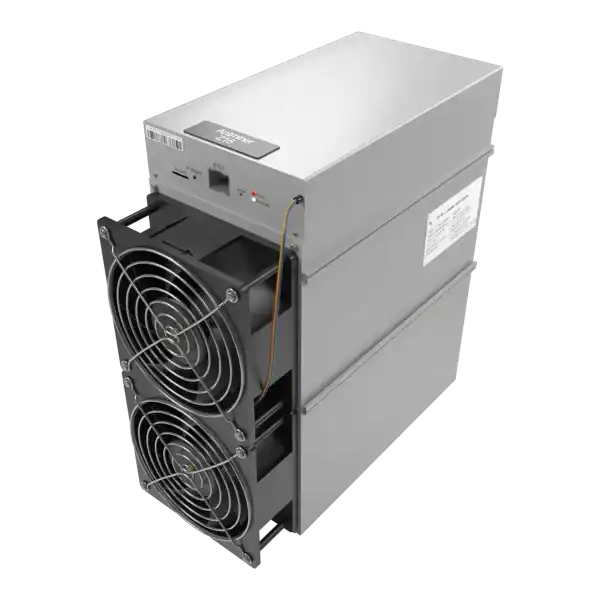
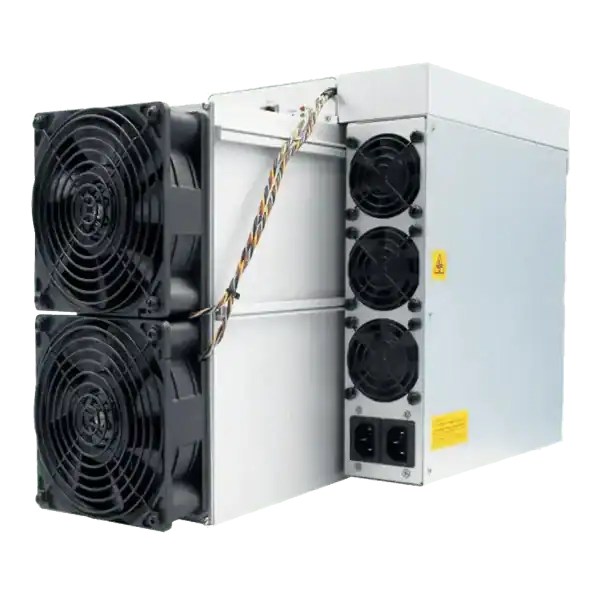
BSV uses HASH-256, commonly described as double SHA-256. Competitive mining therefore uses SHA-256 ASICs rather than a normal laptop or graphics card. The model, firmware, power supply and cooling system determine the real hashrate delivered at the wall.
An ASIC advertised at a headline speed may run below that figure because of heat, voltage limits, dust or rejected work. Record accepted hashrate at the pool and electricity measured at the socket. Those two readings are more useful than a product label.
Where the Reward Comes from
A successful block can pay a block subsidy plus transaction fees. The subsidy follows the inherited Bitcoin schedule and reduces at halving heights. Fees vary with actual network use and the transactions selected by the mining node.
Pool miners normally receive a calculated share rather than the whole block reward. PPS, PPLNS and other methods move luck and fee risk differently between the pool and miner. Read the formula, minimum payout and withdrawal charge before comparing headline percentages.
Quick reference for BSV mining decisions.
Why Large Blocks Change Operations
BSV is designed around much larger transaction volumes than a simple small-block model. Proof of work still tests a compact block header, but a mining node must receive, validate, assemble and distribute the underlying transaction data quickly enough.
This makes bandwidth, storage, memory, node software and peer quality important for a block-producing operation. A home miner connected to a pool leaves most of that work to the pool, but remains exposed to the pool's reliability and policies.
Calculate BSV Mining Profit Carefully
Start with accepted hashrate, network difficulty, expected reward, fee share and coin price. Then subtract measured electricity, pool fees, cooling power, hosting, maintenance and an allowance for downtime. Use several price and difficulty cases rather than one optimistic forecast.
A useful break-even test asks how many pence per kilowatt-hour the machine can afford at today's conditions. Repeat the calculation after a reward cut, a difficulty rise and a lower market price. If one small change removes the margin, the plan is fragile.
Pool and Network Checks
Confirm that the pool currently supports BSV, names its payout method and shows accepted and rejected shares. Check the payout address carefully and use an account protected by strong authentication where available. Never assume support because a pool mines another SHA-256 chain.
BSV documentation also describes Network Access Rules and an alert system for mining nodes. Operators who run block-producing infrastructure should understand those current requirements directly from the official documentation and obtain professional advice where necessary.
Risks a Beginner Can Miss
The largest risks are usually electricity price, sudden difficulty changes, hardware failure and coin-price movement. Pool concentration, withdrawal delays, firmware provenance and weak remote access can add losses that a simple calculator never shows.
A miner also produces heat and noise continuously. Check the circuit, plug, cable, airflow and fire precautions before installation. A profitable spreadsheet does not make an unsafe electrical setup acceptable.
What the Current Data Can and Cannot Tell You
The supplied market snapshot is useful for identifying BSV as an active SHA-256 asset, but a market rank and a current price do not prove that a particular machine will earn money. Mining decisions need network difficulty, pool observations and electricity readings taken at the same time.
BSV shares its hardware class with other SHA-256 networks. That gives an operator choices, but switching is not automatic. Pool credentials, payout addresses, firmware profiles and settlement rules must be checked for every destination before hashrate moves.
Decision Table
Question
Evidence to collect
Is the machine suitable?
SHA-256 model, measured watts and accepted hashrate
Is the pool suitable?
Current BSV support, fee, payout method and minimum
Can the site cope?
Circuit rating, airflow, noise plan and network uptime
Is the return resilient?
Low-price, high-difficulty and downtime cases
A table is a starting point, not a promise. Verify every live input before spending money on BSV mining hardware, software or hosting.
Frequently Asked Questions
Can a Bitcoin ASIC Mine BSV?
A SHA-256 ASIC may be technically compatible, but the pool, firmware and payout account must also support BSV. Check current documentation before switching.
Does BSV Mining Pay a Fixed Daily Amount?
No. Network difficulty, pool luck, fees, your accepted hashrate and market price all move. A calculator is an estimate, not a promise.
Can a Laptop Mine BSV Profitably?
Competitive BSV mining uses SHA-256 ASICs. A general computer cannot normally match their efficiency.
Do BSV Miners Need a Full Node?
A block-producing operator needs node infrastructure. A customer pointing an ASIC at a pool normally relies on the pool's node.
What Should I Measure First?
Measure wall power and pool-side accepted hashrate over a representative period. Those figures anchor the cost calculation.
Conclusion
Bsv mining deserves a measured trial, not a promise of easy money. Confirm the live network rules, use compatible hardware and official software, protect the wallet, and calculate profit from accepted work and wall power. Keep dated records because rewards, difficulty, prices and pool terms change.
Darren Waggott is the visionary Founder and CEO of The Mining Shop UK, with over a decade of leadership in the cryptocurrency mining sector. Renowned for driving innovation, Darren has built a company dedicated to providing high-quality ASIC miners and comprehensive hosting services. His forward-thinking approach places The Mining Shop UK at the forefront of the industry.
Membership helps us protect the discussion from spam and keep answers useful.
ASIC MINING SUPPORT
Need Help Choosing an ASIC Miner?
Tell us what you want to mine, your electricity cost and where the machine will run. We can help you compare hardware, power requirements, hosting and repairs.
We use necessary cookies to run the shop and optional analytics cookies to understand how visitors use the site and improve shopping and checkout. You can accept analytics, use only necessary cookies, or choose settings. You can change your choice at any time.
Functional
Always active
The technical storage or access is strictly necessary for the legitimate purpose of enabling the use of a specific service explicitly requested by the subscriber or user, or for the sole purpose of carrying out the transmission of a communication over an electronic communications network.
Preferences
The technical storage or access is necessary for the legitimate purpose of storing preferences that are not requested by the subscriber or user.
Statistics
The technical storage or access that is used exclusively for statistical purposes.The technical storage or access that is used exclusively for anonymous statistical purposes. Without a subpoena, voluntary compliance on the part of your Internet Service Provider, or additional records from a third party, information stored or retrieved for this purpose alone cannot usually be used to identify you.
Marketing
The technical storage or access is required to create user profiles to send advertising, or to track the user on a website or across several websites for similar marketing purposes.





Join the ASIC Mining Discussion
Members can read and join the discussion
Log in to read comments from other miners. Create a free account if you would like to ask a question or share your experience.
Membership helps us protect the discussion from spam and keep answers useful.