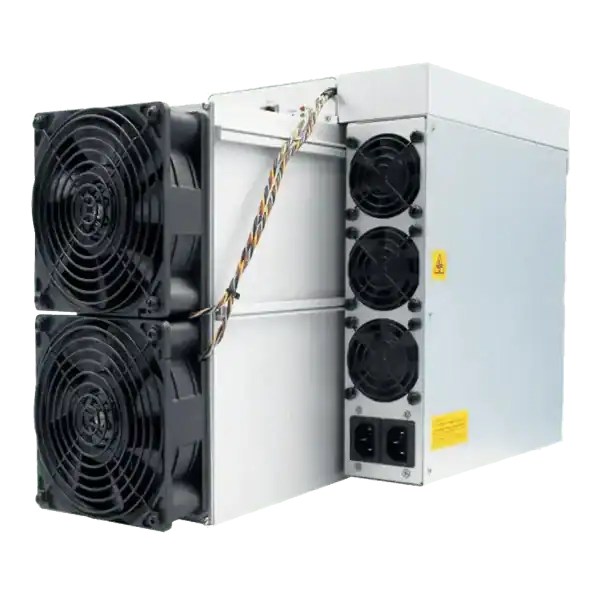
Blake14r Mining Explained: Hardware and Compatibility explains where Blake14r mining fits in proof of work, what hardware is relevant and which facts must be checked before committing power or equipment.
TL;DR
Blake14r Mining Explained: Hardware and Compatibility explains where Blake14r mining fits in proof of work, what hardware is relevant and which facts must be checked before committing power or equipment.
- Confirm the current Blake14r mining consensus rules and active mining algorithm before choosing hardware.
- Mining compatibility does not by itself prove that a network has useful liquidity, pool support or sustainable demand.
- Use current pool, wallet, exchange and network documentation because smaller projects can change or become inactive.
- Treat revenue estimates as a comparison only and include electricity, fees, downtime and hardware resale risk.
Background and purpose
Let’s start with the elephant in the room, that funky name. Blake(14r) isn’t just someone’s creative attempt at naming their pet hamster. It’s a sophisticated variant of the Blake algorithm family, specifically designed with 14 rounds of processing (hence the “14r”). Treat it as the overachiever cousin in the Blake family tree, not content with just being good, it had to go and be excellent.
What makes Blake(14r) special isn’t just its technical specifications (though we’ll get to those juicy details later). It’s the algorithm’s approach to balancing security, efficiency, and accessibility. Unlike some mining algorithms that seem designed by people who think electricity is free and GPUs grow on trees, Blake(14r) was created with real-world mining operations in mind.
Technical design
Now, before you start having flashbacks to computer science classes that made you question your life choices, let’s break down the technical aspects about Blake(14r) in a way that won’t require a PhD to understand.
What’s special about Blake(14r) is that it operates on what cryptographers call a “wide-pipe” construction. If that sounds like plumbing terminology, you’re not entirely wrong, it’s all about moving data efficiently through the system. The algorithm processes data in 512-bit chunks, which is like having a highway with more lanes than you know what to do with. This wide approach allows for better parallelization, meaning your GPU can work on multiple parts of the problem simultaneously instead of standing in line like customers at the DMV.
What’s particularly clever about Blake(14r) is how it handles memory requirements. Unlike some algorithms that demand more RAM than a Hollywood special effects studio, Blake(14r) is designed to work efficiently with standard GPU memory configurations. This means you don’t need to mortgage your house to buy specialised hardware just to stay competitive.
The algorithm also incorporates what’s known as the HAIFA construction (HAsh Iterative FrAmework), which sounds like it should be accompanied by a dramatic movie trailer voice. This construction helps ensure that the hash function is secure against various types of cryptographic attacks while maintaining excellent performance characteristics.
Why GPUs Are Having a Love Affair with Blake(14r)
If you’ve ever wondered what it would look like if graphics cards could express emotions, Blake(14r) mining would probably make them do a happy dance. The algorithm’s design philosophy seems to have been “let’s make GPUs as efficient as possible” rather than “let’s see how much we can torture these poor silicon chips.”
Blake(14r)’s memory access patterns are also optimised for GPU architecture. Instead of randomly jumping around memory like a caffeinated squirrel, the algorithm accesses memory in predictable patterns that allow GPUs to preload data efficiently. This reduces memory latency and increases overall throughput, making your mining rig purr like a well-tuned sports car.
The Cryptocurrency Ecosystem Embracing Blake(14r)
Several innovative cryptocurrency projects have recognised the potential about Blake(14r) and have integrated it into their blockchain infrastructure. These aren’t just fly-by-night altcoins trying to make a quick buck, we’re talking about serious projects that have done their homework and concluded that Blake(14r) offers the optimal balance of security, decentralization, and efficiency.
The adoption of Blake(14r) has created interesting dynamics in the mining ecosystem. Projects using this algorithm have attracted a diverse community of miners, from garage enthusiasts with a few GPUs to large-scale operations running hundreds of cards. This diversity is healthy for network security and helps prevent the centralization issues that plague some other mining algorithms.
What’s particularly noteworthy about Blake(14r) adoption is how it’s changing the economics of mining. The algorithm’s efficiency improvements mean that smaller miners can remain competitive without needing to invest in current hardware every few months. It’s democratizing mining in a way that recalls the early days of cryptocurrency, when you could mine coins on your gaming PC without melting it into an expensive paperweight.
The network effects are also interesting to observe. As more miners join Blake(14r) networks, the increased security and hash rate distribution create more robust and decentralized networks. This positive feedback loop benefits everyone in the ecosystem, from miners to users to developers.
Setting Up Your Blake(14r) Mining Empire
If you’re thinking about diving into Blake(14r) mining, you’re probably wondering what kind of setup you need. The in practice, Blake(14r)’s efficiency means you don’t need to sell a kidney to afford competitive mining hardware.
The algorithm’s GPU-friendly nature means that most modern graphics cards can participate effectively in Blake(14r) mining. You don’t need the latest and greatest cards that cost more than a used car, even mid-range GPUs can achieve respectable hash rates and profitability.
Cooling is another important consideration, though Blake(14r)’s efficiency means your GPUs won’t be running as hot as they would with some other algorithms. This can extend hardware lifespan and reduce cooling costs, which is great news for your long-term profitability and your relationship with your electricity provider.
The software ecosystem for Blake(14r) mining has matured rapidly, with most major mining programs offering built-in support. This means you don’t need to be a command-line wizard to get started, user-friendly interfaces make it possible for newcomers to jump in without needing a computer science degree.
The Economics That Make Blake(14r) Shine
Let’s talk about everyone’s favorite topic: money. The economics about Blake(14r) are particularly compelling because the algorithm’s efficiency improvements translate directly into better profit margins for miners.
The reduced power consumption compared to other algorithms means lower operational costs, which is like getting a permanent discount on your electricity bill. But the benefits extend beyond just power savings. Blake(14r)’s efficiency also means that mining operations can achieve better hash rates with existing hardware, potentially increasing revenue without increasing costs.
The algorithm’s accessibility has also created more competitive mining markets for Blake(14r) coins. This competition benefits the broader ecosystem by ensuring fair distribution of newly minted coins and maintaining network security through decentralization.
From an investment perspective, Blake(14r) mining equipment tends to have better resale values because the hardware remains useful for longer periods. Unlike specialised ASIC miners that become paperweights when their target algorithm becomes unprofitable, GPUs used for Blake(14r) mining can be repurposed for other algorithms or even sold to gamers and content creators.
The reduced barrier to entry has also created opportunities for smaller-scale miners who might have been priced out of other algorithms. This democratization of mining is healthy for the cryptocurrency ecosystem as a whole, promoting decentralization and preventing the concentration of mining power in the hands of a few large operators.
Environmental Impact and Sustainability
In an era where cryptocurrency mining’s environmental impact is under increasing scrutiny, Blake(14r) offers a more sustainable approach to proof-of-work consensus. The algorithm’s efficiency improvements mean that Blake(14r)-based cryptocurrencies have a significantly smaller carbon footprint compared to those using more energy-intensive algorithms.
This environmental friendliness isn’t just good for polar bears and tree huggers, it’s also good for the long-term viability of cryptocurrency mining as governments and regulators increasingly focus on environmental issues. Mining operations using Blake(14r) can honestly claim to be more environmentally responsible, which may become increasingly important as regulatory pressures mount.
The efficiency gains also mean that renewable energy sources become more viable for Blake(14r) mining operations. Solar and wind power can more easily meet the reduced energy requirements, making it possible for miners to achieve carbon neutrality or even carbon negativity in their operations.
Technical design
The cryptographic and mining communities’ reception about Blake(14r) has been overwhelmingly positive. Security researchers appreciate the algorithm’s robust design and resistance to known attack vectors. The 14-round structure provides excellent security margins while maintaining performance, striking a balance that many other algorithms struggle to achieve.
Mining software developers are enthusiastic about Blake(14r) due to its clean implementation and optimization potential. The algorithm’s straightforward design makes it easier to write efficient mining software, which translates into better performance for end users.
Hardware manufacturers have also taken notice, with some GPU vendors optimising their drivers and firmware specifically for Blake(14r) mining. This industry support suggests that Blake(14r) has staying power and isn’t just a flash-in-the-pan trend.
Current status and outlook
The future about Blake(14r) in the cryptocurrency mining landscape looks exceptionally bright. As more projects recognise the benefits of the algorithm and more miners experience its advantages firsthand, adoption is likely to accelerate.
The algorithm’s design suggests excellent longevity as hardware continues to evolve. Unlike some older algorithms that become less efficient as technology advances, Blake(14r) was designed with future scalability in mind. This forward-thinking approach means that investments in Blake(14r) mining infrastructure are likely to remain relevant for years to come.
Emerging trends in GPU technology, such as improved parallel processing capabilities and more efficient power management, align perfectly with Blake(14r)’s architectural strengths. This synergy suggests that the algorithm will become even more attractive as hardware continues to improve.
The Innovation Factor
Practical setup checks
The key requirement with Blake(14r) mining is understanding that it rewards efficiency over brute force. A well-optimised mid-range setup can often outperform a poorly configured high-end system, making it accessible to miners with various budget levels.
Research is crucial, understanding which coins use Blake(14r), their mining difficulty, network hash rates, and market dynamics will help you make informed decisions rather than just chasing the latest trend.
Practical conclusion
Blake(14r) represents a significant step forward in mining algorithm design, offering a compelling combination of security, efficiency, and accessibility that benefits miners, users, and the broader cryptocurrency ecosystem. Its GPU-friendly architecture, reduced power requirements, and sustainable approach to proof-of-work consensus make it an attractive option for both individual miners and larger operations.
Whether you’re a mining veteran looking to optimize your operations or a newcomer exploring the cryptocurrency world, Blake(14r) offers opportunities worth investigating. The algorithm’s growing adoption, combined with its technical merits and economic advantages, suggests that understanding more about Blake(14r) could be crucial for future mining success.
As the cryptocurrency landscape continues to evolve, algorithms like Blake(14r) that prioritize efficiency, sustainability, and accessibility will likely play increasingly important roles. The question isn’t whether Blake(14r) will become more prevalent, it’s whether you’ll be positioned to take advantage of the opportunities it creates.
What to verify before acting
Mining networks, pool support, firmware, exchange access and hardware availability can change. Verify the current network documentation, test with a small controlled configuration and do not rely on a historical profitability figure when purchasing equipment.
Useful next steps
Authoritative references
Check current official documentation alongside this article because network rules, product ranges and legal guidance can change.