
Pre-order
Overall ranking

Equihash
·
ZEC
Overall rank#1of 100AvailableAll: #3 / 831
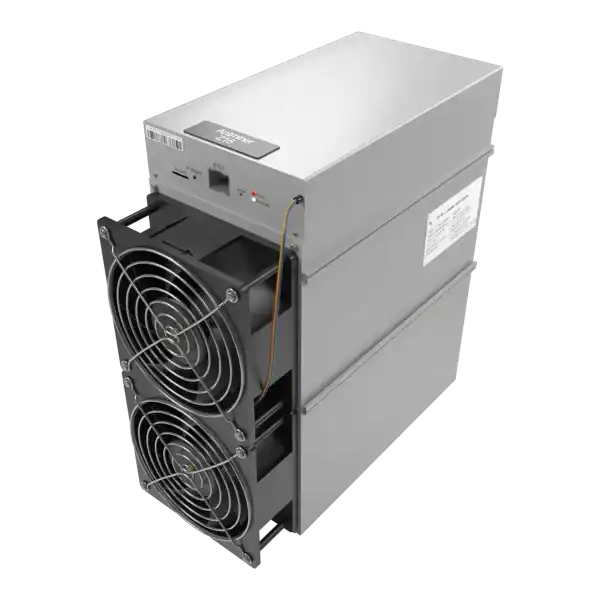

Pre-OrderFree Shipping
Hashrate
525KSOL
Efficiency
4.73W/KSOL
Power
2483W
Earns/kWh
38.1p
Bitcoin Core 0.17 uptime guide covering returned server seconds, restart detection, monotonic checks, health limits, fleet labels and resilient monitoring.
This guide explains Bitcoin Core uptime RPC in plain English. It shows what the command does, what its result means and what it cannot prove.
Bitcoin Core uptime RPC: For the same node identity, a substantial decrease indicates a restart, replacement process or monitoring misrouting. Correlate with process supervisor start time, boot events, release changes and logs.
A node operator is checking Bitcoin Core uptime RPC. Convert for dashboards only after retaining the raw value. Exclude approved maintenance only when the restart and subsequent readiness are observed.
Expect a non-negative numeric count in seconds. Apply type and plausible-range checks and record collection time. Convert for dashboards only after retaining the raw value. A negative, decreasing or implausibly large result should trigger investigation rather than silent coercion.
For the same node identity, a substantial decrease indicates a restart, replacement process or monitoring misrouting. Correlate with process supervisor start time, boot events, release changes and logs. A planned restart still needs a maintenance record and post-start readiness gates.
Attach host, network, data directory, instance and software version to every sample. Load balancers can send consecutive calls to different nodes and manufacture false resets. Prefer direct authenticated endpoints or stable instance labels for continuity monitoring.

A process can run for months while stalled, isolated, out of disk or on the wrong chain. Combine uptime with best hash, height, chainwork, initial-block-download status, warnings, peers, block age, wallet load and independent reference nodes.
Collect often enough to detect unexpected restarts without making RPC availability itself a burden. Alert on resets, missing samples and divergence from supervisor state. Avoid treating every RPC timeout as a restart because network and authentication failures are separate conditions.
Exclude approved maintenance only when the restart and subsequent readiness are observed. High uptime alone is not availability, and deliberate security upgrades may reset it. Measure service objectives using correct validation and payment outcomes, not a vanity process counter.
Operators test the command on a non-production node first. They check a normal reply, an invalid request, a timeout and a restart. This shows what the response means and prevents one local result from being mistaken for a network-wide outcome.
Bitcoin Core uptime RPC: For the same node identity, a substantial decrease indicates a restart, replacement process or monitoring misrouting.
Expect a non-negative numeric count in seconds. Apply type and plausible-range checks and record collection time.
For the same node identity, a substantial decrease indicates a restart, replacement process or monitoring misrouting.
Attach host, network, data directory, instance and software version to every sample.
uptime is a useful process-continuity counter, not a node-health verdict. Reliable monitoring binds it to one instance and combines restart evidence with independent chain, peer, wallet and storage checks.
Check the current specification status and the documentation for the exact implementation you operate before moving production funds or changing a mining node.

Bitcoin Core 30 data-carrier policy explained: larger OP_RETURN defaults, multiple outputs, aggregate sizing and the boundary between policy and consensus.
Bitcoin Core AssumeUTXO guide covering height 840000 mainnet snapshots, authenticated loading, dual chainstates, background validation, storage and rollback.

Learn how Bitcoin Testnet4 mining works, what it can earn, the costs and security checks, and how a Bitcoin node can support SHA-256 miners.

Join the ASIC Mining Discussion
Members can read and join the discussion
Log in to read comments from other miners. Create a free account if you would like to ask a question or share your experience.
Membership helps us protect the discussion from spam and keep answers useful.