
Pre-order
Overall ranking

Equihash
·
ZEC
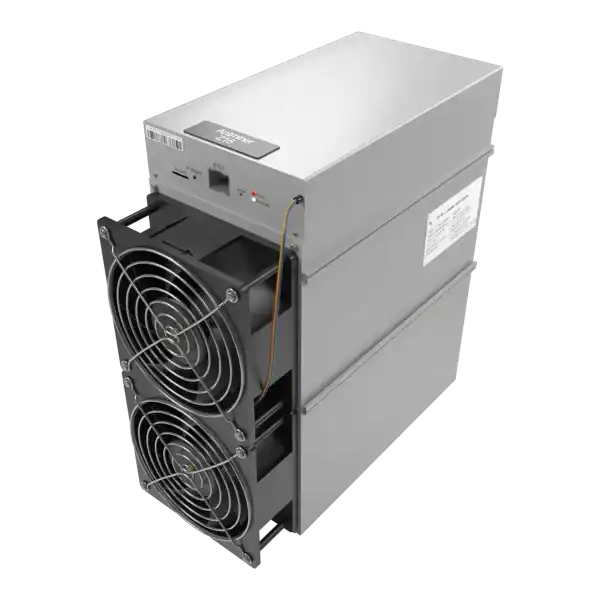
Overall rank#1of 100AvailableAll: #2 / 831

Pre-OrderFree Shipping
Hashrate
525KSOL
Efficiency
4.73W/KSOL
Power
2483W
Earns/kWh
42.2p
Bitcoin Core 0.17 getblockstats guide covering hash or height selection, satoshi amounts, fee-rate percentiles, txindex and pruning limits, and reorg safety.
This guide explains Bitcoin Core getblockstats RPC in plain English. It shows what the command does, what its result means and what it cannot prove.
Bitcoin Core getblockstats RPC: Fee-rate percentiles are calculated at specified weight-unit points, not simple percentiles over transaction count. Average, median, minimum and maximum can be distorted by a block’s particular composition.
A miner is checking Bitcoin Core getblockstats RPC. Compare returned blockhash with the expected active-chain block before storing a time series. Height can map to another block after a reorganisation, while hash fixes identity.
Accept an explicit block hash or integer height and record the node tip at query time. Height can map to another block after a reorganisation, while hash fixes identity. Compare returned blockhash with the expected active-chain block before storing a time series.
The optional stats array limits returned values and can reduce work and payload. Use an allow-list of documented names, reject duplicates and unknown values and version dashboards. Do not request every field by default when only two operational metrics are needed.
All monetary amounts are satoshis. Average and percentile fee rates are satoshis per virtual byte. Transaction counts, sizes, weights and total outputs follow documented coinbase exclusions. Preserve integer units and definitions rather than converting early or comparing unlike metrics.

Fee-rate percentiles are calculated at specified weight-unit points, not simple percentiles over transaction count. Average, median, minimum and maximum can be distorted by a block’s particular composition. Keep the methodology with exported data and avoid treating one block as a fee recommendation.
Pruning can make some heights unavailable. Without txindex, UTXO-size-increase and fee or fee-rate statistics may not work. Detect capabilities before bulk jobs and record missing as unavailable, not zero. Do not trigger a production reindex merely for an optional chart without planning.
Store block hash, height and collection tip with every row. Recheck recent blocks after reorganisation depth and replace orphaned observations through an auditable correction. Statistics from a valid side-branch block are not active-chain history.
Operators test the command on a non-production node first. They check a normal reply, an invalid request, a timeout and a restart. This shows what the response means and prevents one local result from being mistaken for a network-wide outcome.
Bitcoin Core getblockstats RPC: Fee-rate percentiles are calculated at specified weight-unit points, not simple percentiles over transaction count.
Accept an explicit block hash or integer height and record the node tip at query time.
The optional stats array limits returned values and can reduce work and payload.
All monetary amounts are satoshis. Average and percentile fee rates are satoshis per virtual byte.
getblockstats is a precise per-block analytical tool when identity, units and node capabilities are recorded. It is not a live fee estimator and its recent results must remain reorganisation-aware.
Check the current specification status and the documentation for the exact implementation you operate before moving production funds or changing a mining node.
Bitcoin Core waitfornewblock RPC made simple. See what the feature does, where its limits sit and which checks node or wallet operators should make.
Bitcoin Core waitforblockheight guide covering at-least height waits, timeout returns, response checks, reorganisations, client limits and reliable automation.
Bitcoin Core waitforblock RPC made simple. See what the feature does, where its limits sit and which checks node or wallet operators should make.

Join the ASIC Mining Discussion
Members can read and join the discussion
Log in to read comments from other miners. Create a free account if you would like to ask a question or share your experience.
Membership helps us protect the discussion from spam and keep answers useful.